Tuesday, June 30, 2009

Another Milestone

Post # 3,000

It started March 9, 2003. I can't believe it's still going- and still fun.

What has become interesting to me is how this blog has become a non-paying second job that I enjoy. I spend an hour or so on most days updating and writing. I spend extra time on the weekends putting the next week together. I read other blogs and note things I want to share. Some of the posts are simple pass-alongs. Other times I have something I want to say.

It's probably a 10- 12 hour/week job. As is said, it is still fun. It is writing and I enjoy writing. I guess I'll stick around for a while.

So off I go to the next 1000.

Monday, June 29, 2009

Saving is Bad?

What a change in overall perception.
A penny saved is a penny earned.
Save for a rainy day.
Always have six months of salary saved.

Then comes a headline on Friday that the household savings rate in May was really good. In fact it was the best in 15 years. That means money is out there. It means that the recession is coming to and end?

Not so fast. All that news that people are taking care of their finances was part of the cause of a weak response on Wall Street. The economic recovery is not on the near-term horizon- because people were saving and not spending. With consumer spending the economy does not respond. Even though debt caused the crisis in the first place.

I have posted on this before and it remains, I believe, one of the weaknesses in our economy and perhaps even our economic system. It is a material-based- buy-buy-buy economy. I am not an economist and certainly don't understand a great deal of deeper economic theory. Yet I feel that somehow there is something inherently self-destructive in a system that depends on increased spending from year to year and not on saving. Somehow I think that there will always be big losers in such a system. Most of the time it will be the average consumers who find themselves having to be in debt to keep up.

Then comes a debt-crash like we have just had and people lose their homes, cars, health insurance and probably a healthy sense of self. I find that scary. I hope someone finds a way to build a system of production and economics that can live and grow without having to constantly be expanding and greater and greater rates.

Yes, maybe I am an idealist, but often we can set up an ideal and then move toward it. Let it be so.

The Times HAVE Changed

Headline on the AP last week said more than just news:

SF lawmakers pass Haight smoke shop ban
Yes, lawmakers unanimously passed a law that sets a three-year moratorium on any new head pot-smoking paraphernalia shops in the Haight.
I'm actually surprised it has taken this long.

Sunday, June 28, 2009

A Sunday to Wake Up

I wonder what drives people into the streets in great mourning for someone like a Michael Jackson? Something, sometime touched them about the person. I wonder if for that moment we are more sensitive to the uncertainties of life. If someone of the money and skill and stature of the rich and famous still didn't get out alive, what is our hope?

As I was reviewing some quotes I had saved from Inward/Outward over the past year or so I came across one by Eugene Peterson. It struck me as something perhaps at a time like this we need to hear. When many feel the loss and shock and even fear of the death of a superstar, maybe that can be a time also to refocus where we look and how we live. Perhaps we can discover life....

We wake up each morning to a world we did not make. How did it get here? How did we get here? We open our eyes and see that ‘old bowling ball the sun’ careen over the horizon. We wiggle our toes. A mockingbird takes off and improvises on themes set down by robins, vireos, and wrens, and we marvel at the intricacies…. There is so much here–around, above, below, inside, outside. Even with the help of poets and scientists we can account for very little of it. We notice this, then that…. Before long we are looking out through telescopes and down into microscopes, curious, fascinated by this endless proliferation of sheer Is-ness–color and shape and texture and sound.

After awhile we get used to it and quit noticing. We get narrowed down into something small and constricting. Somewhere along the way this exponential expansion of awareness, this wide-eyed looking around, this sheer untaught delight in what is here, reverses itself: the world contracts; we are reduced to a life of routine through which we sleepwalk. But not for long. Something always shows up to jar us awake.

Source: Christ Plays in Ten Thousand Places

A 40-Year Memory: Stonewall


June 28 - The Stonewall riots in New York City mark the start of the modern gay rights movement in the U.S.


A gay friend of mine moved to New York a week or so after the Stonewall riots. The changes he described to me in attitudes among gay men following Stonewall were amazing. All of a sudden they were willing not to just cower and take it. They fought back. gay rights became an issue. The movie Milk last year gave us a glimpse of those changes in progress.

The issue is still going on, of course. It has taken a number of different directions and issues. Many are still controversial, even when seemingly so clear- hospital visitation rights by a partner being one that seems like a no-brainer, but is not automatic, for example. Another is the "Don't ask, don't tell" policy that gets 18-year decorated military men discharged because someone asked or told.

The emotions generated on both sides are powerful. In a free country I wonder why we can't allow hope and companionship and support to be determined by the individuals.


Today, the location of the original Stonewall Inn is a National Historic Monument

Saturday, June 27, 2009

Paving Paradise


The Infrastructurist - America Under Construction lamented 11 Beautiful Train Stations That Fell To The Wrecking Ball (And The Crappy Stuff Built In Their Place).

#1 is truly a disaster from 1963 when Pennsylvania Station in Manhattan was torn down for Madison Square Garden.


The train station is still the busiest in the world, but you might as well be in a subway station.

#11- Detroit's Michigan Central Station still exists but is in trouble. The others have been replaced by vacant lots, parking lots, highway interchanges and buildings of all different types.

But then I think about some of the stations that have been preserved, even if they are not necessarily train stations anymore. I have been to St. Louis Union Station, Washington D.C. Union Station, Union Station Chicago, and the best and brightest (in my humble opinion)


Grand Central Station in New York.

Overheard in Recovery - Don't Live in the Past

The Promises of AA say:

We will not regret the past nor wish to shut the door on it.
I recently heard a different way of saying that:
Look back - but don't stare.

Friday, June 26, 2009

The Irresistable Force?

Another politician has been caught with ... well, you know ... the ongoing problem of sex being more powerful than the desire to succeed. Gov. Sanford (R-SC) goes AWOL and meets up with a woman in Argentina. Didn't he know someone would find out? It's not as if he hasn't seen it happen before.

Gary Hart (D); Bill Clinton (D); Elliot Spitzer (D); Larry Craig (R); Mark Foley (R); John Edwards (D); King David (?).......

(Don't ignore preachers, either- Jimmy Swaggart and Ted Haggard quickly come to mind.)

Back in older days we cannot forget that Nelson Rockefeller, Dwight Eisenhower, John Kennedy, Lyndon Johnson and Franklin Roosevelt weren't exactly just sitting around. They just were never made public.

There are probably a number of psychological things at work, of course. There has to be a grandiosity and a certain amount of narcissism in anyone who aspires to such high offices. There has to be a sense that what they do is right, even when it isn't. There has to be a sense that they really won't get caught- they have figured out a way around it.

Or is it the game of doing something that is in some way or another illicit or immoral and trying to get away with it? Is it a power trip?

And let us not forget what may be the biggest of all- the pull of sex and sexual gratification. The pleasure centers of the brain, the powerful neuro-chemicals that flood our system when we are engaged in something as enjoyable as sex are difficult to turn off.

I am not one, however, to blame the society and the permissiveness that some say runs rampant. It is much more profound than that, and much more difficult to assign such simplistic blame. Yet it is much more basic and actually simple (as opposed to simplistic) and you have heard me talk about it before.

Human nature. Or actually, the proclivity for human nature to lead to sin. I don't mean that in any judgmental way. Original sin is, as I have said before quoting my Old Testament professor, the only provable, verifiable, observable doctrine. Just look around. Which is why it is less than helpful to point fingers and make all kinds of moralistic statements.

Gov. Sanford, like each and every one of us, yes, each and every one of us, has fallen prey to the basest part of who we are. His was through sex. Yours or mine may be in a gazillion other ways. But it is sin. And all any of us can do is get down on our knees and ask forgiveness. Whether other people forgive us or not is beyond our control. Whether we can forgive ourselves may take a while. But the good news is that God does forgive.

That's the wonder and power of grace. May we be as graceful to others as God is to us.

(By the way, do you realize how difficult it was to write this and not have any double entendres in it? Or at least I tried not to since I would like this to be no worse than a PG-13 rated blog. Okay, that reminds me of a joke from one of Garrison Keillor's old joke shows:
Did you hear about the woman who walked into a bar and asked the bartender for a double entendre?
He gave it to her.)

Gives Gave Us Those Bright Colors

Bye bye to Kodachrome, Kodak's iconic brand. They announced on Monday that due to digital, the sales are next to nothing. We bid farewell to the sharpness that was never beaten by a competitor (or even any of Kodak's other brands.) We bid farewell to the colors that had saturation and life. Nothing will ever truly beat the slide film for a eye-catching, breath-taking color.

Kodachrome. The best there was.

BoingBoing had a post on Tuesday. They quoted photographer Glen Friedman:

As far as quality products that mean something to me this one ranks above all else, even Apple.

This is like losing your favorite paint brush or camera lens or guitar, forever. Their are others, but none will be the same at all.

Perhaps one day in the future some one will invent a Kodachrome mode in digital photography....

Thursday, June 25, 2009

The Power of the Spiritual

Speaking of Faith has done it again. Last week's show was another deep and spiritually enriching one. Joe Carter and the Legacy of the African-American Spiritual gave a good look at the history and meaning of those powerfully moving songs forged in the days of slavery and oppression. The website says:

It is the source from which gospel, jazz, blues, and hip-hop evolved. It was born in the American South, created by slaves, bards whose names history never recorded. The organizing concept of this music is not the melody of Europe, but the rhythm of Africa. And the theology conveyed in these songs is a potent mix of African spirituality, Hebrew narrative, Christian doctrine, and an extreme experience of human suffering.
Carter talked about how spirituals are different from the other music out of the African-American tradition:
they were the expression of the great pain and the sorrow. But at the same time, they were always looking upward. They were always reaching. There was always some level of hope, as opposed to the concept of the blues. The blues was just singing about your troubles, and there was no hope. But there's always the glory hallelujah someplace saying, "Oh, and on that glory hallelujah, then we fly."... So in the midst of the night, we can fly away to freedom while we're singing these, these songs.
He then goes on to talk about the transcendence of the people who invented these songs, how they lacked any sort of mean spirit of revenge or hatred. They were, in reality the outgrowth of a truly deep felt spirituality that combined African roots with what may be a primitive, hopeful side of Christianity that we don't often see in our own lives.
Mr. Carter: They're the most noble sentiments. Now, you — find a song like this: "It's me. It's me. It's me, oh, Lord, standing in the need of prayer." (singing) "It's me. It's me. It's me, oh, Lord, standing in the need of prayer, not my brother, not my sister."

Ms. Tippett: Yeah.

Mr. Carter: Not the preacher, not the deacon, not the doctor, not the lawyer. Not the master? Wait a minute. These are people who were victims. They were in the midst of the most horrible situation but they said, "I'm taking responsibility for who I am today, and it's me standing in the need. I'm the one that has the proud heart today. Come and fix me."

Ms. Tippett: This is not only sound theology and psychology, it's extremely mature spirituality, right?

Mr. Carter: Yeah.

Ms. Tippett: What was it that, that came together in the lives and the spiritual sensibility of those slaves that, that connected them so powerfully to — really those are the best attributes of Christianity that you're talking about.
Great stuff.

--Link to Website (with Carter singing a number of spirituals.
--Link to transcript

Sorry - It's Not Serious News

Within the last 15 minutes the news has been hijacked by the death of Michael Jackson. One of the reporters on NBC said that a "serious news story" was happening.

Sorry, but this is nothing in comparison to what is happening in Iran. Yes, Jackson was an amazing performer (although I never was a fan of his) and he has had a significant impact on world Pop culture but the lead 8 minutes of NBC Nightly News had more important things to talk about.

And no, it was not the next 3 1/2 minutes about Farrah Fawcett, either.

The Real Value of You Tube

Yes, You Tube has made lots of nobodies famous for a few moments. It has also allowed a lot of sharing of performances (and stupidity) of average people like you and me. But for me the real value of You Tube is that it has managed to get online for public viewing clips and bits and things from the past that might have been lost forever. Now we have an opportunity to see these whether they are music, history, or performances.

I realized this again when I was working on yesterday's post about the essential folk songs. As I went surfing I discovered, for example a whole series of videos with Pete Seeger and many different musicians from a TV series he had on public TV in the 60s called Rainbow Quest.

For example, here is a young Tom Paxton and the even then middle-aged Seeger doing the remarkable Ramblin' Boy.


There are also clips with June Carter and Johnny Cash- LINK

Or how about a video to cover a radio interview with Steve Goodman and the #3 essential folk song, The City of New Orleans. LINK

Then there is the clip, one of two surviving clips, of Woody Guthrie singing Ranger's Command.


It is a treasure trove of trivia and wonder and history and things I might never have been privileged to see or hear if it weren't for You Tube.

Wednesday, June 24, 2009

Another Baseball Book

Anyone who knows anything about baseball knows that baseball players have not exactly been role models of clean living, openness and diversity. Mickey Mantle died, most likely, of alcoholism; Babe Ruth was a powerful drinker; Ty Cobb, perhaps the greatest player in history, was a mean, racist, KKK-supporting SOB; others played under the influence of alcohol so well that it could even be considered "performance enhancing." We haven't even talked about steroids.

Yet the Baseball Hall of Fame still says one of the attributes of an HoF member is that he is to be a person of good character.

All this is in introduction to the book I just finished, Cooperstown Confidential: Heroes, Rogues, and the Inside Story of the Baseball Hall of Fame by Zev Chafets. Chafets digs into the history of the Hall, the politics, the shuffling, the revisioning of history in order to build the monument to the great American game. Some of the stories, like those I mentioned above are well known. Others, like the background of the Hall itself are more hidden. By the end of the book, it appears as if Chafets had at least the goal of uncovering the hypocrisy of the Hall itself.

The "monks" (as he calls them) of the Hall would not think that such a good idea. He talks about the mixed record on racial diversity; he mentions without detail the sexual preference closet; he spends a great deal of time and detail on perhaps one of the most important event of the past 50 years- getting rid of the reserve clause freeing baseball players from legal slavery. Curt Flood, whose actions led to that historic event is not in the Hall.

But in the end Chafets talks about Shoeless Joe of the 1919 "Black Sox" scandal, Pete Rose of gambling fame, and the up and coming issue that will define an era- steroids and who should or shouldn't get elected. He makes a very good case that the issue of "character" has been ignored countless times to allow appropriately skilled players into the Hall. He wonders aloud about the truth behind steroids (and cocaine and speed in the 70s) and whether they do produce the superstars from people who would probably have been superstars anyway (Barry Bonds, Mark McGwire, Sammy Sosa, A-Rod.)

In short, it is a good book giving an alternative view of history, one that takes into account the humanity of these very fallible men we have placed in such a difficult spotlight. We expect of them something that very few of us could live up to would we be thrust into that kind of pressure, fame, and now, fortune. It gives some real food for thought (and the winter hot-stove baseball league.)

Essential Folk Songs

Last weekend NPR posted a story from Folk Alley, the 24-hour online stream from WKSU at Kent State. They recently spent eight-weeks polling their listeners to discover their 100 Essential Folk Songs. Go to the post at Folk Alley where you can find the list and an ongoing stream of the 100 songs. NPR posted the whole list here.

Here are the Top 10 of the Essential 100.....

1. "This Land Is Your Land" - Woody Guthrie
2. "Blowin' in the Wind" - Bob Dylan
3. "City of New Orleans" - Steve Goodman
4. "If I Had a Hammer" - Pete Seeger (and Lee Hays)
5. "Where Have All the Flowers Gone" - The Kingston Trio (Pete Seeger)
6. "Early Morning Rain" - Gordon Lightfoot
7. "Suzanne" - Leonard Cohen
8. "We Shall Overcome" - Pete Seeger (Trad)
9. "Four Strong Winds" - Ian and Sylvia
10. "Last Thing on My Mind" - Tom Paxton
Looking at the rest of the list I can only see a few (Circle Game, Good Night Irene or Tom Dooley) that might have replaced something on the top 10. Otherwise, I think that at least in this part the list is as good as it can get.

Tuesday, June 23, 2009

On (Not) Being Superman

Every now and then I come to the new conclusion that I am not A Superman, let alone THE Superman. I came to realize that again last week when I needed to stop and take it easy on myself. From time to time I walk into situations that I think I can handle on my own. That my great and wonderful personality and abilities and just general being will get me through anything.

In short, there is nothing that I can't do.

I can handle whatever it is that comes along and walk through fire, on water, and around the clouds. Can you imagine how tough that is to live like that? Can you feel the responsibility that comes with such amazingness and wonderfulness?

But I am sure that if you stop and think about for the least microsecond, you can realize how stupid and personally harmful it is. Sooner or later things fall apart. Not necessarily where all turns into a disaster, but it sure might be headed that direction. Someone disagrees, someone challenges, someone does it better. Or worse, you realize you can't be the savior to all, the perfect one, the answer to every question.

In other words you realize you truly are human. Just like everyone else. You realize you have shortcomings and failures. Just like everyone else.

Then you want to scream- NO! WAIT! I am unique and special and as perfect as I think I am. You can't lump me together with everyone else. I'm me! Can't you see that?

Of course each of us is unique and individual. But way down at the bottom line when all else is said and done, we all have character defects, shortcomings, even failings. We are all fallible human beings.

It is at that point that we can move toward and into recovery. Recovery is to have an open and honest view of ourselves, neither thinking to highly nor too poorly of ourselves. Being willing to see both extremes of grandiosity- the BEST or the WORST. I have a hunch that in the evolution of the 12-Steps, the 6th and 7th steps where we become willing to ask a Higher Power to help us in our weakness, have to come only after we can give up the Superman (or Wonder Woman) complex.

Now, if I could only learn it for good so I never have to face it again.

Jazz Doesn't Get Much Better Than This

Classic. Awesome. I challenge you to sit still as drummer Gene Krupa, trumpet player Harry James, and the incomparable Benny Goodman on clarinet with Sing Sing Sing. It is the real thing.


Monday, June 22, 2009

Why It "Works"?

Alcohol, that is.

LiveScience reported on how alcohol changes the brain.

Only 6 minutes after consuming an amount of alcohol equivalent to three beers — leading to a blood alcohol level of 0.05 to 0.06 percent, which impairs driving ability — changes had already taken place in the brain cells. ... The concentration of substances such as creatine (energy metabolism), which protect brain cells, decreases as the concentration of alcohol increases. Choline, a component of cell membranes, was also reduced.

"That probably indicates that alcohol triggers changes in the composition of cell membranes," [one of the researchers said.
At this point, they said, they don't know what the long-term effects, if any, might be.

A great deal of research is being done in many places to figure out the impact of alcohol- and of course alcoholism. There appears to be a great deal of evidence growing that a lot of different things happen in and around the brain-functions thanks to alcohol use. We know that there are things that happen in the brain as the result of alcohol use that change neuro-chemicals and therefore thinking processes. Do these happen to all people, only those who may have a genetic pre-disposition or those who drink heavily over a long period of time?

In the long run the value would be, among others, to help remove the still-present stigma for many that alcoholism (and other addictions) are moral failings. That will go a long way in helping more people deal with the surrounding issues with less fear.

And Yet, What's A Counselor to Do?

But then the New York Times pointed out last week the greater issue in all of this discussion and research from all different angles. They point out that a number of health studies point out that some use of alcohol may even be good for you- lengthening life, improving health, etc. Every time one of those studies comes out alcohol and drug counselors get inundated with "See! It isn't as bad as you said it was."

Of course the ones saying that are usually those who have already gone well past the healthy aspects that alcohol may provide. Three or more DWIs, possible liver damage, a wrecked family life- none of those seem to fall under "healthy" living provided by alcohol in that person's life. I have a hunch that the more someone tries to argue how good alcohol is for them, the more harm it has already done.

But the NYT article goes on to talk about the fact that there are a alot of scientists challenge the other studies as lacking real proof. They point out that the moderate drinkers studied probably didn't do anything to excess and had a generally healthier lifestyle to begin with.

Even those who tout the supposedly positive aspects of moderate use point out the clear and present dangers of alcohol use. It has been tied, in even moderate amounts, to breast cancer as well as potentially fatal accidents. There is no "gold standard" quality test out there, said one of those interviewed from the Centers for Disease Control.

So over here in the treatment world where we do not, under any circumstance, deal with the moderate drinker, what are we to do? Well, we have to keep aware of what the studies are saying- and what they are not saying. We also have to be clear that true, moderate, social drinking people do not generally have negative consequences from their drinking. Only those who are past that point will have ongoing problems.

A friend of mine used to describe it this way. Two people go to a wedding and the reception and dance afterward. Both have too much to drink. Both get in the car and drive home. Both are stopped for driving under the influence. They both will react with shame and embarrassment. They will both walk away from this lousy experience and say, "Wow! That was terrible. I'm never going to do that again!"

The non-alcoholic never will.

--Link to NYT article

Unfortunate Quotes

About 18 months ago Listverse had a list of 30 Unfortunate Quotes. I came across it again recently and thought I would share some of them with you. After all it is Friday....

29. “Are you going to ask that question with shades on?” – George Bush to blind reporter Peter Wallsten

26. “We don’t like their sound. Groups of guitars are on the way out.” -Decca Records Rejecting the Beatles

25. “Most cars on our roads have only one occupant, usually the driver.” – Carol Malia, BBC Anchorwoman

16. It’s a humbling thing being humble.” – Former Ohio State running back Maurice Clarett

9. “Traditionally, most of Australia’s imports come from overseas.” – Former Australian cabinet minister Keppel Enderbery

3. “The internet is a great way to get on the net.” – Bob Dole, Republican presidential candidate

Jaw-Dropping Slo-Mo

A HT to Mental Floss Blog for this stunning slow-motion video shot in HD at 1,000 frames/sec. It's from a rugby match and it is mesmerizing. Then, to top it off, there is a closing shot of a rippling block of Jello taken at 2,500 fps. For the HD version, go to Vimeo.

I-Movix SprintCam v3 NAB 2009 showreel from David Coiffier on Vimeo.

Sunday, June 21, 2009

Sunday - Life on the Water

In family systems theory and specifically the religious institution based understanding of it by Rabbi Ed Friedman, there was always a phrase that I liked. It was what is often needed in difficult or conflicted family systems. It is referred to as:

A Non-Anxious Presence.
I often like to use the acronym for it:
NAP.
Ed Friedman in his book Generation to Generation says that NAP is part of "differentiation" when a person in a system can
define his or her own life's goals and values apart from surrounding togetherness pressures,... It includes the capacity to remain a (relatively) nonanxious presence in the midst of anxious systems, to take maximum responsibility for one's own destiny and emotional being.
--p.27, Generation to Generation
It was an idea that jumped out of my memory when I read about Jesus in today's Gospel. He is sleeping in the back of the boat in a life-threatening situation. The disciples are terrified. He's purring in peaceful sleep. Talk about a non-anxious presence (and taking a NAP). I realize that this is one of the marks of Jesus- he keeps the anxiety levels at a minimum. You never see him worried or anxious or any of those other things. Here, in the boat, all is fine. No matter what.

Friedman also says (pp. 209-210) there are two aspects of the NAP that are worth highlighting in institutions:
  • The Value of Playfulness and
  • The Dangers of Diagnosis.
Anxiety is seriousness; content oriented; diagnostic (what's wrong?) These tend to increase anxiety and keep the cycle going. "How loose are we able to be?" is a good question to ask ourselves.

Now I don't fault the disciples nor am I willing to challenge their faith as Jesus did. Any preacher who does so is itching to get challenged in the same way by Jesus. Given the situation, and I have been in similar ones, I know beyond a shadow of a doubt that I would probably be as terrified as they were.

We in the Moravian (and Methodist) traditions have a story of John Wesley making his trip to Georgia from England. The boat runs into serious storms. Wesley is afraid. Deeply afraid. Then he comes cross a group of Moravians (men, women, and children) heading to Georgia. They show no fear or anxiety. They read the Bible and sing hymns. Wesley is amazed. It becomes an important challenge to furthering his faith development.

So maybe it is possible to have that non-anxious presence, even for us frightened humans. Maybe the message in today's Gospel is that the NAP is a good way to live.

If for no other reason than Jesus can always calm the storms.

Summer Soul

At 12:45 a.m. (CDT) Summer arrived. It is the longest daylight day of the year.

Where is it in my soul?

Here is a quote from Bengali poet and Nobel Prize winner, Tagore posted on Inward/Outward a few weeks ago. Ponder the season of your soul and don't miss each day.

When the lotus opened I didn’t notice and went away empty-handed.

Only now and again do I suddenly sit up from my dreams
To smell a strange fragrance.
It comes on the south wind,
A vague hint that makes me ache with longing,
Like the eager breath of summer waiting to be completed.
I didn’t know what was so near, or that it was mine.
This perfect sweetness blossoming in the depths of my heart.

Source: Unknown

Saturday, June 20, 2009

Ice Cream and Music in Rochester


Another promo:

The Rochester Big Band (i.e. swing, not size) will be playing at the Ice Cream Social for Possabilities, a local organizatoin that helps persons with disabilities become active community participants.

It's always fun and we have a great time playing.

On a Bumper Sticker- Music

Real guitar heroes

Play real guitars
Well, maybe sometimes the ads are worth watching. The Beatles in Two Minutes.


HT to Best Article Every Day

Friday, June 19, 2009

Now, Back to the Baseball Book

Yes, the one I wanted to write about earlier and got sidetracked in baseball reminiscing. Confessions of a She-Fan

Jane Heller is a best-selling novelist and a great Yankees fan. The greatest, she hopes. Except she gets angry and fed up at their losing in the first part of the 2007 season and writes an Op-Ed piece for the New York Times "divorcing" them. She's had enough. No more. They don't deserve her love. They aren't living up to their part of the bargain. They are not winning. So, like in any marriage, time to give up. Get a divorce.

But she is stung by some of the responses she gets from other Yankee fans. She decides it's time to show them she's a true fan. In order to do that she will follow the team for the second half of the season and write a book. Most of the book recounts the season week by week, the ups and downs.

Lo and behold she comes away with a different view of what's going on. And the turning point really begins in week 22- the week of August 27 as the September race is about to start. She is interviewing Sweeny Murti, the beat reporter for WFAN in New York. What he says "gnaws" at her.

Teams will have ups and downs, but Yankee fans don't want anything but ups. The fact is you don't win every year- you can't win every year- and the fans will have to deal with that.
With that seemingly obvious statement we see Heller turn into a true fan- one who loves the sport and her team because they are hers, for better or worse, for pennant or basement.
Have all the championships completely warped me? Have I lost all sense of perspective? Do I really know how hard it is to win?
Along her way she meets many fans from other teams who are there cheering even when their team is in the basement. She begins to understand "true love."

Yes, I know that too often we make more of baseball (and sports in general) than we should. We read into it all the ups and downs of life as if baseball itself is life and death. It is not. (Nor are, I am forced to admit- the Packers- but they come mighty close.) But we can learn from baseball (or football or music or anything that comes along) something about living. Thanks Jane Heller for reminding us that love is about sticking with it while winning AND losing. Perhaps mostly in the latter.

The Long Shadow of Torture

This is an issue that won't - and should not - go away, forgotten, swept under some proverbial rug in a lost file room. This issue has a great deal to do with who we are as a people and what our values mean to us in the short- and long-run.

This was rekindled on Sunday morning as I was driving through the beauty of our Minnesota country on my way to my bicycling journey for the day. In stark contrast was the discussion on Public Radio's Speaking of Faith program with Krista Tippett. It was a program titled The Long Shadow of Torture.

It is not a surprise that those who torture are damaged by the process in some form or another. Darius Rejali is a professor of political science at Reed College in Portland, Oregon and author of Torture and Democracy. Here are some thoughts he had that shook me:

Most people are unaware of the incredibly long shadow that torture casts, not just for a government but for society and lastly, I think, for the families that are involved in this process. The cases of atrocity-related trauma that are tied to torture are the domestic abuse, alcoholism, suicide rates. None of these things are calculated when people think about torture.

And everybody kind of thinks that when evil walks in the door it's going to have horns on its head and a tail and it's actually — I didn't have to read Eichmann in Jerusalem or any Hannah Arendt to understand that basically much that happens in the world happens without that. Basically, when evil walks in the door it usually has a good French education or American education and invites you out for a beer and is very friendly.

We began the 20th century thinking that people who tortured had certain dispositions that made them cruel. And then we discovered basically two things: first of all, organizations that torture make sure that the people who torture are not sadists because sadists don't follow rules. They choose people to follow rules and be patriotic. If you kill the guy and get pleasure out of it, you've kind of failed to get the information. So that's a problem. And this is true, we discovered, not just among democratic states but, say, in Cambodia when we look at the genocide and the torture at Tuol Sleng. We actually have the torture manual from Tuol Sleng, and in it the head torturer says to his people, "You have to be more disciplined, more ideological. If you just keep on doing on the pain side of things you may kill the person before we need the information we get." Clearly it's a problem, even in authoritarian conditions. People get sucked up by the pain. So part of it is that we have very little evidence that people are chosen because they're sadists to become torturers, historically.
--Link to Transcript
It was chilling but not surprising. What we do when we begin to take torture as an appropriate means to an end is dehumanize those who do the torture and ourselves as a nation. It is amazing, but again not surprising to me that we can so easily fall into acceptance of such methods.

We think in terms of efficacy or efficiency instead of thinking of morality and humanity. Whether it is effective or not is irrelevant. The ends do not justify the means when the means are inhumane or downright evil. To think otherwise is to put ourselves in the same camp as those we seek to stop from destroying our way of life.

We must not allow that to happen.

Go read the transcript or listen to the podcast of Speaking of Faith- The Long Shadow of Torture. Read and pray.

Thursday, June 18, 2009

Overheard in Recovery - Denial

A person describing their thought process before they got into recovery:

I have been overdosing on denial.

Wednesday, June 17, 2009

Through Cottonwood Flurries

Cottonwood flurries gather along the edge of the streets and lawns, in trees and bushes. They blow along paths and in the open air. They make for a beautiful start to my 2009 biking season.


Yes it is already mid-June and just got out on the trail for the first time this past Sunday. But, oh, what a wonderful and beautiful day it was.

I did the eastern end of the Root River Trail in southeast Minnesota, in what is known as Bluff Country, the 12.5 miles between Houston and Rushford and back. The sun was out, the birds were singing up a storm and the Cottonwood flurries made it fun.

Bridge

(One of the bridges across the Root River.)

I don't know what it is about bridges that attract the pictures I want to take. In this case I was struck by the shadows and strongly contrasting colors. The lines and angles add a lot that make me want to try and capture what I think I am seeing. When I look at the picture I am also reminded of the smell. It is the old aroma of creasote in the wood. It always takes me back to the days of walking along railroad tracks when I was a child and the smell coming from the ties in the hot summer sun. The smell remains the same.

Hairy
Then there are the flowers. Here is an extreme close-up that showed me things I never saw before- the tiny little hairs along the side of the flower and leaves. I wonder if that is partly how the plant gets water to drip right under the flowers where it is most needed. These wonders never fail to amaze me.


Underside
It was also kind of interesting this time to get under a flower and look up, allowing the sun and shade to play different roles. This set of flowers was about 5 feet off the ground reaching out for the light. (Not a bad metaphor, actually.)

Sometimes I wonder if my love for biking trails is just an excuse to get out and take pictures or vice versa. In truth I enjoy them both. There's nothing like getting into a rhythm of pedaling and listening, watching and thinking on a beautiful afternoon.

South of Contrary - Poems to Challenge and Move

Last week I mentioned that I had been at a poetry reading/book signing by my friend Larry Christianson on the publication of his third book, South of Contrary. I also promised a review. Here it is, as promised.

What is amazing to me is that while I have always enjoyed good poetry, I can't say I have ever paid attention to it and why it works. By spending so much time sharing in Larry's poetry over the past couple years I have experienced poetry in a new way. It is, in short, story telling taken to a bare minimum of words. Poetry takes the everyday, wraps it into a non-linear format and out comes a new way of understanding the world.

I remember poetry doing that in the past when I had to read it in school. I know it happens in hymns and songs which are poetry set to music. Now, thanks to Larry, I have seen it in things that I know or have personally experienced. In his first book, Beyond Time: Poems from North of the Tension Line I knew places and even experienced some of them with Larry. It was a great way to get introduced to his style of writing. In his second book Obama Rising, he went in a different direction combining essays and poetry in reflection of the historic election.

Now, in South of Contrary, he has gone deeper and broader within the realm of poetry. It shows up, not so much in length as in how the words are put together into their final form. There is a sharper edge to more of the poems. There is a deeper penetration into situations and places. There is a complexity that is being brought to bear in sentence structure and emotion while allowing the basic words to spring at you in new ways. Sometimes they hit you right between the eyes.

For example, here is a little bit of a poem reflecting on something as simple as a lawn service:

Insidiously.
Incredibly shortsighted.

Poison truck
well accepted
without thought
or alarm.
Or a poem about a decaf coffee that could be about many things that surprise us:
Flushed free--
no chemicals,
no poison,
no drugs,
no caffeine.

Too extraordinary
to be believed
as decaf.
Larry has obviously had more time to hone his craft. It gets cleaner and pointed and challenging.

Reach of rivers.

Running from gravity

wild and free

on the wind.

Ruffling in big pines

and across open

waters.

Deep.

In the soul

of humanity.

I am now waiting for the next book, which I know he is working on probably even as we speak.

Here's a link to Larry's website where you can order this or either of his other two books as well.

Tuesday, June 16, 2009

View from the Band


We had our first concert for the community band on Saturday. What a wonderfully warm, sunny, and beautiful day to be in the downtown park for a band concert! We had a great turnout of all ages- family, friends, and just plain music lovers.


The Chatfield Brass Band played first.

Concerts in the park are not a thing of the past, fortunately. I have been playing in community bands now for almost 25 years. Many community bands just play summer concerts in their local parks. It is one of the great traditions that has helped develop musicians and local music for generations. It has not gone away. Fortunately, also, there are younger people who continue to play in community bands! There is a future.


Then the Rochester Community Band played.
Here are two views from the band.

The trumpet section in the bright sun. (No, I am not shirking my part. I had a bunch of rests at the start of the piece.)


Our director, Mike Mangan. It is truly amazing, I am sure, to a non-musician how much difference a good director can make. His or her ability to interpret the music, share with his his or her ideas, and then direct us to be able to execute it.

For me performing music is an essential part of life. As a trumpet player I am grateful to have opportunities like this (and the Rochester Big Band where I also play) to let that out. But it isn't just something for me. I am not all that good (or disciplined) at practicing unless I have a goal- a performance- to prepare for. For a musician just to play isn't enough. We have to play so someone else enjoys it.

I am not a professional at it. I will not even consider quitting my day job to make music. But without playing music I don't think I could do my day job. Music truly can move the soul- and to perform music is to be able to let a little of who you are join with others to bring even more to others.

Momentary Comment

It is 7:58 pm.

I am my local Caribou Coffee.

I am wearing shorts and sandals, no hat, no coat.

It wasn't supposed to be pouring rain. The TV weatherman told me so.

It is pouring rain. Right now. No umbrella.

Fortunately I have another hour until the store closes.

Maybe it will stop.

Update: 8:41
Yes, it stopped. I will now go home dry.

60-Years of Big Brother

Best Article Every Day website had a post remembering George Orwell's chilling and influential novel, 1984. Last week was the 60th anniversary of its publication and it's place in the literary canon is as secure as ever. One of the money quotes from the article:

Nineteen Eighty-Four is a standing rebuke to all those who think history or biography
can ever be superior to the novel. Big Brother, the Thought Police, Newspeak, Room 101, telescreens, Doublethink, the Two-Minute Hate, the Ministry of Love, 2+2=5, Airstrip One, unperson - one has only to list the words to realise how central Nineteen Eighty-Four has become to our collective imagination.
Go to the site and read a good review of the power of Orwell.

Monday, June 15, 2009

Almost as Good as the Real Thing

Baseball and books go together as good as peanuts and Cracker Jacks. For years I have enjoyed baseball. I have been a lifelong fan since my parents took me to a game at old Ebetts Field in Brooklyn or to the games of the Williamsport (PA) Greys, a farm team for the Phillies in the 50s. There was a magic to those fields. Something unique that felt quite timeless went on in those green cathedrals. As a result of geography and family history I have been a lifelong fan of "Wait-till-next-year" teams.

First there were the Dodgers in Brooklyn. Wait and wait. Bobby Thompson robbing us of the World Series with a walk-off home run. Next year.

Then there were the Phillies. Until 1980 the only original team to never have won a series. Wait and wait. Even master pitcher Steve Carlton's 27 wins in 1972, with an ERA of 1.97 and 310 strikeouts couldn't help when they only got 32 wins for the other pitchers and ended up in the basement 37.5 games behind. Yes, the Phillies own the title for the most losses of any professional sports team in any sport, ever. Next year.

I can't forget the Brewers who I came to love after moving to Wisconsin. Wait. Wait. When owner Bud Selig traded Paul Molitor to Toronto since Molitor was, well, you know, too expensive old. But not too old to win World Series MVP the next year. Next year.

Then there are my Twins. These lovable Twinkies with wonderful players who just can never pull it together at the end of the season. Wait. Wait. We almost lost them a number of years ago when Bud Selig, (same guy) now Baseball Commissioner, wanted to downsize the Twins away. (Competition for the next door Brewers?) But we came back and have been contenders ever since. But still, next year.

But so much for my martyrdom. I have seen Mike Schmidt and Pete Rose play. Cal Ripken and Robin Yount and Richie Ashburn. Probably Roy Campanella and Pee Wee Reese in that long ago Ebetts Field game. But the underlying martyrdom might explain part of why I like to read about baseball, even during the season. There I read about Timeless Teams and Timeless Plays and Timeless Players. The Babe. Joltin' Joe. The Iron Man. (Yes, all Yankees.) But also Ted Williams and Sandy Koufax, Don Drysdale and Joe Garagiola and of course Jackie Robinson.

Probably the first book on baseball I was ever given was for my 13th birthday. It was a biography of Dodger GM Branch Rickey who did the unthinkable of breaking the color barrier with Robinson. (I believe it was probably a gift from my relatives in Brooklyn six years after the Dodgers (Da Bums) left for LA.)

Since I love reading anyway, what better way to enjoy even more of baseball than to read. And baseball has produced some wonderful books, even in the fiction field (These are only the ones I remember reading):

  • The Natural - Bernard Malamud
  • Shoeless Joe (which became the movie Field of Dreams) W. P. Kinsella
  • Bang the Drum Slowly - Mark Harris
  • The Southpaw - Mark Harris
  • I Don't Care If I Never Get Back - Darryl Broock
  • The Brothers K - David James Duncan
  • The Iowa Baseball Confederacy - W. P. Kinsella
--Source

But then there are the countless non-fiction books. How about:
David Halberstam:
  • The Teammates: A Portrait of a Friendship
  • Summer of '49
  • October 1964
Roger Kahn:
  • The Boys of Summer (Perhaps one of the greatest baseball books.)
  • The Era, 1947-1957: When the Yankees, the Giants, and the Dodgers Ruled the World
  • October Men: Reggie Jackson, George Steinbrenner, Billy Martin, and the Yankees' Miraculous Finish in 1978
  • A Season in the Sun
  • Memories of Summer: When Baseball Was an Art, and Writing about It a Game
Others:
  • Moneyball - Michael Lewis
  • Sandy Koufax: A Lefty's Legacy - Jane Leavy
  • Baseball's Great Experiment: Jackie Robinson and His Legacy - Jules Tygiel
  • Clemente: The Passion and Grace of Baseball's Last Hero - David Maraniss
  • Men at Work - George Will
  • Eight Men Out: The Black Sox and the 1919 World Series - Eliot Asinof and Stephen Jay Gould
  • As They See 'Em - Bruce Weber
  • Confessions of a She-Fan - Jane Heller
  • Rickey and Robinson: The Preacher, the Player, and America's Game - John Chalberg
  • Baseball is a Funny Game - Joe Garagiola
One of the benefits of getting older is that you can have read a lot of books about baseball! And you can write about them in posts like this. Even though one does get long-winded. This post was originally to talk about the book I am currently reading- Confessions of a She-Fan, but I guess that will have to wait till another day.

What this is really about is the power of words, even words about sports. Some may scoff (though not I) to think that sports can produce great moments of enjoyment, but also great moments of reading- fiction or non-fiction- and in many ways give us insights into ourselves.

Which is what good literature is meant to do.

I Didn't Know About That

Not knowing about something interesting isn't a surprise. But I love coming across things I didn't know about that are fun. One of my latest was learning, thanks to Mental Floss Blog, that there are people out there who like to do re-enactments of some of cartoonist Gary Larson's Far Side cartoons. There's a Flickr pool of reenactments such as one of my favorites:


School of Geniuses

But now that I think about it, maybe I have seen this before.
Or maybe I read it?
Or maybe it's age.

In any case, it's still fun.

Sunday, June 14, 2009

Third Sunday of Pentecost

It Grows With God - No Matter the Size

Mark 4: 26 - 32 “The kingdom of God is as if someone would scatter seed on the ground, and would sleep and rise night and day, and the seed would sprout and grow, he does not know how. The earth produces of itself, first the stalk, then the head, then the full grain in the head. But when the grain is ripe, at once he goes in with his sickle, because the harvest has come.”

He also said, “With what can we compare the kingdom of God, or what parable will we use for it? It is like a mustard seed, which, when sown upon the ground, is the smallest of all the seeds on earth; yet when it is sown it grows up and becomes the greatest of all shrubs, and puts forth large branches, so that the birds of the air can make nests in its shade.”
It's easy to see the big things that can grow into bigger things. It is easy to miss the small things that do just as great a thing.

Take for example:
Each one of those white spots in the dandelion picture at the right is the seed head. There are at least 30 visible in the picture. We all know that there are a great deal of these seeds in one dandelion and countless more in a small yard of but a few dandelions.

That's why homeowners who want a pretty green lawn go absolutely ape when a neighbor doesn't take care of his dandelions and let them grow. Disaster. BIG disaster, unless you're making dandelion salad or wine.

It doesn't take a lot to make a big thing.

And that includes our faith. I know my faith is far smaller and far weaker than I would like it to be sometimes. Yet I also know how there have been times, more than I will ever know, when sharing what little faith I have has led to some wonderful things. Even big things that have made the difference for someone else. And for me.

Which most days is what keeps me going. I haven't sprouted many big trees, but those bushes from little seeds sure make my life better because someone else planted them first.

Sunday Morning Coffee

Straight Dope Chicago on Friday started a two part series on coffee. In this first one they review the rudiments of coffee- and make no mistake- coffee is interesting.

Three basic things they learned:

  • Coffee is complicated
  • Coffee is best drunk black
  • Coffee is easy to mess up.
Overall, good coffee has unsuspected subtleties.

I think I'll stop and get a Caribou on my way to church this morning.

Saturday, June 13, 2009

Comfort, Confrontation, or Performance

Internet Monk has been doing a lot of writing about the self-destruction of evangelicalism from his perspective. He always has a great deal of insight. One of his more recent posts looks at worship, one of the more debate-inciting topics.

Does anyone- I mean, really, seriously- have any idea what is actually happening within the worship culture of evangelicals?

We have, within a matter of 50 years, completely changed the entire concept of what is a worship service. We’ve adopted an approach that demands ridiculous levels of musical, technical and financial commitment and resources.

We have tied ourselves to the Christian music industry and its endless appetite for change and profit. We have accepted that all of our worship leaders are going to be very, very young people. Traditional worship - a la Tenth Presbyterian in Philly- is on the verge of becoming a museum piece. (snip)

Worship has now become a musical term. Praise and worship means music. Let’s worship means the band will play. We need to give more time to worship doesn’t mean silent prayer or public scripture reading or any kind of participatory liturgy. It means music.Even singing is getting lost in this. As the volume and the performance level goes up, who knows who is singing? (snip)

We have a lot of happy people right now. They have no idea what Biblical worship is outside of the context of their favorite songs played by a kickin’ band. They have little idea of worship in vocation, in family, in ordinary work or in silence. They credit their favorite songs as major spiritual events.
Being a lover of both music and worship I have had some excellent times in worship using all forms of styles. A good congregational singing of Shout to the Lord can get me into God's presence as an organ-led It is Well With My Soul of for that matter listening to a bluegrass band doing Life's Railway to Heaven.

But the Monk is right on target about what this has done to contemporary church worship services. They make them difficult for many, even less able to be participatory and actually quite repetitive. We have lost simplicity in worship (as the IM points out) and what it means to worship. It will be back however.

I firmly believe that we humans are made to worship God. (I think that's one of the basic essentials of the Catechism :>) As such when worship is not leading us to where our souls need to be we will find ways to redo it and even go back to what our soulful history and religious memory know is good.

So tomorrow if you go to worship start with a different idea. Before you leave home remind yourself that you are looking for God to comfort you- and confront you. Not one or the other. Both. I will guarantee you that when you do that you will find worship.

More Than One Foot

Over at (The Customer is) Not Always Right, they titled this one:

Would You Like A Foot To Go With Your Mouth
(Note: I’m a customer and overhear this exchange while waiting in line.)

Barista: “Here’s your change… have a nice day.”

Customer: “You know, you haven’t smiled once.”

Barista: “Sorry.”

Customer: “I’m so sick of the attitude of people in the service industry! Is it so hard to give your customers a smile as you’re pouring water through beans? You all are so arrogant, it makes me sick!”

Barista:*eyes begin to well up*

Customer: “Why aren’t you smiling?!”

Barista: “…because my father died last night.”

(At this point, you could hear a pin drop. The customer is literally glared out of the shop, forgetting her coffee.)

Friday, June 12, 2009

Looking for a Good Concert on Saturday?

If you are in the Rochester, Minnesota area, here's a concert for you on Saturday afternoon:

We will be playing what is arguably one of the best concert band pieces written in the last 20 - 30 years, Alfred Reed's Hounds of Spring. It is exciting, challenging, fun, and moving.

Here's a link to an audio recording of it:


And a You Tube video of the UW-Milwaukee band performing....

A New Book


My friend Larry Christianson has a new book of poetry out. It's titled South of Contrary.

Wednesday evening he had a reading of some of the poems at one of our favorite places to go for fun and a meal- Victor's 1959 Cafe which serves wonderful Cuban food.


These are two pictures from the evening, sitting on the patio with friends and family along with others who showed up for dinner.

I'll post some comments and reflections after I get a chance to read more of the poems.

This is Larry's third book.

You can go to his website http://www.larrychristianson.com/

Thursday, June 11, 2009

After All He IS a Christian

From Politico.com the other day....

Obama invokes Jesus more than Bush
By EAMON JAVERS

He’s done it while talking about abortion and the Middle East, even the economy. The references serve at once as an affirmation of his faith and a rebuke against a rumor that persists for some to this day.

As president, Barack Obama has mentioned Jesus Christ in a number of high-profile public speeches — something his predecessor George W. Bush rarely did in such settings, even though Bush’s Christian faith was at the core of his political identity.

In his speech Thursday in Cairo, Obama told the crowd that he is a Christian and mentioned the Islamic story of Isra, in which Moses, Jesus and Mohammed joined in prayer.
--Link
My first response- Doh! He's been saying he's a Christian. No surprise. But that he actually talks about it as if it were important as more than a talking point.. Ah, there's the issue. That and the fact that he's not selling an ideological/theological agenda makes a huge difference. His view of Christianity is obviously somewhat different from Bush.

He's comfortable with his Christian faith as a foundation of his life and politics. It informs his personal morals, but he also knows that he cannot impose that on others. He sets it out there as something for all to know and see about him as a person. He explains what he needs to in order for it to make sense. Then lets it be.

Many right-wing Christians will obviously disagree with his interpretations. In the article, Tony Perkins, president of the conservative Christian group Family Research Council sees it as a politically motivated issue and is a veneer that is being used to cover up "anti-Christian" policies. As is so often the case among us humans we tend to believe those we agree with and distrust those we don't.

In reality Obama and Bush have quite different ways that faith works in their lives. It takes them to different places with different results. Does that mean that one is a real Christian and the other a fake. No. I believe that both are sincere, and that both will utilize their faith in ways that support them politically.

And remember that there are still those out there who believe that Obama is truly a Muslim. So his continuing invoking of Jesus makes sense if he is trying to overcome that ongoing gossip.

In any case, as a Christian (admittedly a left-wing, liberal one) it is good to have Obama raising the name of Jesus as something other than an okay to go to war as so often has happened in history.

Awesome Power- Film Tape Now

From The Today Show on Hulu:


Get a look inside a tornado from the top!

Wow!

Wednesday, June 10, 2009

Makes Sense

One of the symptoms we can look for in a person who may have a problem with alcohol is called low level of response (LR) Here was some information I came across last week.

A person's high or low response to alcohol says much about their risk for alcoholism
From Alcoholism: Clinical & Experimental Research
Eurekalert May 22, 2009

Someone who has a low level of response (LR) to alcohol, meaning relatively little reaction to alcohol, has a higher risk for developing alcohol-use disorders (AUDs). A study that examined the influence of LR in conjunction with other characteristics - like family history of AUDs and age of drinking onset - has found that LR is a unique risk factor for AUDs across adulthood and is not simply a reflection of a broader range of risk factors.

Results will be published in the September issue of Alcoholism: Clinical & Experimental Research and are currently available at Early View.

"If a person needs more alcohol to get a certain effect, that person tends to drink more each time they imbibe," explained Marc A. Schuckit, director of the Alcohol Research Center, Veterans Affairs San Diego Healthcare System, professor of psychiatry at the University of California, San Diego, and corresponding author for the study.

See the full release at: http://www.eurekalert.org/pub_releases/2009-05/ace-aph051509.php
Now on one hand that sounds like a no-brainer. The more alcohol you need to have an effect on you (get a buzz, get wasted, get drunk, etc.) the more likely you are to become an alcoholic. Surprisingly, many people think the other way around. If you easily get drunk, they think, you are having problems with alcohol. In fact many alcoholics I have known will tell you that the first time they drank they had a "high tolerance" or low response to alcohol. A major warning sign of potential future problems.

We also tend to think that a person who can "hold their alcohol" is somehow bigger, better, more in control. Again, the reality is the opposite. If a person can drink everyone else under the table and does it regularly, they are in danger of alcohol problems.

It only makes sense, actually. Alcohol is an addictive substance. The more you drink the more likely you are to become "dependent" on it. Your body will build a tolerance so that you then want more to get the feeling you're looking for, which adds to the tolerance, etc. etc. What we have been learning about alcohol use and its effects on the body over the past 25 years is truly astounding. It's not about will-power. It truly is a physical response in many people.

You Didn't Have to Ask or Tell About That

Posted yesterday by Andrew Sullivan at The Daily Dish

In 1948, Truman issued an executive order integrating the armed forces. That same year Gallup found that only 13 percent of Americans supported "having Negro and white troops throughout the U.S. armed services live and work together."
The comparison from 61 years ago is obvious.

With the 40th anniversary of the beginning of the Gay Civil Rights movement less than three weeks away, I wonder what might happen? That would be a perfect time to announce a change. But I don't think it will happen. Not yet. Obama is more focused on some deep and divisive issues that he will not want to undermind.

Tuesday, June 09, 2009

On Becoming a Smart Person

Management guru Seth Godin did it again on his blog last week.

If you're in a meeting with smart people and they start discussing a term or concept you don't understand, what do you do?

Do you know what recombinant DNA is? Analytics? Chapter 7? Fair use? RSS? The Long Tail?

If smart people in your industry are talking about an issue you don't know cold, it's very important that you don't just sit there and nod your head sagely. I think there are two constructive paths. The first is to ask. "Wait, I was with you until a second ago. What does that mean?" You'll be amazed at how smart and engaging this makes you seem if you say it at the right time.

The second approach is to write it down and not go to bed that night until you know the topic better than the person who brought it up. How else, precisely, are you going to become one of the smart people?
I am always amazed at how common sense can be so profound. I guess that is what marks the difference between someone like Seth Godin and most of the rest of us. He has the ability to get to the basics and strip away all the gloss we place over things.

When you think about it, this advice is foundamental. If you don't know something- learn about it. You don't have to become an expert, just know what it's about and how it applies to you or your field of expertise. As you broaden your awareness and knowledge of the world around you you will be smarter. And on top of your own game all the more.

Safest Streets Where You Don't Expect Them

NY 062Real Clear Politics posted a story last week about the safest cities in the US. Going against all supposed conventional wisdom #1 is New York City! Right behind was San Jose, CA and Los Angeles. We tend to think of big cities as hot beds of crime, but as I remember the stats over the recent years, New York truly is generally one of the safest cities around.

As long as you know where you are, where you're going, and stay away from the dangerous places. Pretty good advice any place.

(Actually, even safer than you would expect- they have turned Times Square into a pedestrian mall. No traffic. Lawn chairs. What will they think of next?)

Monday, June 08, 2009

Sunday, June 07, 2009

Second Sunday of Pentecost - Trinity Sunday

There is no explaining theology. Not in a simple way that won't get you into realms of heresy. I have tried for years to explain things like the Trinity but every time I do I slip into trite phrases, convoluted sentences that seem to run on forever, and, well, I'm already starting down that road. But let me show you an example of how difficult it might be. Here is the lead section on Wikipedia about the Trinity:

The Christian doctrine of the Trinity teaches the unity of Father, Son, and Holy Spirit as three persons in one Godhead. The doctrine states that God is the Triune God, existing as three persons, or in the Greek hypostases, but one being. Each of the persons is understood as having the one identical essence or nature, not merely similar natures. Since the beginning of the third century the doctrine of the Trinity has been stated as "the one God exists in three Persons and one substance, Father, Son, and Holy Spirit." Trinitarianism, belief in the Trinity, is a mark of Oriental and Eastern Orthodoxy, Roman Catholicism and all the mainstream traditions arising from the Protestant Reformation, such as Anglicanism, Lutheranism and Presbyterianism. The Oxford Dictionary of the Christian Church describes the Trinity as "the central dogma of Christian theology".

This doctrine is in contrast to Nontrinitarian positions which include Binitarianism (one deity/two persons), Unitarianism (one deity/one person), the Oneness belief held by certain Pentecostal groups, Modalism, and The Church of Jesus Christ of Latter-day Saints' view of the Godhead as three separate beings who are one in purpose rather than essence. ...

Like other terms expressing fundamental Christianity concepts, such as monotheism, the word trinity is not found in the Bible. The doctrine developed from the biblical language used in New Testament passages such as the baptismal formula in Matthew 28:19 and took substantially its present form by the end of the 4th century as a result of controversies in which some theologians, when speaking of God, used terms such as "person", "nature", "essence", "substance", terms that had never been used by the Apostolic Fathers, in a way that the Church authorities considered to be erroneous.

Some deny that the doctrine that developed in the fourth century was based on Christian ideas, and hold instead that it was a deviation from early Christian teaching on the nature of God or even that it was borrowed from a pre-Christian conception of a divine trinity held by Plato (428/427 – 348/347 BC).
Got it? (Test next week.)

But I have a hunch that all this is simply our human way to deal with seemingly irreconcilable paradoxes. God as a human being- even as a tiny, helpless baby. God as a breath of fresh air or a push of strong wind moving across the formless waters. God dying on a cross. God in flames or doves landing on average people making them into something more than they ever thought possible.

Can you put all that together in your mind? Can you keep those contrasting views in the same picture? Can you describe what it means?

Neither can I- so I won't go any further with this and instead let it happen, let it be, let it sink into my soul and go from there.

It's all about God and as I have said here before, I'm not sure I could worship a God who I could explain and understand in my poor, almost useless human language.

But It Feels So Good

My wife does not understand me when I do what Naked Pastor David Hayward shows. Oh, so nice....

Saturday, June 06, 2009

The Rest of the Story

What I didn't tell you about with the beauty of the day last Sunday was my, well, over ambition, uh, stupidity?

I wanted to go here:
Elba Fire Tower through Leaves

to see:
View from Elba Fire Tower

But in order to get there to see:
Elba Fire Tower

I had to climb between 600 and 700 of these:
The Way Up to Elba Fire Tower

Yes, on the way up I also saw:
Tiny Yellow Flower at Elba Fire Tower

and
Close1 of flower by Elba Fire Tower

which was all well and good, until I had to try to walk the rest of the day Sunday and then on Monday and Tuesday.

Oh did those calves yell at me.

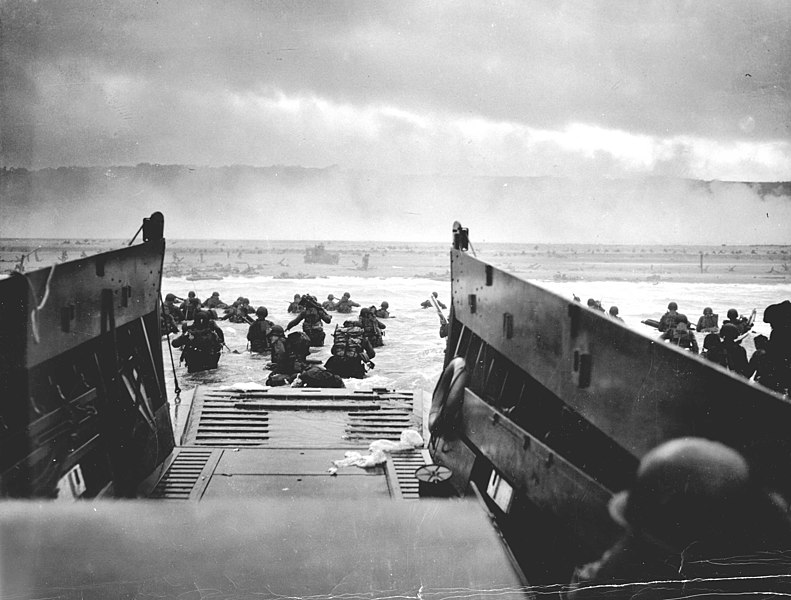
A 65-Year Memory: Not to Be Forgotten


One of the greatest wartime events in history was the Invasion of Normandy - D-Day - on Jun 6, 1944. It was the beginning of the end, as they say, of World War II.

One of the movies that deeply affected me in my high school years was the drama made about this- The Longest Day. It had a huge list of stars from Eddie Albert and Paul Anka, through Sean Connery and Henry Fonda to Rod Steiger and John Wayne.

Until Saving Private Ryan came along it was the ultimate story of D-Day. I can still remember the emotion and feelings in the early 60s to seeing D-Day pictures, whether in old pictures, newsreels or movies. It wasn't even quite 20 years after the event at that time. The reactions to it were still visceral, profound, stirring, and frightening. They were not history or on-screen drama. These were still recent events even for those of us who were born a few years later when the ones who could come home returned to build their American dream.

It's hard to recreate that. There has been nothing like it since- for which we should be grateful. So today, as we hopefully will take some time to pause and remember, may we also say a prayer that the day might come when we will learn war no more. I can think of no greater memorial to those who fought and died in that now long-ago war and in all the ones ever since.

Here's an old official video made about D-Day:

Friday, June 05, 2009

At Buchenwald

President Obama is not a clueless politician. He sure knows how to put together a series of visual and verbal events that, taken as a whole, give you a much broader picture than any one alone. Starting this trip in Saudi Arabia and then the speech in Cairo he called for a new way for America, and the West in general, to think about the Middle East and our life as people of a very fragile world.

Then today he went to Buchenwald with Elie Wiesel and stood in the stark place where thousands were treated as less than human by a regime that in its action called into question their own understanding of what it means to be human and part of the greater human race.

To this day, there are those who perpetrate every form of intolerance — racism, anti-Semitism, homophobia, xenophobia, sexism, and more — hatred that degrades its victims and diminishes us all.... This place teaches us that we must be ever vigilant about the spread of evil in our own time, that we must reject the false comfort that others suffering is not our problem, and commit ourselves to resisting those who would subjugate others to serve our own interests.... To this day there are those who insist that the Holocaust never happened, a denial of fact and truth that is baseless and ignorant and hateful.
A needed and excellent challenge to those who continue to minimize and even deny the Holocaust as historical fact. But on this day Obama's clear language and eloquence was surpassed by one whose eloquence about Buchenwald and what Buchenwald represents has been calling out for over five decades- Elie Wiesel.
As I came here today it was actually a way of coming and visit my father's grave -- but he had no grave. His grave is somewhere in the sky. This has become in those years the largest cemetery of the Jewish people.
As I read his words I could her his courageous voice that even as he looks like the memories are so close to the surface he will be twisted by them, he presents the challenge of hope that this will one day be a curiosity of a barbarism that humans forget how to do.
When I was liberated in 1945, April 11, by the American army, somehow many of us were convinced that at least one lesson will have been learned -- that never again will there be war; that hatred is not an option, that racism is stupid; and the will to conquer other people's minds or territories or aspirations, that will is meaningless.

I was so hopeful. Paradoxically, I was so hopeful then. Many of us were, although we had the right to give up on humanity, to give up on culture, to give up on education, to give up on the possibility of living one's life with dignity in a world that has no place for dignity. We rejected that possibility and we said, no, we must continue believing in a future, because the world has learned.
But alas that was not to be.
But again, the world hasn't. Had the world learned, there would have been no Cambodia and no Rwanda and no Darfur and no Bosnia.
But it may be, Wiesel keeps saying whenever anyone will listed. We must keep that hope or we will never be able to live with ourselves. It must be stopped.
You spoke of humanity, Mr. President. Though unto us, in those times, it was human to be inhuman. And now the world has learned, I hope. And of course this hope includes so many of what now would be your vision for the future, Mr. President. A sense of security for Israel, a sense of security for its neighbors, to bring peace in that place. The time must come. It's enough -- enough to go to cemeteries, enough to weep for oceans. It's enough. There must come a moment -- a moment of bringing people together.
Now put these words and these images together with what Obama has been doing and saying on this trip. Go ahead, try to wrap your mind around the amazingly paradoxical, never before seen images in a moment of great drama and history. He is trying very hard. He may even be betting his reputation and presidency on it.

Change we can believe in?

Oh, God, our Creator who must weep at every sight of Buchenwald or genocide or torture, may it be so.

May it be so.