The Tuning Slide is now Life In Tune

This post was originally written for the final post of the Following the 10th Armored blog at the 70th anniversary of the end of World War II. It is now the end of the 75th Anniversary. I have updated a few things, but it is generally as I wrote it five years ago.


I am honored to be your son, Dad.
Happy Birthday.
Thanks for your service and dedication.
This is the final post in this Buddy's War blog. Meanwhile I am in what is hopefully the final stages of putting my search over the past 10 years into a book, Buddy's War. It is a completely different task to write a book than a blog. It will have a different format and be a memoir of my search for my Dad and the lessons I have learned. I hope to have it published by VE Day in May of 2021. If you would like to be kept up-to-date on what I am doing, please follow the link below to sign up for more information.
This was from my blog series Following the 10th Armored when I followed them at the 70th anniversary of the end of World War II. It is five years later and we are at another Veterans' Day at the end of the 75th anniversary of that war. I have done a little bit of updating, but I present it here with an even deeper humility and awe at my Dad and his "greatest generation."


 | ||
 |  |  |
 | ||
I look at them
differently today. I had been told that he would often have nightmares
about the war in those days before it was known as PTSD. I can
understand a little more about it today. Being a medic in such a
horrifying place as the Battle of the Bulge would produce many traumas. I
am sure he tried to return to "normal" but must have found it
difficult. I remember his anger and wonder today how much of that might
have been made worse by the memories. I also know and have been told
that he was a caring person. He gave prescriptions on "credit" that had
eventually to be written off when he sold the store but 14 years after
the war ended.
In the health care of the 50s and 60s, my
Dad was also cared for by the VA. He spent the last 16 or so months of
his life in the chronic, nursing-type ward at the VA hospital in
Wilkes-Barre. His brain tumor prevented him from taking care of himself.
The VA did that for him and for us- his family. We received veterans'
benefits and college support. The whole atmosphere, the ambiance of
World War II was a unique and caring response. At least that is how I
saw it as a recipient of the care and support.
His generation is passing away. According to the National World War II Museum there are now approximately only 300,000 veterans remaining of the 16
million who served our nation in World War II.
My
Dad was among the older vets of his era, almost 39 when he arrived in
Europe in 1944. He died 51 years ago, not yet even 60. But the youngest
vets are now at least in their mid-80s. My generation is older than most
of them were when I was a teenager. We are losing that intimate contact
with an important piece of our American heritage and democracy. They
fought a war in which there was to us a clear example of evil spreading
across the world. Hitler and the Axis powers were terrifying, even to
many sitting in the relatively safe borders of North America. In what
may have been one of the more selfless acts in world history, 16 million
Americans went to fight for the world's safety and security. They
believed, a with a great degree of certainty that if they didn't, the
world would not be safe for any of us in this country or for freedom and
democracy. But they went and through grit and courage, fear and sheer
force of will were victorious.
And then they helped rebuild their former enemies.
Perhaps when history is written in another 75 to 100 years this will stand out as the greatest moment in American history. It's pretty damn close to it already!
I
have always known this at some level. One cannot grow up on the World
War II movies and documentaries, books and stories without being aware
of that. It is real today whenever I hear the marches of the different
military branches. "When the Caissons Go Rolling Along (U.S. Army Field
Artillery March)" still moves me.
This must be an open
book for generations to come. These WW II vets set a standard that is
not easy to match but their willingness to serve remains the archetype.
On
this Veterans' Day, 75 years after the end of World War II, I will
pause and give thanks for my Dad's service and for his generation that
gave us an incredible model to follow in serving. There are many things to remember, but this is one we forget at our own peril.
~~~~~~~~~~~~~
I will have one more post in this Buddy's War blog in eight days- my Dad's birthday. Meanwhile I am in what is hopefully the final stages of putting my search over the past 10 years into a book, Buddy's War. It is a completely different task to write a book than a blog. It will have a different format and be a memoir of my search for my Dad and the lessons I have learned. I hope to have it published by VE Day in May of 2021. If you would like to be kept up-to-date on what I am doing, please follow the link below to sign up for more information.

The war is over and O God just think of the mothers that their boys won’t be coming home.Today the underlying thought came out:
Got up at 9:00. Went to the store and cleaned. Got a letter from Buddy that he wrote on VE Day. So now I feel better.In the time between VE Day on May 8 and today, Beula spent some time with Ruth in Bethlehem, saw some movies, went out to eat, and seemed to be busier than usual. Yet for those 15 days she had no doubt been holding her thoughts, prayers, and fears deep inside. She never commented on it in the diary. The dread and anxiety must have been overwhelming, as it may have been throughout the whole time Buddy was overseas. We do learn how to live with such anxieties. Or perhaps in the past years, she had found a way to live without thinking about it. On May 22 she received a letter from Buddy, but it was written before VE Day.
Diary, Beula Keller Lehman
The only basic matter to be decided by the last offensive was not whether the Germans would be reduced to total defeat, but when. Given the stranglehold and almost mystic fascination that Hitler and his coterie exercised over the German people and the incredible loyalty of German military commanders to a regime that long had been discredited, perhaps it was inevitable that the end would come only when the nation was prostrate, almost every square inch of territory under the control of the victors. In those circumstances, whether the invaders insisted on unconditional surrender or came shouting mercy and forgiveness probably would have had little effect on the outcome.

Got up at 10-. It is cold so I did not do anything. Wrote to Ruth and Buddy. Received a box from Ruth- 2 shirts and 2 tea towels.
Diary, Beula Keller Lehman

 ✓ 6 April 1945
Marvin Tews T5 and Simon Smith Pfc — Missing in ActionTews was a surgical tech, like Buddy, and Smith was an aid man. I did some digging on the Internet and found that both these soldiers ended up as prisoners of war. They both were liberated and repatriated. Tews (26), from Minnesota, in October 1945 and Smith (23), from Michigan, in July 1945. They both lived into their mid-80s.

Noble Long Sgt. and Emmett Gilberts Cpl — Killed in ActionThe Morning Report gave no duty listing for either of these soldiers. They were the first, and only, killed in action from Company C during the war.
Joseph Vendittelli T4 — Slightly wounded in action. Lacerating wound, forehead. Not Hospitalized✓ 9 April 1945
- Joseph Vendittelli T4 — wounded in action. Penetrating wound, right foot, burns about face. Trfd to evacuation hospital✓ 10 April 1945
- George Tennant Pfc — Penetrating wound hand and arms. Trfd to hospital unknown
- William Cash Pvt — Penetrating wound arm. Trfd to hospital unknown
- Carl Kopp 1st Lt — Slight gunshot wound face and left thumb. Not hospitalized
Robert Gilbert Pfc and John Lower Pfc — Missing in ActionI don’t know the story, but both returned to duty seven days later on 17 April.
Gilbert, like Marvin Tews and Buddy, was a surgical tech. It appears that Lower was an ambulance driver.
Got up at 10-. Got ready for club. We had a nice time but Ruth called at 6 o’clock and said President Roosevelt had died at 4.30. It was an awful shock.
Diary, Beula Keller Lehman

Got up at 10-. Cleaned upstairs. Cleaned the kitchen. Wrote to Ruth. It is raining tonight. 9 o’clock and father is not home yet.
Diary, Beula Keller Lehman

As it drove into Bavaria, the division overran one of the many subcamps of Dachau concentration camp in the Landsberg area on 27 April 1945, earning it recognition as a liberating unit. (Link)As April ended they were in place for VE Day a little more than a week later. Perhaps the final indication of the reason they had been fighting was discovered on 27 April when portions of the 10th Armored liberated one of the many subcamps of Dachau. (Still looking for more information at this point.) Again, the epilogue to the Last Offensive section of Hyperwar says it best.
As the last offensive came to an end, few if any who fought in it could have entertained any doubts as to the right of their cause--they had seen at Buchenwald, Belsen, Dachau, and at a dozen other places, including little Ohrdruf, what awful tyranny man can practice on his fellow man. To erase those cruel monuments to evil was reason enough for it all, from bloody OMAHA Beach to that bridgehead to nowhere over the Elbe. (Link)• Sunday, April 29, 1945
Got up at 10-. Got dinner. Mrs. S. came in for a while. Wrote to Buddy.
Diary, Beula Keller Lehman

Listening to the "pastors" who have insisted that God will keep them safe in the pandemic- I was struck by how much it sounded like the temptation of Jesus that we always hear way back at the beginning of Lent.
Satan: Go ahead, Jesus, jump from the highest point of the Temple. God will protect you. Isn't that what scriptures say?Somehow I do not believe that God would want any of us to put ourselves in harm's way in order to test or prove the existence or love of God.
Jesus: It also says in scripture that we should not test the Lord, our God.The Coronavirus is that train coming down the tracks. It is the poisonous snake. It is the frigid winter air that can kill you. It may not be as easy to see or hear, but we have been told how to stay safe.
I never got to see him in person. But his music is among the greatest. Thanks to a remarkable songwriter. He told us what he would do today in a song. Enjoy. Laugh and cry as you watch.


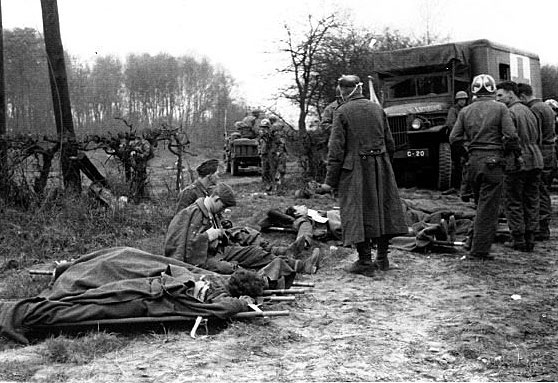
Well, they call you a battalion surgeon. I did no surgery, really. I was simply trying to save lives. They bring in the wounded to the Aid Station, first thing is to stop bleeding. And then give lots of morphine for pain. We used a lot of that, sometimes intravenously. And set fractures, and cleaned out the wounds, which were mess. Often they were filled full of dirt and debris and grass and torn uniforms. Cleaned them out good. Now we had no antibiotics in the days, except we had some sulfa powder. No penicillin. They had it back on base, in the hospital behind us, but we didn't have any. We'd sprinkle some sulfa in on the wound and put on a sterile dressing and pack it wide open and send them on back. We also gave tremendous amounts of blood plasma. We had no whole blood, but these were, we had cases of one bottle of sterile water packed under pressure and a bottle of blood plasma powder packed under vacuum. See, this was blood plasma with no red cells, but just dried protein part of the blood which gave the body and brought them back out of shock. They put these two bottles together with double ended needle and stuck the water bottle into the plasma bottle and in about 30 seconds you had a bottle of blood plasma. We put it intravenously and we gave that by the bucket full. We have hundreds and hundreds of those things in the Aid Station. And that would get them out of shock in a hurry and that's what saved lives time and again, was the blood plasma we had.
I had 32 men in my medical Aid Station and one officer, assistant battalion surgeon with me, another captain. Then these 32 enlisted men. Of those, 12 were company aid men. These guys lived up on the front lines with the company. [The aid men] would lie in the foxholes with the rifleman and they'd say "medic" and they'd run to the aid of the wounded and they would put on a doggone as good dressings I ever saw, lying on their bellies and the bullets going over their heads. How they did it, I don't know. Did quite a job. And then they would let us know in the Aid Station if there was some wounded up on the front line with walkie talkie radio we had. So I'd send up a litter squad, four men on a jeep, and a jeep driver, and he would take them as far as he could forward, then they would walk across the fields until they found the wounded man was. See, no helicopters then. So they'd put them on a litter, haul them back to the Aid Station and bring them back to me and we'd take care of them. So we had these twelve men on the front lines, eight litter bearers, two jeep drivers, and ten technicians to help me in the Aid Station. They would help clean wounds out, give plasma, all the rest, helped me a great deal in the Aid Station. That's what we had in our group.
Question: Now, how far were you from the actual fighting, in the Aid Station?We'd try to find a house to get into, or a shed, or something, because you couldn't work out in the cold. … So we got as close as we could to the front lines so we weren't under actual fire. Maybe about a quarter a mile behind the front line, something like that. And then we would go to work and they would bring the wounded into us on the Aid Station there. And once they were in good shape, we put them in the ambulance and send them back to the Collecting Company, the next group behind us, which is about five miles back. And then they would look them over. If they were okay then, back to the Cleaning Company, ten miles to the rear, and that was almost a small hospital, with a couple of surgeons. They could do emergency surgery if they had to at that time.
If they weren't badly wounded, they stayed in the Clearing Company for maybe a week or so, if they were back in good condition, send them back to the front. If they weren't, they would go on back then to an evacuation hospital or a field hospital, something behind maybe 30-40 miles to the rear and be taken care of there. And then, if even more badly wounded, they'd take them on back to England. And they might be there for a couple months, get them fixed up, then ship them back to the front, go back to duty. If they were badly hurt, send them on back home, sometimes, then too after that.
Oh no.
Question: Or did your men carry guns? You had no protection, then, really.No, we didn't carry guns because the Germans had signed what they called the Geneva Convention, in which they said they would not try to shoot at Aid people. So we all knew that and we had red crosses painted on our helmets on all the four sides. We had red crosses on our arms. Our jeeps carried red cross flags. I know that my life was saved many times by Germans not shooting at us. We didn't carry any weapons and they knew that. And often they had me in their sight, they wouldn't fire. It happened, I know, several times. I had been fired at, [?] one man took a shot at me and missed me by about four inches. That happened now and then, but usually they did not shoot at us. So we were safer to be without arms than to be carrying them.
[We] all were marked this way. Well, one time I just briefly mentioned this. I went behind lines by mistake one time. I was trying to find the Aid Station after I had gone back to check with the Collecting Company. I was coming back in the jeep and I missed a turn-off. I went back behind German lines by two miles, didn't know it. I came around a corner and down the road the German had a tank gun, pointing right at us, ready to fire the thing, the first tank or trunk that turned the corner. They didn't shoot. They saw the Red Cross flag on the jeep... they didn't shoot because we were medics... [and] all around us and the sides of us were little German soldiers digging foxholes, the guns right beside them. They looked up and wondered what was going on. Well, the driver jammed the jeep in reverse, went back up and around the corner and out of there, but they could have killed us, captured us, but they didn't, because they saw we were medical corps people.(Link)
Got up at 9.30. Went to the butcher shop. Baked. Had a letter from Buddy and Ruth. It was cool tonight.
Diary, Beula Keller Lehman
Departed Trier 1015. Traveled 10.9 miles via motor convoy to Lampaden, Germany. Supporting CCB. Arrived 1145. Set up clearing station and billeted troops. Weather fair. (MR)
Combat commands of the 10th Armored Division began passing through infantry of the 80th and 94th Divisions before daylight on 16 March. Although the Germans of General Hahm's LXXXII Corps during the night had formed a new crust of resistance sufficient to deny genuine armored exploitation for another twenty-four hours, no doubt remained among either American or German commanders as the day ended that a deep armored thrust was in the offing. (Hyperwar)
Left Lampaden 1630. Traveled approximately 8 miles via motor convoy to Kell, Germany. Arrived 1730. Set up clearing station and billeted troops. (MR)
Early on 17 March, the 10th Armored Division drove eight miles and seized a bridge intact over the little Prims River, last water obstacle short of the Nahe. (Hyperwar)
Left Kell 1115. Traveled 12 miles via motor convoy to Otzenhausen, Germany. Arrived 1400. Set up clearing station and billeted troops. (MR)✓ 19 March 1945
Left Otzenhausen 1440, Traveled 12 miles via motor convoy yo Wolfersweiler, Germany. Arrived 1540. Set up clearing station and billeted troops. Weather clear. (MR)
As worked out in detail by Patch and Patton, the two armies split the area between the Nahe River and the Rhine almost equally, with a new boundary running just north of Kaiserslautern and reaching the Rhine south of Worms. Patton nevertheless intended to take Kaiserslautern himself and then turn one infantry and one armored division southeast, deeper into Patch's zone, to link with the Seventh Army's VI Corps along the Rhine. Thereby he hoped to trap any Germans who might remain in front of the Seventh Army in the West Wall. That accomplished, Patton "would clear out of [Patch's] area."51 The plan presumed, of course, that the Seventh Army at that point would still be involved in the West Wall, but in any event, Patch apparently accepted the agreement with the same good grace earlier accorded the Supreme Commander's proposal.
It took another day before the effects generated by the heat began to show up on headquarters situation maps, but by 19 March a graphic representation of the Third Army's gains looked, in the words of Patton's colleague, General Hodges of the First Army, "like an intestinal tract."53 With the added weight of the 12th Armored Division (Maj. Gen. Roderick R. Allen), General Walker's XX Corps made the more spectacular gains. By midnight of the 19th, the 12th Armored was across the upper reaches of the Nahe and had gone on to jump a little tributary of the Nahe, more than twenty-three miles from the armor's line of departure of the day before. The 10th Armored Division stood no more than six miles from Kaiserslautern. (Hyperwar)
Got up at 10.30. It is raining.Changed the beds. Had a letter from Buddy. He is in Germany. Wrote to Ruth and Dora.
Diary, Beula Keller Lehman
Left Wolfersweiler 1125. Traveled 23 miles via motor convoy to Reichenbachsteegen, Germany. Arrived 1453, Set up clearing station and billeted troops. (MR)✓ 21 March 1945
Left Reichenbachsteegen 0845. Traveled 17 miles via motor convoy to Schopp, Germany. Arrived 1320. Set up clearing station. Billeted troops. Supporting CCB. (MR)
[The] 10th Armored Division [was turned] south and southeast into the Pfaelzer Forest. By nightfall of 20 March, two of the 10th Armored's columns stood only a few hundred yards from the main highway through the forest, one almost at the city of Pirmasens on the western edge, the other not far from the eastern edge. A third was nearing Neustadt, farther north beyond the fringe of the forest. The 12th Armored meanwhile was approaching the Rhine near Ludwigshafen. Not only were the withdrawal routes through the Pfaelzer Forest about to be compromised but a swift strike down the Rhine plain from Neustadt and Ludwigshafen against the last escape sites for crossing the Rhine appeared in the offing.
In desperation the Luftwaffe during 20 March sent approximately 300 planes of various types, including jet-propelled Messerschmitt 262's, to attack the Third Army's columns, but to little avail. Casualties on the American side were minor. Antiaircraft units, getting a rare opportunity to do the job for which they were trained, shot down twenty-five German planes. Pilots of the XIX Tactical Air Command claimed another eight.
In the face of the 10th Armored Division's drive, the word to the westernmost units of the XC Corps to begin falling back went out late on the 20th, and when the 42d Division, in the mountains on the left wing of the VI Corps, launched a full-scale assault against the West Wall late the next day, the attack struck a vacuum. Soon after dawn the next morning, 22 March, a regiment of the 42d cut the secondary highway through the Pfaelzer Forest. A column of the 10th Armored had moved astride the main highway through the woods and emerged on the Rhine flatlands at Landau. Any Germans who got out of the forest would have to do so by threading a way off the roads individually or in small groups.
By nightfall of 22 March, the Germans west of the Rhine could measure the time left to them in hours. (Hyperwar)

By March 23, the Third Army engineers were ready, and Patton, desperate to cross the great river before Monty, decided that his men should make a feint at Mainz and cross at once at Oppenheim. By daylight on the 23rd, six battalions were over the river for a loss of only 28 men killed and wounded, while other infantry and engineer units had crossed just to the north, at Nierstein, without opposition. Patton telephoned Bradley: “Brad, don’t tell anyone but I’m across … there are so few Krauts around there they don’t know it yet. So don’t make any announcement. We’ll keep it secret until we see how it goes.”
However, the Germans soon became aware of the crossings and after heavy Luftwaffe raids on the Third Army pontoon bridges during the day, Patton called Bradley again that evening: “For God’s sake tell the world we’re across … I want the world to know Third Army made it before Monty.”
In fact, the world already knew. At Bradley’s headquarters that morning, Patton’s representative had announced that the Third Army had crossed the Rhine at 10 pm on March 22, “without benefit of aerial bombing, ground smoke, artillery preparation and airborne assistance.” Clearly, this was a dig at Montgomery, who was using all these assets at that very moment to assist his crossing of the same river. (Warfare Network)
Clearing Section left Schopp 0900. Traveled 12 miles. Arrived Rodalben, Germany at 1000. Opened clearing station 1100. C.P. and remainder of company left Schopp at 1620. Traveled 32 miles via motor convoy to Annweiler, Germany. Arrived 2030. Set up clearing station and billeted troops. (MR)
 |
| Weekly Reflections on Life and Music |
Got up at 11. Did not feel so good. Wrote to Buddy.75 years ago today, the 10th Armored/80th Medical finished a four-day break in the city of Trier. In the two weeks prior to the break they had, as pointed out in earlier posts, cleared the Saar-Moselle Triangle, captured Trier, crossed the Moselle and did some clearing up toward Wittlich and Bullay. According to Nichols in Impact, they took the opportunity to do some sightseeing in Trier, the oldest city in Germany of the old Roman Coliseum and other ancient remains.
Diary, Beula Keller Lehman

✓ 24. MEDICAL COMPANY. For details of organization, see T/O 8-77. The armored medical battalion includes three medical companies organized and equipped to be self- contained. The primary function of the medical company is to assure prompt and continuous evacuation of forward medical units, and to render medical care to casualties evacuated. Each medical company consists of a headquarters, a collecting platoon, and a clearing platoon.In reading through the daily Morning Reports for Company C, my Dad’s company, there has not been any indication of three sections as listed above. I am sure there must have been some breakdown, especially considering there was a surgical team since my Dad’s duty was surgical tech. Whenever they would move, the Morning Report would almost always indicate that the “clearing station” was set up and then the troops billeted.
(1) This platoon consists of a platoon headquarters and two identical collecting sections. The platoon headquarters is equipped with a radio-liaison vehicle included in the group medical net (FM). It is capable of contacting all division medical units within range,
(2) This vehicle formally operates forward from the clearing platoon, contacting the aid stations and controlling and directing the ambulances of the medical company to battalion aid stations and casualty collecting points in the forward areas.
(3) Ambulances of the collecting sections operate forward from the clearing station to evacuate battalion aid stations and casualty collecting points established by the medical detachments.
Functions and operation. ( a ) This platoon is the nucleus of second echelon medical service in combat. The clearing station does not attempt surgical procedures better performed by specialized units of supporting medical elements. Its primary purpose is to perform emergency surgery, including amputation, to combat shock, to administer blood and plasma transfusions, tetanus toxoid, apply splints, and check dressings.The clearing stations employed mobile surgical trucks. According to the Army Medical Department History:
“Mobile Surgical Trucks” were truck-mounted ‘mobile’ operating rooms designed for temporary expansion of busy and overcrowded Hospitals! These units provided additional and self-sustained two-table operating rooms which could be utilized for all types of surgery. No additional burden was put on the Hospital, since the truck possessed its own autoclaves, surgical instruments, lighting, gloves, dressings, and linen. It must be noted that the Truck itself was only a means of transportation, while the ‘special’ Tent (carried in the trailer, together with the necessary power supply) provided with the Truck acted as the actual operating room.



Each surgical unit contains an operating table with operating lights, cabinets for supplies, instruments and sterile dressings, hot water heater with boiler, a supply of cold water, a sterilizing unit and facilities for ventilation and heating. Electric power is furnished by a gasoline-operated generator. Each surgical unit includes a specially constructed blackout tent to provide additional space for the treatment of casualties. One surgical unit has in addition the necessary items of equipment to treat gas casualties. In the event of an enemy gas attack, this unit operates for the emergency treatment of systemic symptoms incident to toxic gases and the emergency treatment of chemical burns. It is equipped to perform essential decontamination of personnel and equipment. (Field Manual)As I mentioned above, part of the reason we will see in the coming weeks for the splitting of the clearing station into platoons or sections (both words are used to describe them in the morning reports) is for the efficiency of collecting and clearing the wounded. The Field Manual makes sure this is covered.
An essential for the proper functioning of the clearing station is the ability to move on short notice. This capability is dependent upon whether the accumulated casualties are being promptly and continuously cleared from the clearing station by corps or army medical units. Constant liaison by the supporting medical unit is necessary to insure prompt evacuation of the clearing station. Liaison is established and maintained by the supporting medical unit charged with the evacuation of the medical company. (Field Manual)One other note during this brief break from the war from reading the Morning Reports:
Manygoats, Raymond Pvt. Reasgd and jd 13 Mar 45 from… HQ 53rd Reinforcement BN, 17th Reinforcement depot. MOS 303. Semi-skilled. Race Amer Indian. (MR)MOS 303 was the duty code for "hospital orderly."
President Roosevelt said at a news conference that as a matter of decency, Americans would have to tighten their belts so food could be shipped to war-ravaged countries to keep people from starving. (Link)
Got up at 10. Felt bad so I am not doing anything. Received a letter from Ruth. Wrote to her. It is a spring day.The 10th Armored and Company C of the 80th Medical Battalion remained at Trier from 2 March through 15 March. It was a clean-up time around and northeast of Trier. Originally, Nichols tells us, the plan was that the 10th just clear the Saar-Moselle Triangle. Their efficiency and speed achieving that goal led to the capture of Trier as well. That then was to be the end of the mission until the actions of Col. Richardson’s Task Force captured the Romer Bridge. Again the combat operation was extended to crossing the Moselle and heading north to Wittlich.
Diary, Beula Keller Lehman

“undefended and sheltered 3,000 wounded Germans.” But when Task Force Chamberlain entered Schweich, they fond a devastating array of 88s, [88mm German anti-tank and anti-aircraft gun, perhaps the best overall and most feared of the German arsenal] mined streets, and instead of 3,000 wounded- they found but two German casualties. Nettled by the big lie, the tankers quickly seized Schweich. Shortly afterward, the acerbic Germans rained a steady stream of shells into that “open city”… resulting in heavy Tiger casualties there as the bombardment took its toll.11 March- after two days of fighting the TF had neutralized the German threat and they returned to Trier.
Got up at 10. Changed the beds. Washed some. It is a rainy day.Reflections
Diary, Beula Keller Lehman
My horizon was quite limited. The war fought in division, corps, and army headquarters, where personal danger and discomfort were slight, was one of maps and lines and pins and shifting troops here and there- more like a fascinating game of chess. But the war I saw was one of mud and discomfort and suffering and death and terror and destruction.I have the advantage of books and the Internet to put these stories in some semblance of order. As I read I can find out what happened when and in what order. Even in Nichols’ somewhat over-hyped prose, it all sounds clear and directed. I also know the end of the story. Through it all, though, I keep looking for ways to describe what my dad was going through. This quote does it as well as any. I am sure that the “mud and discomfort and suffering and death and terror and destruction” McConahey describes were real for Dad. Perhaps the transformation in him that war must exact on one’s soul, was why he may have been “Buddy” to his mother, but he was no longer simply a mother’s son.

