Showing posts with label peace. Show all posts

Sunday, January 07, 2018

Spirituality as Resistance: Proclamation


Epiphany Sunday
January 7, 2018
Proclamation as Resistance


Preaching is effective as long as the preacher expects something to happen-
not because of the sermon, not even because of the preacher,
but because of God.
— John Hines

I come to the end of this Advent to Epiphany series of Spirituality as Resistance. There were the four weeks of Advent:
  • Hope
  • Love
  • Joy
  • Peace
Then the Christmas season:
  • Humility
  • Light in the darkness
  • Sacrifice
  • Sacrament
Yesterday, Epiphany was
  • Revelation
As a result of all of that, these nine themes have been building on each other. They interweave
  • who we are with
  • who God is and then on to
  • who God wants us to be.
We ask the final question of this series:
What good is all that hope and love, light and revelation if we don’t with humility and peace take the sacrifice and joy and
  • Proclaim
It?

Easy for me to say. I am an independent, retired preacher who proclaims here, on a lonely blog that most days probably gets fewer readers than I ever had sitting in the pews when I was preaching. I am not dependent on you or any of my readers for my salary. I can say pretty much what I want, filtered through my own bias and spirituality. If you don’t agree with me you can leave a comment, or just not come back to see what else I have to say.

So I go ahead and proclaim my resistance. When I was still in the pulpit I would often temper what I was going to say so as not to offend those of different opinion. I might not speak out against the oppression or non-Christian stands of people in power or government. Not only did they pay my salary, they were also my friends. Therefore I had to find ways to say what I wanted to say that would not push friends away or even turn them into adversaries. What good would that do? It was a fine line and a tightrope down the center of a busy thoroughfare, to mix all kinds of metaphors.

Perhaps I didn’t always trust that God would work as fully as I wanted things to happen. Perhaps I wanted to make sure that I would be around to preach for longer than just that one sermon. But when not in the pulpit- hence when it could be a conversation and not just me speaking- we could have discussions on disagreements. I could find ways to proclaim what I felt- and feel- was and is the Good News when sitting face to face with these friends and agree to disagree while still respecting each other. Brene Brown in her latest book, Braving the Wilderness, talks about getting close to people as a way of overcoming division. She points out that most of us can name people who have very different opinions from ours with whom we can maintain friendships. Many of us know that all __________ are wrong, can’t be trusted and are not worth my time, except for _____________ who is my friend. (Fill in the blanks. It goes in all directions.)

The past year has severely tested those opportunities for many of us. Polarized opinions shut off debate as well as discussion. Proclamation becomes “my way or the highway.” I did some of the dialogue at times with mixed results. It was tiring, even spiritually draining. Even moderate statements could raise tensions on both sides. But it is in maintaining the possibility of discussion and dialogue that we may be proclaiming our views in the clearest way possible. When we say that we need to have a discussion and not a diatribe, we proclaim our personal values of acceptance of the others. We make a clear statement of who we are when we can embrace our friends with differing ideas even when they may be proclaiming something entirely difficult to hear.

There is always something about proclaiming love in what we do and who we are.

That, after all, IS what we say God did in Jesus.

~~~~~~~~~~~~~~~~~~~~~~~~~~~~~~

What next? I am regrouping for Lent at this point. It’s not that far away- just 38 days. Ash Wednesday is on Valentine’s Day this year. (What a great metaphor to begin the season of reflection!) Over the past six weeks I have been working through a couple of spiritual readings, Falling Upward by Richard Rohr and some of the writings of Thomas Merton. They highlight the inward journey I have found myself traveling in the past year or so. I may take Rohr’s book and do some riffing in good jazz style on what that means in this day and age, building on what I have been writing about since the Dark Night of the Soul posts last year. In any case, keep watch for what’s next. Let me know what you think. Have a wonderful month until Lent.


Saturday, January 06, 2018

Spirituality as Resistance: Revelation


Epiphany
January 6, 2018
Revelation as Resistance


Unclench your fists
Hold out your hands.
Take mine.
Let us hold each other.
Thus is his Glory Manifest.
-Epiphany, Madeleine L’Engle


An epiphany is
  • a usually sudden manifestation or perception of the essential nature or meaning of something.
  • an intuitive grasp of reality through something (such as an event) usually simple and striking.
  • an illuminating discovery, realization, or disclosure.
    • For the essential nature or meaning of something to be revealed is revolutionary and changes everything.
    • To get an intuitive grasp of reality through some simple, yet striking event, pushes back against the status quo.
    • To experience a truth that lights up our lives and the world empowers us to stand up and resist what needs to be challenged.

But what is it that is revealed on this day? What is so striking about today that it should make the state quo defenders tremble? What is the truth that empowers us to resist?

We answer this in the Christian year as the story of the day the Wise Men arrive. While popular culture has combined that with the Christmas Eve narrative, they stand far apart. Mary and Joseph have Jesus in a house now. The angels now bring warning to the travelers instead of tidings of joy. They participate in God’s conspiracy against the government of Herod- they sneak away by another route. That story is a clear instance of resistance and rebellion. It is not to turn Herod into a “believer” or make Judea or Rome a “Christian” place.

The days of Christmas have come to an end. It is Epiphany. All has been revealed, at least for now. Suddenly it is all clear- kind of.

And what is that we now know either more deeply or for a first time or in an entirely new way?
  • The essential nature is not power, but humility and poverty and love.
  • Reality is the birth of a baby being worshipped by the rich and powerful foreigners under the very nose of the King.
  • The truth is that God’s ways are not our ways since none of this makes any sense in the work and ways of this world’s powers.

In such times and with such knowledge Madeleine L’Engel’s words prod and push us into a different understanding.

  • The clenched fist of hatred and discrimination is not what God wants, unless it is seen in the helplessness of an infant reaching for love.
  • The ways of God are not the actions of racism or greed but rather the open hand reaching to grab the fist of the powerless and downtrodden.
  • The light of God illuminating us is knowing that none of us is a stranger to God who knows us more fully than we can ever begin to describe.
  • The empowerment found in the revealing of God among us allows us to stand together, holding each other tight with hope.
In that is the glory of God made visible.

Monday, January 01, 2018

Spirituality as Resistance: Sacrament


New Year’s Day
January 1, 2018
Sacrament as Resistance


God is always coming to you in 
the Sacrament of the Present Moment.
Meet and receive Him there with gratitude in that sacrament.
— Evelyn Underhill

When I outlined these reflections for Advent to Epiphany I wasn’t sure what to say on New Year’s Day. Sure, I could ramble about new beginnings, learning from the past and moving on, working with a clean slate, making resolutions, keeping (!) resolutions, etc. None of it felt right so I kept it open until about 10 days ago when I came across the quote above from one of the great spiritual writers of the 20th Century, Evelyn Underhill. Suddenly the talk of past and future paled in comparison to the “Present Moment.” But it is not just any present moment, it is THIS Present Moment when we have the opportunity to welcome God into our lives- and our lives into God’s presence.

This is a sacrament:
  • a visible sign of an inward grace,
  • a visible symbol of the reality of God, as well as a means by which God enacts his grace,
  • Sacraments signify God's grace in a way that is outwardly observable to the participant.

Jean Pierre de Caussade introduced the idea of the Sacrament of the Present Moment in the late 17th, early 18th Century. It is in abandonment to the Divine Providence that union with God becomes real. It is when grace grows within us. It wasn't published for many years after his death, but has come to be a classic of spiritual guidance.

Notice that grace is a common theme here! When God is present, so is God’s grace. The sacrament of the Present Moment opens that possibility no matter where we are.

Talk about rebellion and resistance to the ways of he world!
    • Abandonment? Forget it. Unless you are talking about blindly obeying the words and dictates of the nation state, of course!
    • Grace? A free, unearned gift? Not for me. I’m no freeloader- even on God. I’ll earn my way, thank you!

Today is not a day, then, to look back in pain or nostalgia. It is better a time to remember when God’s grace flowed into my life in the past year; or maybe the times that grace pushed me out of the door of my own self-imposed box and helped others find grace. It is also a time to inventory the times when I closed the door and windows of my spiritual house so that I wouldn’t be disturbed by the cries from those in pain or terror, need or healing. Then it becomes a time of confession and making amends.

Today is neither a time to look ahead in some dim sense of a nebulous hope, filled with resolutions of what I want to do in the next 12 months. Instead maybe it is a day to just welcome the presence of grace into my life; to abandon me soul into God’s presence and seek the power to live it- today- so that I can be stronger tomorrow.

All sacraments are rebellious; all sacraments challenge the powers that be. Even in my tradition of two sacraments, they cover the gamut of life with grace.

At baptism:
  • Therefore live! Yet, not you, but Christ live in you. And the life you live, live by faith in the Son of God who gave himself for you.
At the Eucharist:
  • As often as you eat this bread and drink this cup, you proclaim the Lord’s death, until he comes!
Today:
  • The present moment holds infinite riches beyond your wildest dreams but you will only enjoy them to the extent of your faith and love. The more a soul loves, the more it longs, the more it hopes, the more it finds. The will of God is manifest in each moment, an immense ocean which the heart only fathoms in so far as it overflows with faith, trust, and love.
    -Jean Pierre de Caussade

That truly makes for a Happy New Year as well as the promise of each new day. Resist the nostalgia of “the good old days” and the promise of some time when all will be “great again.” It is today, as each day, that the grace of God is alive.

Sunday, December 31, 2017

Spirituality as Resistance: Sacrifice


The Sunday after Christmas
December 31, 2017
Sacrifice as Resistance


Human progress is neither automatic nor inevitable... Every step toward the goal of justice requires sacrifice, suffering, and struggle; the tireless exertions and passionate concern of dedicated individuals.
— Martin Luther King, Jr.

In the church calendar the days after Christmas are not filled with peace and joy. First, on the 26th was St. Stephen’s Day. He was the first martyr as told in Acts, chapter 7. He was quizzed, tried, and killed for preaching and believing. Then, two days later on the 28th was Holy Innocents, the remembrance of Herod ordering the slaughter of all male children under two in order to stop this new King of the Jews. (Matthew 2: 13-18). Maybe that’s why the days after Christmas find so few people in church? Maybe they don’t want to lose the pink cloud joy and warm fuzzies of the season. But this is what happens when you follow the church calendar- you are reminded of the world into which this Prince of Peace was born. The light in the darkness that we celebrated on Monday did not suddenly and miraculously turn things around.

Two thousand years later we continue to struggle with that as well. There are innocents being killed today. Columbine, Sandy Hook, Las Vegas are just new names and places added to the seemingly never ending list while many even refuse to debate ways to deal with it. Racism and poverty prevent many from discovering their hopes and dreams. Terrorists of all kinds aim at non-combatants since that is the way to undermine the will of those they oppose. In many places around the world those who speak out for change or justice are shouted down, demeaned, and from time to time, killed. While in many ways we are living in a better world than could have been dreamed of 2000 years ago, much of it is still in need of progress and hope.

But after Christmas we are no longer just a people of hope, who have been loved, found peace, and are filled with joy. We now become the light in the darkness. That is what it means to be a follower of the ways of God. We are not to just sit and let the blessings flow onto us. We have received the light; now we live the light. We would like to think that all we have to do is wait and pray and it will happen. We would like to believe that if we do the right (or wrong!) things that God will intervene and make it happen. The illogic of that can show up in more ways than we can catalog. A paraplegic is told they don’t have enough faith or God would have given them back the ability to walk. A woman in an abusive relationship is told she has to stay with her husband/partner since that is how God would witness to the other. We can push tensions in the Middle East so that the Second Coming will happen faster.

That is not how progress and justice happen. It happens, as Dr. King’s quote says, through sacrifice, suffering, and struggle. These are the ways of Christmas- the tireless exertions and passionate concern of dedicated individuals- God’s people.

The prophet Amos (5:23-24) challenged God’s people to live, not just sing, to practice justice not just pay lip service:
Take away from Me the noise of your songs; I will not even listen to the sound of your harps. But let justice roll down like waters And righteousness like an ever-flowing stream.
Another prophet, Micah, (6:8) echoes it so poetically that the depth and challenge can be missed:
He has told you, O man, what is good;
And what does the LORD require of you
But to do justice,
to love kindness,
And to walk humbly with your God?

Isn’t that what we have been discovering throughout these past weeks of Advent?
Hope,
reaching out with unconditional love,
fills us and others with joy
so that peace is found within and around.
Then, in humility we respond to become part of this call of God, and
we become bearers of light pushing back the darkness.
Because of that we sacrifice and stand up for justice.
As I have said a number of different ways this past month, resistance is not passive; non-violence is not a call to be a doormat. It is a way of life that puts the inner life together with our outer life. It melds us into a unity of purpose and hope. Then we live it. Again, and again, and again I say- we live it. It will do far more than bring some physical light and warmth to the darkness of winter, it will be our way of affirming the ways of God- however we may each understand God- allowing us to find the deaths of grace.

How better to end the year and the Christmas season of posts than the amazing words of poet, author, theologian, teacher, and mystic Howard Thurman:
When the song of the angels is stilled,
When the star in the sky is gone,
When the kings and the princes are home,
When the shepherds are back with their flocks,
The work of Christmas begins:
To find the lost,
To heal the broken,
To feed the hungry,
To release the prisoner,
To rebuild the nations,
To bring peace among people,
To make music in the heart.

Monday, December 25, 2017

Spirituality as Resistance: Light in the Darkness

It has always been one of the core beliefs of my faith that resistance to the world’s ways is at the heart of the Judeo-Christian ethic. It may also be at the heart of other faiths, but this is the one I know best and am steeped in. Between now and Epiphany Sunday on January 7 I will take one of the traditional themes of the season and relate it to our present day resistance to some difficult and troubling things happening around us. I don't believe we are to withdraw from the world, but rather engage with the world (in, not of the world) with the Word in mind.


Christmas Day
December 25, 2017
Light as Resistance


Rage, rage, against the dying of the light!
- Dylan Thomas

I wonder if people at the time of Jesus’ birth felt hopeless? Were the “good, old days” the vision they kept in their mind? Might they have said these things?
• Remember when our people were led by Moses? No one like him since.
• Remember the bravery of the Maccabees reclaiming Jerusalem? Where are they now when we need them again?
• Remember the way Isaiah and Jeremiah had such great contact with God? Why are our religious leaders so dishonest now?
• Remember when Judea was great? Who will make us great again?
As a result of being human, did they believe that the world was winding down into some kind of darkness?

It wasn’t physically any darker than it had ever been. Bethlehem on the first Christmas was as dark as ever. The fields where the shepherds were quietly taking care of their flocks was as dark as any such night might be. The manger was as surrounded by darkness as it would always be in the middle of the night. Light came only from oil lamps or torches. Defeating the darkness was one of those basic human drives whether by campfires and torches or today’s LED flashlights and streetlights blocking the light of moon and stars.

We 21st Century westerners have little to no idea about such darkness. Or at least not exterior darkness. We have conquered the outer darkness and hidden the stars from view. The darkness we often rage against is an inner darkness found in our hearts and the actions of others. We may argue whether the times are any darker than they have ever been or what to do about it. We may disagree about how that darkness manifests itself. The past year has seen many examples of darkness attempting to conquer the light many of us believe God has placed in the center of humanity.
• Terror in Las Vegas, Fort Lauderdale, and Manchester.
• Devastating historic-level hurricanes.
• Threats of nuclear attacks.
• Ravaging wildfires.
• The rise of white supremacists and neo-Nazis.
• Terror in the Bronx, Barcelona, and Manhattan.
• Sutherland, Texas murders.
• Attack on congressional ballgame.
We have experienced a daily onslaught of tweets and counter-tweets, the seemingly unending attacks on social programs aimed at helping the least and the lost, the regular twisting and spinning of news to fit “my” ideologies, the degradation of science as a way of understanding our world, the misuse of the title “Christian” as a political “big stick”, and smaller, but just as hurtful, abuses and assaults on decency and character.

But we are also growing and improving.
  • The amazing shift in dealing with sexual abuse and harassment is causing a long hoped-for movement into honesty, empowering women to speak out. 
  • The Women’s March in Washington started that movement and gave it early momentum. 
  • The election victories in Virginia and Alabama have given many an awareness of what can happen when people do get out and vote. 
  • The solar eclipse was a cross-country unity of awe. 
  • The many pictures of individuals reaching out to strangers in the midst of terror and destruction reminds us that we are better than the headlines might indicate.

It would be easy at the end of this year to be sad, discouraged, or even angry. To do so would be to surrender to the power of the darkness. Most, if not all, myths and cultural foundations remind us that to do so is counterproductive. From the "Odyssey" to "Star Wars", light does find a way to win. We get that image from simply watching a sunrise- or just turning on a light in a dark room. One cannot turn on a darkness switch. It does not work that way. We can hide the light, put it under a covering or a basket, but there is still light and it shines somewhere.
  • Let it shine and defeat the darkness.
Dylan Thomas may have written the above words when his father was going blind and dying, but they are words to be read each day when the darkness surrounding us seems to be getting stronger. It is not. The light must not be allowed to dim. To “rage against the dying of the light” is to shine more brightly ourselves, to affirm what we have already celebrated through Advent:
  • Hope
  • Love
  • Joy
  • Peace.
To live these each day is to push back against the darkness.

One commentator on the web forum Quora said this about Thomas’s poem:
It is a strong invocation for us to live boldly and to fight. It implores us to not just "go gentle into that good night," but to rage against it. Even at the end of life, when "grave men" are near death, the poem instructs us to burn with life. The poem's meaning is life affirming.
-Quora
Light is not just resistance, it is the way resistance works. It is a light in the darkness, a word to break the night into a place of revelation, an action to push for life. Always for life!! As long as there is light, there will be the promise and hope of life.

Christmas is the Word become Flesh and the light shining in the darkness, breaking through hate and fear, despair and greed.

Sing it loud, let it shine.

Merry Christmas!

Sunday, December 24, 2017

Spirituality as Resistance: Humility

It has always been one of the core beliefs of my faith that resistance to the world’s ways is at the heart of the Judeo-Christian ethic. It may also be at the heart of other faiths, but this is the one I know best and am steeped in. Between now and Epiphany Sunday on January 7 I will take one of the traditional themes of the season and relate it to our present day resistance to some difficult and troubling things happening around us. I don't believe we are to withdraw from the world, but rather engage with the world (in, not of the world) with the Word in mind.


Christmas Eve
December 24, 2017
Humility as Resistance


In a very real sense not one of us is qualified, 
but it seems that God continually chooses 
the most unqualified to do his work, to bear his glory. 
If we are qualified, we tend to think that we have done the job ourselves. 
If we are forced to accept our evident lack of qualification, 
then there's no danger that we will confuse God's work with our own, 
or God's glory with our own.
― Madeleine L'Engle, 

We seek power in a savior and instead are guided to a lowly manger. A baby has been born who, we are told, will throw the great from their thrones and let the oppressed go free.

We expect strength and self-assurance when God becomes human and yet we are told he is in a small out-of-the-way place like Bethlehem of Judea. A baby cries, like any baby, intuitively knowing that when they do that they will be heard.

We watch for armies and weapons to come to take the world back for God yet the most defenseless of humans is where we are led. A baby whose arms can hold nothing and whose legs can’t stand on their own is the unarmed Prince of Peace.

The paradox of Christmas is nowhere more apparent than tonight. The great sounds of music will peal with bells and instruments to proclaim a holy miracle. Pomp and pageantry will be the order of the night from all corners of the Christian faith. It will be anything but a sign of resistance. It may even look like the ceremony, spectacle, and trappings of worldly powers will have co-opted the night. Christianity has conquered the world. We dress up in our finest clothes, we venture into our places of worship to pay our yearly respect for something beyond our understanding, but still underpinning our hopes.

This is not a night known for humility- as resistance, revolution, or anything else.

But in that is the paradox we can so easily overlook. Mary’s song months before the birth talked about that:

…he has scattered those who are proud in their inmost thoughts.
He has brought down rulers from their thrones
but has lifted up the humble.
He has filled the hungry with good things
but has sent the rich away empty. (Luke 1: 51b-53)

Perhaps our first act on this night is one of confession for what we have turned this night into. But I think that would also miss the importance of the displays and ceremony. They are not just for us, they are for the world to see. They do not proclaim our greatness, they scatter the proud and bring down the powerful. They lift up the humble- the hungry and lost, the lonely and least with the hope, love, joy, and peace that we have been seeing throughout Advent. A little child IS leading us- a baby who has no choice but to be powerless and dependent, a baby who doesn’t know the word proud or control or self but who can only cry an unknowing cry.

It is when we are willing to live within the paradox of a humble baby who is God become flesh, that we can start to understand who we are. No, maybe it is not about understanding for if we could truly understand this night’s miracles, it would no longer be a night of miracles. By definition we cannot understand or explain what this night is about- other than perhaps to humble us for we, too, are the proud who need tone cast down from our self-made thrones where we have inaugurated ourselves as the saviors of the world.

There is the beginning of humility as resistance. To become as a little child in order to grow into a spiritually mature person of soul. “God humbled himself,” Paul said in Philippians. How can we do anything else.

  • Tonight, meditate on the presence of God in our world.
    • As a child.
  • To show us how important it is to simply be human.
    • Humility.
These are the few ways we can practice humility:
To speak as little as possible of one's self.
To mind one's own business.
Not to want to manage other people's affairs.
To avoid curiosity.
To accept contradictions and correction cheerfully.
To pass over the mistakes of others.
To accept insults and injuries.
To accept being slighted, forgotten and disliked.
To be kind and gentle even under provocation.
Never to stand on one's dignity.
To choose always the hardest.
― Mother Teresa

Spirituality as Resistance: Peace

It has always been one of the core beliefs of my faith that resistance to the world’s ways is at the heart of the Judeo-Christian ethic. It may also be at the heart of other faiths, but this is the one I know best and am steeped in. Between now and Epiphany Sunday on January 7 I will take one of the traditional themes of the season and relate it to our present day resistance to some difficult and troubling things happening around us. I don't believe we are to withdraw from the world, but rather engage with the world (in, not of the world) with the Word in mind.


4th Sunday of Advent 
December 24, 2017
Peace as Resistance


While you are proclaiming peace with your lips,
be careful to have it even more fully in your heart.
― Francis of Assisi

We have come from hope to love and joy. As we end our Advent journey this morning these three move us to the heart of the matter, I believe, no matter how we look at it. We come to peace.

  • Peace, not as the absence of conflict but the presence of serenity.
  • Peace, not as a compromise ending discord, but a way of life that impacts others.
  • Peace, not the result of violence, but as a foundation of unity.
  • Peace, not the privilege of dominance over others, but as the seed of embracing God’s love for ourselves and others.

  • In a world of conflict, peace is an act of revolution.
  • In a world of war and violence, peace is resistance to the ways of the world.
  • In a world where many seek dominance, peace is to be willing to be powerless for the sake of others.

  • It was but a few decades ago when many marched and pushed for peace we were called traitors.
    • That was peace as resistance.
  • Gandhi preached nonviolence as the way to bring about a major societal change.
    • That was peace as resistance.
  • Martin Luther King, Jr. followed Gandhi’s lead to break through a century of post-slave era discrimination.
    • That was peace as resistance.

As Francis reminds us to have peace on our lips without living it from the heart is to shortchange the meaning of peace. It also keeps us from finding the way into deeper hope. We deprive our world of what we have to share and may even cut off the path to peace.

There is no path to peace,
but peace itself is the path.
― Richard Rohr

One cannot find the way to peace. The peace leads us on the path. Peace is not something that we can build, but something we discover as we walk a path that in itself is peaceful. It is one of the great paradoxes of life that the harder we work for peace, the more we depend on power and control to find it in ourselves, the less peace we will have. That, too, is an act of resistance since it seems so counterproductive to the ways we are told to live. There has to be a willingness to surrender to peace before we can find it.

Being a person of peace does not mean that one becomes a doormat or a victim who has no power. Power comes in living as a person of peace. Peace is not passivity. Sharing a life of peace is active and empowering. When one lives in peace, it can be seen that hope, love, and joy are present. Peace is standing in place when chaos erupts. Peace is knowing the way, the truth, and the life. Peace has discovered an inner source of wonder and direction that the world cannot overcome.

Tonight we begin the season of Christmas. It is a season when peace is proclaimed by angels in the fields of Bethlehem and in the cries of a newborn. It is a season when peace is proclaimed and for a brief period we may begin to believe, again, that peace is possible.

More than that, it is the final Advent call to move forward with the hope we have discovered, the love that loves us unconditionally, the joy that overcomes doubt.

Tonight will be the night when we are reminded that the ways of the world are turned upside down.

We are ready. Advent comes to a close.

O come, O King of nations, bind
in one the hearts of all mankind.
Bid all our sad divisions cease
and be yourself our King of Peace.


Tuesday, September 19, 2017

For Today- and Every Day


Complete annihilation of any nation is anything but a good Christian value- or a value of any kind. The results of such an action, whether with conventional or nuclear weapons, would be nothing short of one of the greatest war crimes ever carried out.

But all I can do is make this a daily prayer!

Friday, March 24, 2017

Wouldn't It Be Nice?

Been spending some time on our trip back to Minnesota doing sightseeing and touristy things. I will most likely write about them in more detail in the coming weeks and months. Earlier this week we went to the National World War I Museum in Kansas City. It is a must see if you are interested in American and world history. But all I want to say today is that it would be great if this sign could be put on all armaments and items of destruction everywhere for eternity.


We should never be naive, but we should also never stop praying AND working for peace.

Tuesday, February 28, 2017

6. The Dark Night of the Soul- Through and Beyond

Many of us might be saying as we move through these dark night times:

  • This is impossible.
  • I can’t do anything about what’s happening yet it keeps me awake at night.
  • How can I have a good dialogue with others?
  • I don’t have the energy to do what can be done.
  • I can’t find a reason to hope somedays.

This does look and feel that way. A local church has had a statement on its outside sign for over a month now…
Hope in an apocalyptic world.
Says it all. Everything is falling apart. The end is near.

And yet, an apocalypse, in Christian tradition, is not just a cataclysmic destruction- it is a prophetic revelation of what God is going to be doing. And that brings us back to the Dark Night of the Soul and the journey with God.

Here are the ultimate questions, for me at least, in this series of the Dark Night:
How then does one live after the Dark Night? What is the result of this journey when we get through it?
John Drury in an essay titled The Spiritual Theology of St. John  of the Cross says:
The dark night of sense not only overcomes evil but also infuses good into the soul.  It gives knowledge of self and one’s misery.  This makes it possible for the proficient to have courteous communication with God.  The gift of knowledge extends beyond oneself to God’s grandeur and majesty.  Knowledge of human lowliness and divine greatness produces genuine spiritual humility, from which stems love of neighbor. 
The fruits of this journey are humility, knowledge, virtue, and love for God and others. -Link 
Beyond that, John of the Cross doesn’t give us much of an answer. One of the more common criticisms of him is that he doesn’t deal with the every day life of a person who has experienced the union with God. Part of the reason for that is simply that such a union does not fully occur in this life. The contemplative life, one built in prayer and meditation is powerful and may even feel good. But if it doesn’t have an impact on how we live and what we do in this life, does that mean, then, that the life after the dark night is one of simply waiting around to get to heaven?

I don’t think so. One of the reasons I don’t believe that is true is simply from my experience and the experience of others in dark night situations. I return to the spiritual journey and tools that have led me and many others- the Twelve Steps of Alcoholics Anonymous and their basic text, often referred to as the “Big Book.” In chapter 5, “How It Works”, the paragraph following the listing of the Twelve Steps says:
Many of us exclaimed, "What an order! I can't go through with it." Do not be discouraged. No one among us has been able to maintain anything like perfect adherence to these principles. We are not saints. The point is, that we are willing to grow along spiritual lines. The principles we have set down are guides to progress. We claim spiritual progress rather than spiritual perfection.
How then do we maintain the spiritual journey once the dark night has shown us our powerlessness and our need for a “higher power”? After we have cleansed our souls, made it right with others, and taken responsibility for our own actions, then what? When we recognize our own imperfection and perhaps even knowing or unknowing participation in the darkness, what can we do?

Step 11 says that we continually seek awareness of our higher power’s will- and ask for the power to do it. We do this through regular practices of prayer and meditation. There are some principles behind that, of course.
Honesty
Open-mindedness
Willingness
With these come humility and acceptance of life on life’s terms.

In order to do that there are some practices that we can develop.
Dr. Amit Sood of the Mayo Clinic who was one of my mentors a few years ago, says that we need to develop spiritual practices that help keep our lives as stress free as possible. The more stress, the more likely we are to veer away from the better ways of the spiritual life. It always starts with working on ourselves- the only person we can truly change. On his blog, Dr. Sood lists some practices that help in our daily self-inventory and discovery of acceptance.
Pick one of the practices noted below for today, or create one of your own.
    •    Today, I will consider that most people around me have good intentions.
    •    Today, I will try to gain a complete perspective before making any conclusions.
    •    Today, I will try my best to look at well-meaning intent in a previous situation where I got hurt.
    •    Today, I will keep good intentions all day long.
    •    Today, I will forgive myself for a previous unhealthy thought.
    •    Other: (create your own)
Another idea from Dr. Sood is to get in the habit of picking a “theme” for each day. Start the day with an awareness of the theme and then look for ways to live that throughout the day. He lists the following:
Monday- Gratitude
Tuesday- Compassion
Wednesday- Acceptance
Thursday- Higher Meaning
Friday- Forgiveness
Saturday- Celebration
Sunday- Reflection
This kind of discipline can help keep us grounded in our spiritual lives. It can remind us on a daily basis that we can make a difference by how we live and treat others. What the Dark Night leads spiritual people to is a position of witness. Perhaps at times these witnesses are in the form of being the source of repentance for ourselves and our nations.

I come now to some of the ways we can apply these to our current situation- the one that triggered this dark night in the first place. Many are still struggling with the election and its real life consequences on many people. What is interesting to me is that many of those who are feeling this way are doing so out of a real concern for others.
  • We see issues of racism and intolerance- dangerous and toxic ideas that seriously undermine who we are as a nation. 
  • We see issues of people possibly losing health care or much needed Medicare or Social Security benefits. For a nation that says it cares, this is a disaster. 
  • We see the wealthy 2% getting breaks while the potential for fewer benefits for those who can least afford it is real. For a people who claim democracy and equality, this is a witness against us. 
  • We see refugees and immigrants lumped into religious-based prejudice from people who can’t tell the difference between Muslims, Sikhs, or Hindus. 
  • The press is being unmercifully attacked as an enemy, voter suppression is a real possibility- and this from those who claim to uphold the Constitution.
No wonder many are confused and scared.So let me start by calling us to our own living out of compassion. We need to be cautious that we do not succumb to hateful or mean reactions. We need to maintain our own integrity. We need to be able to listen to what the other side is saying. If we are truly all Americans, we need to find ways to work together. In so doing we also need to find ways to counter the prevailing “party line” of Mr. Trump, Mr. Bannon, and their associates.

Unfortunately we are in an uphill battle. You may have discovered, as I have, that logic does not tend to win any arguments in this or similar situations. No matter what the issue, no matter what side we are on, we all tend to follow our own biases. If it confirms our point of view, we believe it, even when it is downright impossible to believe. The NRA used the “Obama is going to take away your guns” meme so powerfully that many believed it- because they believed it. We will also see in Mr. Trump the confirmation of our fears. When we do so, we need to be careful we do not fall into the same hysteria that we have seen from others. This has been difficult and I am failing at it regularly. But I keep trying.

Underneath this we need to maintain non-violence. The lives of Dr. King and Gandhi are beacons to us. Believe it or not, there are actually studies (admittedly cautionary) that seem to show that non-violent resistance has been more successful at bringing about hopeful change than violence in many places in the world. We must not allow violence to take center stage. We must find ways to maintain the peaceful way even when others- often a very small minority- get the headlines for violent behavior.

In the research and reading for this series, I came across this quote from Shane Claiborne in the book Common Prayer: A Liturgy for Ordinary Radicals:
Peacemaking doesn’t mean passivity. It is the act of interrupting injustice without mirroring injustice, the act of disarming evil without destroying the evildoer, the act of finding a third way that is neither fight nor flight but the careful, arduous pursuit of reconciliation and justice. It is about a revolution of love that is big enough to set both the oppressed and the oppressors free.
I also live with the question, “What if things do continue to get worse? What if the actions of the administration continue to undermine democratic activity, increase racism and intolerance, and even lead to violent confrontations? What if even a small part of the worst of our fears comes true?

We must maintain our stand. We must stay informed. And I don’t mean by watching either left- or right-wing media. Take the time to follow a variety of reputable news sources that probably lean either one way or the other. New York Times and the Wall Street Journal, Forbes, National Review and The Guardian can give a wide view point. You don’t have to agree with all that they say, but most of the time they do tend to be a little more balanced than (in my opinion) any of the TV news outlets of any stripe.

After that, there are three things that those who have had some experience of union with a Higher Power through a dark night journey can and should do.
  •     Protect your soul and spirit.
    • Maintain your own spiritual disciplines of prayer, meditation, yoga or Tai Chi, worship, communion.
    • Don't let the negativity, hatred, or anger subvert your growing awareness of your spiritual life .
    • Find ways to put your feelings into healthy words so others may be better able to understand why you feel the way you do.
  •     Help others protect their soul and spirit.
    • Be a good listener to people on all sides of the issues.
    • Listen to the cries of all who feel least and lost on both sides, remembering that perception is felt as reality
    • Don't attack others in vengeful ways but hear the pain and fear that has led them to their position.
    • Know that we are all in this together and that we all have our biases that can get in the way.
    • Be as forgiving of them as you would want others to be to you. You are the one who can change your reaction.
  •     Bear witness
    • Some are calling this a time of resistance. Resistance is a way of bearing non-violent witness. 
    • Be cautious and loving in your witness. Just the very act of resistance can feel like a provocation to those being challenged. Maintain the peace! 
    • Speak up for the least and the lost, the stranger and the hungry, the sick and lonely. Those of us who are in some space of privilege need to find healthy ways to use that privileged place to improve the world.
In doing this wrestling over the past months has reminded me that the spiritual life and union with our Higher Power is for this life! It is NOT a pie in the sky for someday we will be in heaven kind of message. The dark night occurs because we have experienced a significant spiritual and cognitive dissonance. This is not who we are nor is it who we want to be seen. What can this mean?

It means contemplation AND action. It means affirming life and peace. It means resistance with compassion.

This of course is but a small step. We can only think and act locally in our own lives. Over this time I have felt drawn to the words of Dietrich Bonhoeffer many times. I am going to do a series for Lent here on the blog called Interrupted by God, a phrase taken from one of his quotes. Yes, there are certain issues with Bonhoeffer and I hope to dig through those.

I will start this tomorrow- Ash Wednesday and continue every Sunday of Lent and through all of Holy Week. I have picked a quote for each day and I hope to be able to read more on Bonhoeffer through Lent.

I invite you to join with me on this and continue our individual journeys to our ongoing spiritual awakening and practicing these spiritual principles in all we do.

Blessings and grace!

Saturday, June 25, 2016

But I'm Not the Only One

I have decided that it is time to stop posting memes against those we disagree with, spouting the same old, tired talking points on both sides and sit down together. For a change let's talk face to face with our fellow Americans and find out that we are in this together! Yes: You may say I'm a dreamer / But I'm not the only one / I hope someday you'll join us / And the world will be as one…


Saturday, April 30, 2016

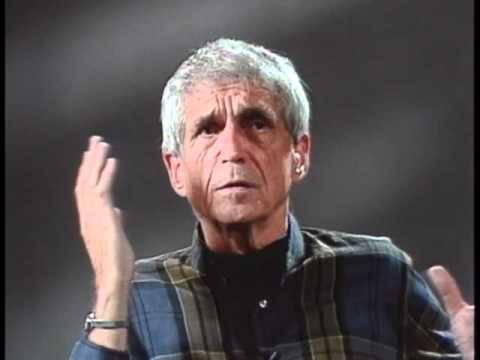
In Memoriam

Father Daniel Berrigan
May 9, 1921 - April 20, 2016


A poet, 
a prophet, 
a pastoral presence 
for peace.

He challenged the status quo of the "war machine" and stood in humble strength before the powers that be.


Three quotes:
One is called to live nonviolently, even if the change one works for seems impossible.
And even more radically:
Faith is rarely where your head is at. Nor is it where your heart is at. Faith is where your ass is at!
And finally, at the heart of the matter for Bro. Dan:
If you are going to follow Jesus, you better look good on wood.
Well done, good and faithful servant.

Thursday, November 19, 2015

Following the 10th- Personal Reflections

This is the final part of a series following my father's 10th Armored Division in World War II seventy years ago. He was a medic with the 80th Medical Battalion assigned to the 10th Armored, part of Patton’s Third Army.


Today, November 19, 2015 is the 110th anniversary of my Dad's birth. Seventy years ago today, on his 40th birthday, he was settling back down in his hometown in Pennsylvania after years of uncertainty with World War II, training for War and the 11 months overseas with the 80th Medical Battalion/10th Armored Division.

He was now back at the pharmacy he owned. His wife of 18 months was with him. She was, I am sure, a stranger in a strange land, being a 32-year old Jewish woman from Brooklyn now in the (mostly Christian) wilds of North Central Pennsylvania.

Less than three years later in August 1948 their first child would be born eight months after Dad's mother died. Another three years and a second son would come along. Time would move quickly and unforgivingly for Harold and Dora.
  • August 1958 Dad would have brain tumor surgery
  • November 1959 he would sell the pharmacy
  • November 1961 Mom would discover she had colon cancer
  • February 1962, she would be gone.
  • Summer 1963 Dad would move to a Veterans' Hospital
  • December 1964, two weeks after his 59th birthday, he, too, would be gone at which point I was 16-years old.
I never had what could be called a "close" relationship with either of them. There wasn't time for a lot of memories to be built. Whatever memories were there were also sublimated in the grief and trauma of losing them both while still a teenager. Much of what I know about Dad is in bits and pieces. Until the past several years his war service was an uncertain bunch of seemingly disconnected facts and rumors.

I then opened my grandmother's diary for the first time. (Hard to believe, I know.) I soon began to discover a few more bits and pieces that actually corroborated the facts and rumors. I began to put a timeline together and do more research.
  • Yes, he "ran away" from home and got himself drafted
  • Yes, he was at Camp Gordon, Georgia with the 80th Medical Battalion/10th Armored Division where he met and married my mother
  • Yes, he was at the Battle of the Bulge
Thus I began to read more about the work of the 10th Armored including the campaign by campaign history- Impact: The Battle Story of George S. Patton's Spearhead Tenth Armored Division in Europe in World War II by Lester M. Nichols. I did more research on the Internet and decided I would do this blog series following Dad's journey in the war.

I come now to the end. This will be the last post in the series. Seventy years ago war was over. There's nothing else to report on the battles seen and wounded cared for. World War II as I said in a previous post remains the paradigm of a "good war." It was truly a world war with staggering casualties everywhere. It did truly save western democracy as we know it. It also began the breakdown between races when the Black American troops came home to find they were less accepted at home than in Europe.

Through these intervening seventy years much has changed. I myself am a product of the aftermath of World War II and then of Vietnam, causing a major shift in so many things American. The divisions raised in that war coinciding with the Civil Rights Movement and then Watergate are the precursors of much of the division we see active today. These posts were not meant to compare that time with this. Maybe we should. I don't know.

What I learned was subtle and perception changing.
  • This past 4th of July I realized that my deep and emotionally positive responses to the military songs and Sousa marches are to a great extent based in my Dad's war. I play "the caissons" as much in his honor as any other reason. The others remain symbols of the victory of World War II.  
  • I can see now in pictures I have seen dozens of times, in Dad's eyes, that far-away soul that has seen more than he ever wanted to. If his unit was part of the liberation of a Nazi Concentration Camp as seems to be the case, the inhumanity he witnessed would be forever etched in that soul.
  •  In other pictures of Dad with his comrades in the medical unit, there is a sense of brotherhood that Steven Ambrose wrote about so movingly in his World War II books like Band of Brothers. Whether it is standing outside a beer hall/restaurant or beside a Nazi war plane, there is a confidence that comes from having done something so awful, yet so important - and succeeded. And they did it together.
  • I have a better awareness now of why my Dad never wanted to talk about it. A medic involved in that winter hell of the Bulge would be a classic definition of PTSD, a word unknown at the time. Since all the other "rumors" I collected seem to be true, the stories of nightmares and not being willing to talk would probably also be true. As would his hair-trigger anger which was most likely made worse by the "startle-effect" common to PTSD.
  • Knowing how many from my hometown went to war in the 1940s I also have a better understanding of the world I grew up in. We were all surrounded by veterans. Most of us in my class were children of those vets. I am sure that colored more than just the patriotism that was bred into us. It also produced many fathers who had difficulty relating to anyone but their comrades at the local VFW or American Legion. Vietnam later brought the addition of drug abuse. WW II had its alcoholism I am sure.
    • I, personally, have been a pacifist my entire adult life. This isn't the place to go into the details of what that means and how that can- and does- fit together with my lifelong patriotism. I noted to a friend the irony of a pacifist following the end of World War II so closely. He commented back that it gives me the opportunity to again see why I believe what I do about war. 
    • He was right on target. I am as much a pacifist as I ever was. War is always an evil, even when it does good or even when it is necessary. We must never forget that. Perhaps because my Dad was already in his mid-30s when he got drafted and sent to war, it was not the self-defining vision late-teens and early-twenties would experience. The "glory" of war was forever tarnished for him in the snow and ice of the Ardennes. I remember a vague statement to that effect from his sister, my aunt, who took over the role of mother and father when they were gone. In the midst of her patriotism she indicated that some way or another, her brother had forever changed.
    • Since my Dad was a non-combatant, a medic, I learned from this vicarious family connection to the War that there are many ways to serve without having to carry arms. Being a non-combatant, even a pacifist, does not mean that one is a coward. There a many ways to stand up for one's beliefs and serve the country. My Dad did that. I never looked at him that way before.
    • I am proud of him and glad I did this. I met a side of my Dad that I never knew- and would probably have never known. To live that hell, then come back to his hometown roots and pick up where he left off, must have been a whirlwind of emotions. I don't know if he survived it or whether that all played into his own death before age 60. Losing his 48-year old wife after less than 20 years of marriage played into that as well, I am sure. 
    • In the end I am humbled by my Dad's service and the service of his many comrades. It was not what he wanted to be doing- none of them wanted that. But they went and did it. Many of them would say that they simply went and did what they had to do, then came home and tried to forget it. We cannot forget; we must not forget. There is a lesson of the greatness of the American spirit in their story- spirit, and courage, and humility.


      I am honored to be your son, Dad.

      Happy Birthday.

      Thanks for your service and dedication.

      Monday, November 16, 2015

      Continuing to Reflect and Respond

      Those who preach a message of hate, anxiety, or fear are teaching false doctrines. That's a paraphrase of what our pastor said yesterday morning in his homily. I would add that those who preach vengeance and war as "Christian" responses are also preaching false doctrines. War may be inevitable in many situations, but it is never a Christian response in my opinion. A nation may need to go to war in different circumstances, but as far as I'm concerned Christians become people of prayer to minimize the casualties and the repercussions of war on those involved. Which, by the nature of our citizenship, includes us as well.

      But a look around Facebook, the Internet, or 24/7 news will show that to be a person of peace in the midst of such violent times is downright a minority opinion. So is acceptance of those who are different. So is the willingness to call our own Christian history into question as a historic role model for what we see happening today.

      One of my friends on FB drew upon the Crusades as a possible way of seeing what we might be called to do against ISIS. Of course it wasn't just ISIS that is invoked as the enemy. It is Islam. Which they imply is far worse than Christianity. When I point out the historic inaccuracy of such views, I become one of those liberals trying to excuse the terrorists instead of condemning.

      No, I say. I condemn terrorism.

      • Islamist terrorism in Paris or Beirut; 
      • Christian terrorism in Northern Ireland, the KKK in the American south or against abortion clinics and abortion providers; 
      • Tribal terrorism in central Africa; 
      • Ethnic terrorism in Eastern Europe.
      Terrorism is terrorism. End of statement. It is always abhorrent and horrific and aims at innocent people. The terrorists of any type see no one as innocent. If you are not with them, you are supporting the evil of their enemies.

      The Crusades, some say, were an appropriate Christian response to Muslim oppression and persecution of Christians. I have a number of responses to that:
      • The world of the Crusades is not the world we live in. For example:
        • Nation-states as we understand them today did not exist. When they did in embryonic form in Western Europe, there was a higher power than the state government- the Church.
        • When the Church called for the Crusades it was a call to a war of aggression and the gain of territory and wealth. Sure it was couched in the language of kicking the "infidels" out of the Holy Land, but it was still a war of power.
        • When some Crusaders entered areas under the hegemony of the Eastern Orthodox-style churches, slaughters of locals sometimes occurred because these couldn't be "real" Christians. They weren't "western."
        • How did the Crusades recruit? They promised the Crusaders that they would get a quicker entry into heaven as a result of their fighting. (Note: This led to what were called "indulgences" and the later protest against that by Martin Luther.)
      Any of this sound familiar? The church may not have promised whatever number of virgins, but they did promise entry into God's kingdom as a payment. Many fell into line quite quickly for any of a number of reasons- escape poverty, escape jail sentences, get a family member out of Purgatory, hopes to get rich, a desire to be powerful when feeling powerless.

      Others cry out- "Why don't national Muslim leaders speak out? Why don't they condemn the attacks?"

      A not very in-depth Google search will find many, many examples of such anti-terrorism statements. What do people want them to do, go fight ISIS with guns in Syria to show they are opposed to the terrorists? Even international Christian leaders such as the Pope have been unable to stop Christian violence by their supporters- and many believe the Pope has unlimited power over Catholics. The National Council of Churches makes statements condemning racism and terrorism, but they are dismissed by those who disagree with them. Yet, it is expected that western Muslim leaders- a significant minority in this country- and within world Islam- will make condemnations that make some sort of a difference.

      ISIS and their supporters will only laugh and put targets on the names of those condemning them. We are expecting "western values" to make a difference with a group of terrorists who are out to DESTROY western values. Anyone, even other Muslims, supporting what can be seen as western values will be suspect.

      Yes, to have western Muslim leaders speak out has important reasons
      • Call American Muslims to resist recruiting
      • Remind American Muslims of the possibilities they have in the "west"
      • Remind us all that ISIS et al. are the reason many refugees left their homes to come here
      • Take a stand for peace
      • Ease our Euro-centric American fears of Muslims.
      What then are we to do? Where is this going?

      First, I think we need to stop hiding our own history behind our self-righteousness. We have been here before in history and it wasn't pretty. It isn't pretty now and won't get any better as long as we believe we are blameless in the past. Rewriting - revising our history - to justify anger and vengeance is not helpful.

      Second, we need to find more common ground within the country. We need each other. Name-calling doesn't work on the grade-school playground; it works even less in the political arena. It only further separates us. We don't need that!

      What might be some of the common ground? How about:
      • Being clear who the "enemy" is- radical extremists Muslims are responsible. Let's name that and NOT demonize all of Islam. 
      • Stop "spin" to make everything Obama's fault or Bush's fault or God knows what else. That gets us as far as does name-calling.
      • Find ways to increase dialogue with Muslims in the United States. Most of us know very few Muslims personally. Let's change that.
      •  Admit that we are in a war. Pope Francis has said we have been fighting World War III as a piecemeal war. I believe he is right. But a war of this type may very well give us some possibilities we may not have had before to bring disparate nations and sides together. I don't give a damn how it started- we can't change that. We can look for ways to bring about a change.
      • As a pacifist I have serious problems with war. It is never the best solution. It may be the only solution at some point, but that is not a reason to celebrate war. As a country we need to find ways to wage this war with as much of an eye to peace as we can. War will always lead to difficult and awful decisions.
      • How does a pacifist support a war? With great difficulty; it is never an easy choice. 
        • A pacifist needs to always be there in the midst of the discussion reminding  the nation of its humanity and its need to remain humane. 
        • A Christian pacifist (which has never, NEVER been a contradiction) will remind all, themselves included, that we are all (on both sides of the conflict) created in the image of the Creator. 
        • The deaths of civilians and innocent people (so called, collateral damage) are never acceptable and when it happens, confession and repentance is essential.
        • Pacifists are not unpatriotic. We love our country and will always work hard to keep her strong and committed to our historic values. We may not take up arms and may often be seen challenging common wisdom as well as a warrior mentality, but we are not un-American. We will do what we can do to maintain our freedoms and hopes as a nation.
      This is a difficult time. The government of the past two administrations as led us deeper into a war-mode. One did this by it's saber-rattling, regime-change, and general lack of insight. The other has attempted to downplay what is happening with groups like ISIS. Both have continued the American tradition that goes way back in history of poor intelligence often caused by the intelligence community giving those in power the news they want.

      Unfortunately I don't see anything better happening no matter who gets elected. It is a time for new insights, new tactics, new understandings. I don't know what those new things are, but we are not living in the world of World War II or even Vietnam. This is new and dangerous. New insights and direction are needed.

      So I pray. Not out of fear or anxiety, but out of the need to remain settled and centered in the ways of God. I also pray that I am not being a prophet- that these things will not come to pass, that we will not deepen the war-mentality and fall deeper into a new morass of unwinnable war. I pray that our values as a nation will not be lost in fear and a desire to have a perfect life.

      Let me end with words of a hymn used in worship yesterday. These words form a prayer of hope in these days of growing war...
      O God of every nation,
      of every race and land,
      redeem the whole creation
      with your almighty hand;
      where hate and fear divide us
      and bitter threats are hurled,
      in love and mercy guide us
      and heal our strife-torn world.

      From search for wealth and power
      and scorn of truth and right,
      from trust in bombs that shower
      destruction through the night,
      from pride of race and nation
      and blindness to your way,
      deliver every nation,
      eternal God, we pray!

      Lord, strengthen all who labor
      that we may find release
      from fear of rattling saber,
      from dread of war's increase;
      when hope and courage falter,
      your still small voice be heard;
      with faith that none can alter,
      your servants undergird.

      Keep bright in us the vision
      of days when war shall cease,
      when hatred and division
      give way to love and peace,
      till dawns the morning glorious
      when truth and justice reign
      and Christ shall rule victorious
      o'er all the world's domain.

      Words: William Watkins Reid, Jr.
      Words © 1958, Renewed 1986 by The Hymn Society (admin. by Hope Publishing Co., Carol Stream, IL 60188).
      All rights reserved.

      Saturday, November 14, 2015

      When Will It Ever End?

      Again and again it happens. We cannot seem to be able to escape death and destruction in the midst of violence. It is a vicious cycle that always follows the same pattern. We could plot it on a timeline and wait for each to happen.

      It starts with that bloody, horrific event. It could be a riot in Ferguson, a mass shooting in a school, or a terrorist attack in Boston or Paris. Everyone does their part and reacts in sadness, anger, horror, and shock. It is our part because that is how we humans respond to such things. It is a cycle of trauma that has become so commonplace in our 24/7 news cycle, highly interconnected world, that we don't even realize we are being traumatized and re-traumatized every time it happens.

      News coverage can then go over the top, reporting more than they know and often depending on sources that have little if any connection to the situation. The NPR program, On the Media has a meme they post everytime something happens to remind us that we don't know what's happening yet. They call it The Breaking News Consumer's Handbook. We saw some of this happen yesterday on Facebook, for example, when people were posting pictures supposedly from Paris last night when in reality they were from the Charlie Hedbo event in January.

      It doesn't take long for the politicians to weigh in. They all have their talking points, right, left, or middle. It's all there. You know what they are going to say and how others will react. Just watch the pictures, leave the TV off and you will know the progression of the story.

      By now the "Pray for [fill in the blank]" posts will be up. New graphics for each situation or the ubiquitous candle(s) will have the word "Pray" superimposed. A quick check showed that about 15% of my "Friends" had changed their profile picture for the Paris situation.

      Someone will come up with a unique graphic like the Eiffel Tower Peace Symbol last night. All these will go viral. They are sincere; I participate in this as well. It is important to be reminded that there is something possible for us to be involved in at that very moment. As we are praying for Paris or Beirut or wherever, we are also bringing ourselves into the presence of our God. We are seeking the peace we want Paris to have. We need the peace we are asking God to provide.

      While that is happening the memes from the left- and right-wings begin to show up. Blaming becomes the word. That and revenge. Rhetoric will fly. Violence will be threatened or suggested by some. Others will try to defuse this with meaningless actions that only they will care about. (I kind of fit into that category. More later.)

      Then we have a few days of "in-depth" reporting, comments, more information, interviews with victims families or eye-witnesses. The news cycle moves on.

      Until the next time.

      And I have absolutely no idea what to do about it.

      How can I speak up? What difference can anything I say make? So I post a few things to challenge narrow thinking or attempts to demonize people. A few of my regulars respond. Some will agree; some will disagree. Those who disagree are friends who I respect and trust and we work hard at being respectful and appropriate. We will sometimes go into messaging so as not to overwhelm the posts. But we do not point fingers at each other and often just agree to disagree since we are reasonable people.

      Is that enough? Is that what we can do? I have no idea.

       The cycle I have talked about above will continue. It will happen again somewhere, maybe even in my state or community. We will go through the same ups and downs. We need to find a way of approaching it with peacefulness.

      I am reminded of the old saying

      Think Globally
      Act Locally
      Maybe that means that what I am doing is a start, and at times, perhaps all I can do. It also means that I need to be sure I am in a peaceful place. I cannot engender peace around me  if my life is in hatred or anger or fear. Hatred, anger, and fear are what the extremists are trying to get us to feel. We will then shut down our thinking and fall into purely emotional responses. No one wins then- except the extremists.

      It means something different to each of us. For me acting locally means that I need to find the peace within me- and then live it. That is why I will go to church tomorrow to envelop myself in my faith tradition and seek the peace that passes understanding. Then, and only then, can I move out to live it.

      I pray that we can all find our source of peace and hope in these seemingly never ending cycles of violence and death.

      Wednesday, November 11, 2015

      Following the 10th- Keeping the Book Open- the Son of a Veteran

      This is part of a series following my father's 10th Armored Division in World War II seventy years ago. He was a medic with the 80th Medical Battalion assigned to the 10th Armored, part of Patton’s Third Army.


      For the past year I have been following my Dad's 10th Armored Division in the last year of World War II. I have done research and learned things that I never knew. In this next to last post in the series, I decided to think about this whole process from the viewpoint of being a son of a World War II veteran.

      Today is Veterans' Day. For me it has always been a special day of remembrance. They have been called "The Greatest Generation" and their war has defined "good war" (if there is such a thing) for the past 70 years, at least two generations. The first half of the 40s became, for my generation, a "magic" time. It was World War II! We grew up with war stories, war movies, war memorials built. We celebrated the great victory well into the early 60s. Korea was a blip on the road of history. World War II was the big war, the war of our fathers.

      They weren't the greatest generation to us, not as it has come to be used in recent years. They were the heroes who went and did what needed to be done and paid a great price for it. From the vantage point of the 21st Century, this is well two-thirds of a century ago. But for me, they are recent events. The war ended but three years before I was born.

      Our lives were impacted in many silent ways by the returning vets. In small towns across the country these veterans were well-known, special people. Yet many, as in my Dad's case, kept it all bottled in. To question it, to raise any concerns was unpatriotic. We never thought about it. We never asked about what he, and so many others, suffered in their silent nightmares? What was it like to relive the Battle of the Bulge from a medical battalion? The horrors he must have seen are beyond the ability of anyone to imagine.

      By the time I was old enough to think about these and ask the questions both he and my mother were gone. It was the mid-60s  and the times were changing. It is only in recent years, with the advent of the Internet that I have been able to trace the stories I never heard directly. In so doing I opened a book I didn't know existed. I found a way to be an observer from a distant place and see pictures of my Dad in new ways. I have posted some of them here over the past year.


      I look at them differently today. I had been told that he would often have nightmares about the war in those days before it was known as PTSD. I can understand a little more about it today. Being a medic in such a horrifying place as the Battle of the Bulge would produce many traumas. I am sure he tried to return to "normal" but must have found it difficult. I remember his anger and wonder today how much of that might have been made worse by the memories. I also know and have been told that he was a caring person. He gave prescriptions on "credit" that had eventually to be written off when he sold the store but 14 years after the war ended.

      In the health care of the 50s and 60s, my Dad was also cared for by the VA. He spent the last 16 or so months of his life in the chronic, nursing-type ward at the VA hospital in Wilkes-Barre. His brain tumor prevented him from taking care of himself. The VA did that for him and for us- his family. We received veterans' benefits and college support. The whole atmosphere, the ambiance of World War II was a unique and caring response. At least that is how I saw it as a recipient of the care and support.

      His generation is passing away. According to the National World War II Museum "there are approximately only 855,070 veterans remaining of the 16 million who served our nation in World War II." That means there are only about 5% of the Vets still around. Nearly 500 of them die each day.

      My Dad was among the older vets of his era, almost 39 when he arrived in Europe in 1944. He died 51 years ago, not yet even 60. But the youngest vets are now at least in their mid-80s. My generation is older than most of them were when I was a teenager. We are losing that intimate contact with an important piece of our American heritage and democracy. They fought a war in which there was to us a clear example of evil spreading across the world. Hitler and the Axis powers were terrifying, even to many sitting in the relatively safe borders of North America. In what may have been one of the more selfless acts in world history, 16 million Americans went to fight for the world's safety and security. They believed, a with a great degree of certainty that if they didn't, the world would not be safe for any of us in this country or for freedom and democracy. But they went and through grit and courage, fear and sheer force of will were victorious.

      And then they helped rebuild their former enemies.

      Perhaps when history is written in another 75 to 100 years this will stand out as the greatest moment in American history.

      I have always known this at some level. One cannot grow up on the World War II movies and documentaries, books and stories without being aware of that. It is real today whenever I hear the marches of the different military branches. "When the Caissons Go Rolling Along (U.S. Army Field Artillery March)" still moves me.

      This must be an open book for generations to come. These WW II vets set a standard that is not easy to match but their willingness to serve remains the archetype.

      On this Veterans' Day, 70 years after the end of World War II, I will pause and give thanks for my Dad's service and for his generation that gave us an incredible model to follow in serving. There are many things to remember, but this is one we forget at our own peril.

      (Below is my video for Veterans' Day 2015 in Memory and Honor of my Dad and the Vets of our American history.)