Showing posts with label civil disobedience. Show all posts

Sunday, March 25, 2018

The Sixth Sunday of Lent-A Peasant Procession


If the machine of government is of such a nature that it requires you to be the agent of injustice to another, then, I say, break the law.
-Henry David Thoreau


When we speak of Henry David Thoreau we jump back and forth between two different images. One is the naturalist and semi-hermit on the banks of Walden Pond for a little over two years. His writings began a great line of writers and seekers of peace and direction in the wildness that Thoreau knew was the salvation of humanity.

But there is also the tax resister, the anti-slavery and anti-war protestor. As the author of Civil Disobedience, Thoreau also began a second line of thought, one that influenced Gandhi, Dietrich Bonhoeffer, Martin Luther King, and nameless protestors in the streets of many cities. Today we return to the protestor, to the Thoreau who wrote that the law must be disobeyed if it requires you to do injustice to another. We make this turn to the activist on the day we tell again the story of another activist 2000 years ago.

Today is the beginning of Holy Week. Today we sing of palms and crowds as cheers of “Hosanna!” ring through the air. It is the greatest week in the Christian year. It will end in death- and life! It was the week of Passover those many years ago in Judea. A time to celebrate the possibility of liberation from slavery and oppression under the boots of foreigners. As such it was a tense time for many.

In their book, The Last Week: What the Gospels Really Teach About Jesus’ Last Days in Jerusalem, the New Testament scholars Marcus Borg and John Dominic Crossan argue that two processions entered Jerusalem on that first Palm Sunday, and that Jesus’ was not the only Triumphal Entry.
Two processions entered Jerusalem on a spring day in the year 30…. In the centuries since, Christians have celebrated this day as Palm Sunday, the first day of Holy Week…. One was a peasant procession, the other an imperial procession. From the east, Jesus rode a donkey down the Mount of Olives, cheered by his followers…On the opposite side of the city, from the west, Pontius Pilate, the Roman governor of Idumea, Judea, and Samaria, entered Jerusalem at the head of a column of imperial cavalry and soldiers. Jesus’ procession proclaimed the kingdom of God; Pilate’s proclaimed the power of empire. The two processions embody the central conflict of the week that led to Jesus’ crucifixion.
In a very real sense Borg and Crossan are reminding us of the struggle that has existed for millennia when the nation may be acting with injustice and asking its citizens to also do so. While we have often hidden the political side of Holy Week behind the spiritual struggle, we have thus done violence to the whole picture of this important week. Jesus was not executed simply because a small minority of religious leaders wanted him dead. He was executed because his leadership was a threat to the established political and governmental order. He was executed because his understanding of God and faith was not a “nation” based understanding, it was not an expression of “nationalism” as we would define that today. It stood in stark contrast to that.

Jesus spoke passionately and often about caring for the least and the lost. The image of the sheep and goats at the last judgement equated righteous actions with visiting those in sick or in prison, helping the poor, the widow, and the orphan, or giving food to the hungry. Those who do not do these things cannot call themselves “righteous.” The intertwining of the religious leaders and the governmental leaders in Jesus day was anything but righteous. He entered the Temple and challenged those who were mixing the two. He engaged in an act of civil disobedience that set the stage for many.

Thoreau was not an anarchist, even though some would like to call him that. He did not want to do away with government. He said it clearly:

I ask for, not at once no government, 
but at once a better government.

It is hard, of course, and ultimately absurd to compare the Roman government of Jesus’ day with the American government of today. We would all agree with Thoreau that we want better government, caring government, although some may want far less government than others. It is a tough time.

What is a person of faith to do? We hear the cries from both sides to this day. The issue is as raw and painful on this Palm Sunday as it was on the first. Sides have been taken; some see the government as a way of enforcing a particular religious view. It is a time of power for them. Some see government leadership, even immoral and criminal leadership as a way to get the political agenda enacted. Bring down the hard hammer of law to make sure that the ways of a particular faith are enacted and followed. They decry these actions in other faiths and then call for them to be enacted in their own faith.

It is Palm Sunday. As it has often been since the first, there are two choices we are called to decide between, especially in our modern American dilemma. Are we to succumb to the power of the gun and the loudest, wealthiest voices? Are we to bow before a government that criminalizes ethnic groups and nationalities simply because they are who they are? Are we to seek ways to enforce a particular righteousness because it is what we think is the way?

Or do we stand up, as many did yesterday, and say “Enough!”?

Hear the two processions marching this week.

One is an imperial procession pointing fingers, rattling war sabers, making a joke of truth.

The other is a peasant procession calling for change and grace, hope and compassion, safety and life.

Not much has changed in 2000 years, except perhaps today we are more able to make our voices heard.
  • What can I do this Holy Week to speak for hope and life?
  • How can I witness to the power of grace standing against the power of hate?
  • Where is the call of God leading me to take a stand?
May I spend time this week looking within to find what may be next for me, as I follow Jesus toward the Last Supper, Calvary, and finally life breaking forth.

What lies behind us and what lies before us are tiny matters compared to what lies within us.
- Ralph Waldo Emerson

Wednesday, March 07, 2018

4th Week of Lent: Living Your Beliefs=Happiness


In a gentle way, 
you can shake the world.
-Gandhi


Thoreau did not just have an impact in the United States. Among his widest impacts in the wider world was through Mohandas Gandhi, the non-violent protestor fighting in India for freedom from the British. He read Walden in 1906 while working as a civil rights advocate in South Africa.
He first read Civil Disobedience "while he sat in a South African prison for the crime of nonviolently protesting discrimination against the Indian population in the Transvaal. The essay galvanized Gandhi, who wrote and published a synopsis of Thoreau's argument, calling its 'incisive logic [...] unanswerable' and referring to Thoreau as 'one of the greatest and most moral men America has produced'."
-Link
Talk about shaking the world! It is also changing the future.
The future depends on what we do in the present.
-Gandhi
We don’t often give much thought to what influence we can have on the future. Maybe that is the life of “quiet desperation” Thoreau mentioned in his writings. What is the sense of what we do? We live until we die and then we are gone. Very few of us will have the level of influence that a Thoreau or a Gandhi had on the “future.” Perhaps, though, we need to remember that we are still in our own spheres of influence quite significant. Our words and actions go together because they are what we have right here and now to share. Gandhi recognized this in Thoreau. Here is what he said about Thoreau in For Passive Resisters in 1907:
Thoreau was … a most practical man, that is, he taught nothing he was not prepared to practice in himself. He was one of the greatest and most moral men America has produced. … He went to gaol for the sake of his principles and suffering humanity. His essay has, therefore, been sanctified by suffering. Moreover, it is written for all time. Its incisive logic is unanswerable.
-Link
Words are made real in actions. They speak louder than words. Even though Thoreau’s act of civil disobedience was quite small, even appearing trivial in comparison to what Gandhi was going through, the fact that he was willing to take the action in and of itself gave power to the words. They caught Gandhi’s attention as “sanctified” words, words containing the “holy.” Therefore Gandhi paid attention and the world was changed. I doubt that Thoreau would have ever thought his words would have such power more than 80 years later on the other side of the world.
Happiness is when what you think, what you say, and what you do are in harmony.
-Gandhi
In many ways that is what Lent is about. For me it is a kind of time to take inventory of how my life and my faith, my words and my actions, work together. Each year I discover new things about myself since I am not the same person I was last year let alone 50+ years ago when I became a Christian. The world is also far different. Perhaps it needs the same words but with different actions. Perhaps I need to understand God’s call to me today and not what it was when I started this journey.

So my questions for this week in Lent lead me to thinking about the melding of thoughts, words, and deeds

  • Who has had this kind of impact on my beliefs?
  • What  have I learned from them?
  • This Lent, how can I more deeply be a living action of what God wants me to do with my words?
  • This Lent, where are my actions not showing the truth of my beliefs and therefore undermining my words?
  • This Lent, how can I confess and be transformed from them and be guided into a more holistic life?
  • This Lent, how can I be open to the life-giving surrender to the power of God in Jesus to bring me healing?
To be in constant conflict with ones beliefs and actions is a sure way to lose ones sense of self and direction. If I am not open to living out the beliefs of my conscience, and my Creator, it will steal any sense of peace and hope I might be able to find. To be honest and live a life of integrity to what I believe is essential to mental and physical health. Perhaps Thoreau was right in saying that such would lead to death itself instead of the life promised by God.

Is there not a sort of blood shed when the conscience is wounded?
Through this wound a man's real manhood 
and immortality flow out,
and he bleeds to an everlasting death.
― Henry David Thoreau, Civil Disobedience


Sunday, February 25, 2018

Second Sunday of Lent: What Drumbeat? What Path?


If a man does not keep pace with his companions, perhaps it is because he hears a different drummer. Let him step to the music which he hears, however measured or far away.
-Henry David Thoreau


Okay, I better address something this week. Why in the world am I using someone like Thoreau for leading me deeper into the world of Lent? Thoreau was not supportive of Christianity. In fact his “diary” entry for Sunday in A Week on the Concord and Merrimack is more about western religions' faults and hypocrisies. On top of that he is often seen as self-centered, narcissistic, pompous, and hypocritical. An article in New Yorker magazine in 2015 by award-winning author Kathryn Schulz severely criticizes Thoreau.
The real Thoreau was, in the fullest sense of the word, self-obsessed: narcissistic, fanatical about self-control, adamant that he required nothing beyond himself to understand and thrive in the world. From that inward fixation flowed a social and political vision that is deeply unsettling. -Link
She goes on to analyze and question how in the world such a person could be so honored and even deified by so many?

I am not here to defend Thoreau. To some extent I agree with Schulz’s general review of him. He was a very strange man in so many ways. In spite of the popularity- and importance- of his ideal of civil disobedience, or his ideal of Walden pond, his arguments as presented do not always hold water, especially in the 21st Century. He was an excellent naturalist and the founding father of so much of what has since been written, but again it may not be all it seems. In many ways he was writing a metaphor, not a strict natural history. But again, we are dealing with the pre-Civil War 19th Century! The world of New England in 1845, which Thoreau presented as the seeming pinnacle of civilization, looks nothing like our world. It is, for me, the principles and directions of his thought that impress me.

As we remember that we are not dealing with a contemporary of ours, so too we should understand that he was not a “wise elder.” Thoreau never made it to being an elder; he died at age 45 of tuberculosis. He was 28 when he moved to Walden, 30 when he left, and 31 when he delivered the lecture that would become Civil Disobedience. In other words he was still a young rebel. He never left that behind.

Which is why I am so impressed by him and why the quote at the top of this post is his legacy for me. He was always marching to a different drummer. I believe that we as Christians should never forget that thought. We should find ways to move our own lives with an attitude of following our own music- or more fittingly for this series- the music of the soul and spirit as we Jesus-followers experience and discover it through Jesus Christ; him crucified and resurrected. Jesus told us that we should learn the ways of the world because he was sending us out
like sheep into the midst of wolves; so be wise as serpents and innocent as doves. (NRSV)
Part of that, Thoreau would remind us, is to listen for the beat of that different drummer! That is what Lent reminds us. Here is the call of this season for us-
dig deeply, look inside to find the drumbeat of our lives. 
More to the point may be that we are hearing the heartbeat of God when we do so. That heartbeat can be restless. That can make it a heartbeat that animates us, gives us direction and meaning and life. It keeps us moving.

A friend on Facebook posted a challenge to his fellow Baby Boomers last week. He asked what happened to the idealism and hope, the fresh ideas and directions, the radical and revolutionary understandings that propelled so many of us in the 60s and early 70s? Instead we have become “elders” (read: old), often more interested in the status quo than the possibilities of growth and peace, grace and spirit. “Have we lost our soul?” was my personal response. Have we become afraid of our own shadows, or even ashamed of some of the naive and innocent ideals of our youth? As a result have we turned away from asking the hard questions for fear of offending ourselves or others? Have we turned off the drumbeat and simply given up on making the world a better place?

But the word naive comes from deeper roots than that.
1650s, "natural, simple, artless," from French naïve, fem. of naïf, from Old French naif "naive, natural, genuine; just born; foolish, innocent; unspoiled, unworked" (13c.), from Latin nativus "not artificial," also "native, rustic," literally "born, innate, natural" -Link
Maybe we weren’t as “foolish” as some think we were. Maybe we were listening to what is more innate, a more natural way of living. Thoreau’s time at Walden Pond was a similar move. No, he did not leave the world behind and live like a hermit. Far from it. Instead he used that time to dig into his own soul and the spirit of the world around him, to hear the different drummer’s beat for him.

That’s what I am doing this Lent. I am using my faith and my experiences to bring that beat into clearer focus. I am using the wrestling with Thoreau to help me fine-tune my ear for the music and the ways to bring what I still believe as important from my “naive” years into this time and place.

  • Where am I turning to hear the beat of God’s drummer?
  • How can I pay closer attention to what the Spirit is calling me to do?
  • What is the path in front of me that I may need to follow?
  • What of my past is valuable to translate into this new century and the next decade of my life?
  • How can I leave a trail that others may follow and find their own place in the work of God?
Do not go where the path may lead,
go instead where there is no path
and leave a trail.
-Ralph Waldo Emerson

Wednesday, February 21, 2018

2nd Week of Lent: Getting Beyond the Idols


The atheist staring from his attic window is often nearer to God than the believer caught up in his own false image of God.
― Martin Buber


My Wednesday Lenten posts this year will be reflecting on quotes from people who were influenced in one way or another by Henry David Thoreau. A good one to start with is Martin Buber. His attachment to Thoreau is not based on Thoreau’s famous naturalist writings but on his political activism.

Martin Buber (1878–1965) was a prolific author, scholar, literary translator, and political activist whose writings—mostly in German and Hebrew—ranged from Jewish mysticism to social philosophy, biblical studies, religious phenomenology, philosophical anthropology, education, politics, and art.

He is most famous for his philosophy of relationships based in the short but extremely influential book, I and Thou. In it he differentiates between I - It relationships which are subject-object interactions and I -Thou or dialogue-based interactions. (Note: A reminder that “thou” in the original English usage is NOT the formal pronoun, but the informal version of close and intimate relationships. It is the equivalent of “du” in German and “tu” in Spanish.)

So without getting too complicated or philosophically technical, Buber sees the main difference between “I-It” and “I-Thou” as the first is an experience by one of another. It is in observation and analysis that this occurs. It can be said that it is also a non-interaction in the sense that there is no back and forth. I watch the sunset; I watch the heron on the beach; I watch the people walking by me.

On the other hand, “I-Thou” is interactive; we meet each other and dialogue or we seek to deepen our understanding of the other. Buber says this dialogue relationship is what happens in love. We live IN love; we don’t watch it. (Again, oversimplified, but that’s my understanding of the gist of it.)

Thoreau, when he went to live by Walden Pond really went into what he was expecting to be an “I-It” relationship. It was a self-serving, selfish motive on some levels when it began. How could it be anything else? He didn’t know the pond or its inhabitants either present or past, human or animal or plant. It didn’t take him long.

He dug into the ground and found history with old foundations and burial grounds of previous villages. He went out and discovered his fellow residents. He began to enter into a dialogue with them and discover what they had in common and what he had to learn from their teaching.

Every major naturalist writer since him has had the same experience. To repeat Sunday’s Thoreau quote, they discovered heaven is under their feet as much as it is about their heads. When we discover heaven it might be safe to say we begin to discover and interact in love. When Thoreau did that, he also saw connections he needed to make in other areas; we are all inter-connected whether we like it or not. That led him to his political views and the essay, Civil Disobedience. It was in that writing that Buber connected first with Thoreau.

Martin Buber wrote, of Civil Disobedience:
I read it with the strong feeling that here was something that concerned me directly.... It was the concrete, the personal element, the "here and now" of this work that won me over. … He addressed his reader within the very sphere of this situation common to both of them in such a way that the reader not only discovered why Thoreau acted as he did at that time but also that the reader—assuming him of course to be honest and dispassionate– would have to act in just such a way whenever the proper occasion arose, provided he was seriously engaged in fulfilling his existence as a human person. The question here is … of the absolutely concrete demonstration of the point at which this struggle at any moment becomes man's duty as man....
— "Man's Duty as Man" (1962)
-Link
Because Thoreau has entered into an “I-Thou,” personal and intimate relationship with his world and the events of the world, he makes it clear in his essay that any thinking and honest individual would have to do the same when challenged by circumstances. In Thoreau’s case it was the annexation of Mexican territory by the United States and the ensuing Mexican-American War. He was also a strong Abolitionist who saw no way that owning slaves was a moral thing. How could it be when we are all interrelated? How can we turn relationships with other humans into “I-It”, non-dialogic interactions?

Why then was I drawn to Buber’s statement above? We live in a time when there are many false images of God (or gods) being thrown around. There is the angry, punishing God; there are the things we worship as having importance beyond themselves; there is the image of a God that hates the same people as I hate and believes the same things I believe.

The atheist on the other side has nothing to start from. There is nothing of that kind of value as a “God”. The attic is shuttered, but unlike the false images, an attic’s shutters can be opened more easily than a closed mind. Somewhat in the way that Thoreau discovered the ability to be in a personal relationship with the world and others, the atheist has more possibility of discovering an “I-Thou” relationship with “God” because he or she has no preconception about what or who God is.

That is far more technical than my mind wants to grasp. But that is what Lent is about. I don’t understand this relationship with God in and through Jesus. Intellectually I understand it less today than I did in 1964 when I  became a Christian. But I know it better today. I also know that it is just as intimately connected with the world around me than ever before. I continually discover new ways to move from “I-It” to “I-Thou.”

This past week we have seen another school shooting. I will write about that sometime else, perhaps. But what I see happening among the student survivors of the Parkland shooting is a movement into an “I-Thou” based civil disobedience. They have discovered the Golden Calf of guns in the public square and realized that they are not as important as the idol. A relationship to an idol is not a dialogue. It is "I-It" and never built in love. It is often a demand. We say "I will worship you (the idol) and you will protect me and make me powerful."

In our mind the idol responds with a beckoning smile.

The students in Parkland have seen the lie in that. They have lost 17 fellow students and teachers. They were not protected by the idol; the idol was used to kill them.

The power of the interconnections, the relationships, become clear. Students around the country I am sure sat in their classrooms every morning since then wondering if it could happen to them. They saw and lived the relationship between themselves and Parkland. They are tired of it. They see the evil in it on some emotionally deep level and say, “Enough!”

  • What can I learn this Lenten season from paying attention to my relationships? 
  • How can I drop the “observer” role and enter into dialogue with the world around me? 
  • What does love compel me to do for those with whom I am in an “I-Thou” relationship? 
  • Finally, how can I stop being an observer of God, or worse, one who turns God into a false-image idol, and give myself over to the love I can live within?
Let your life be a counter-friction to stop the machine. What I have to do is to see, at any rate, that I do not lend myself to the wrong which I condemn.
― Henry David Thoreau, Civil Disobedience

Wednesday, February 14, 2018

1st Week of Lent: A Different Drummer


Today, Thoreau's words are quoted with feeling by liberals, socialists, anarchists, libertarians, and conservatives alike.
— Ken Kifer


Before Aldo Leopold, Loren Eiseley, and Sig Olson-
~~ there was Thoreau.
Before Gandhi and Martin Luther King, Jr.-
~~ there was Thoreau.

Henry David Thoreau (1817-1862) was a writer, philosopher, naturalist, abolitionist, and political activist. Part of the “Transcendentalist Movement”, he is best known for Walden and Civil Disobedience.

My interest in Thoreau began in the 60s, of course, when he was one of the mentors and heroes of both the anti-war and new environmental movements. It was recently reignited by a conversation last year with an early twenty-something who was clearly conservative and a Trump supporter. He said to me one day, “I have just found a great book that I really like. It’s kind of old though.” My first thought was naturally Thoreau. Who else but him would be an “old” writer that captures the imagination. I was right. This young man then went on to quote the opening of Civil Disobedience where Thoreau famously wrote that “that government is best which governs least.”

I didn’t try to dissuade him from his liking Thoreau, instead hoping that getting into reading it would perhaps move him a little away from his right-wing views. I have no idea how Thoreau himself would have looked at our 21st Century American government nor how he would respond to it. As an anti-Mexican War and anti-slavery activist (the reasons he wrote Civil Disobedience) I am hopeful he would not be on the Tea-Party side as this young man expected. From his willingness to go to jail if only for one night on a refusal to pay taxes to support a war, I would guess he would not be happy with some of the current budget and tax proposals.

Underneath and supporting his political style, Thoreau was part of the transcendentalist movement of his friend Ralph Waldo Emerson.
Transcendentalists are strong believers in the power of the individual. It focuses primarily on personal freedom. Their beliefs are closely linked with those of the   Romantics but differ by an attempt to embrace or, at least, to not oppose the empiricism of science…. Transcendentalists desire to ground their religion and philosophy in principles not based on, or falsifiable by, physical experience, but rather those that derive from the inner spiritual or mental essence of the human.
-Link
For Thoreau this was based on an almost intuitive interest and understanding of spirituality.
one of his first memories was of staying awake at night "looking through the stars to see if I could see God behind them."
-Link
Among other things this spirituality took him to Walden Pond for a two-year period when he took the notes and started writing his famous book named after that pond. These are not separate areas of interest, each in its own compartment. The philosophy and spirituality of Thoreau are intertwined. His political stance fits into his view of the world which fits into his environmental understandings.

As I thought about this year’s Lenten season I felt I wanted to take a look at things from a little different angle. For the last year and a half, since Advent 2016, I have been looking at politics and faith and resistance. Dietrich Bonhoeffer was my guide last year and I grew immensely in my thoughts. Advent of 2017 was tying the themes of Advent to resistance to injustice, racism, and hatred. It is important to me- and part of my unshakable faith- that our faith as individuals must inform and expand our political and social views.

Thoreau is a perfect person to help with this.

I have chosen a number of Thoreau quotes to use for Sundays in Lent through Easter. I will use them as starting points for some reflections and interpretations. They will start this Sunday, Feb 18. I am not sure what I am going to do on Wednesdays in Lent. Today, Ash Wednesday, is obviously this introduction. I will see as we progress what happens, perhaps quotes from those who Thoreau influenced. [I have moved The  Tuning Slide posts on this blog to Thursday for the next seven weeks. They will still be posted on Wednesday on the Tuning Slide blog.]

For today, let me end with a quote from his mentor and friend, Ralph Waldo Emerson. It is perhaps Thoreau’s greatest achievement:

To be yourself in a world that is constantly trying to make you something else is the greatest accomplishment.

Saturday, April 30, 2016

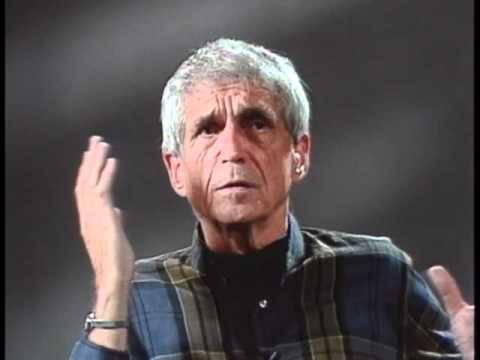
In Memoriam

Father Daniel Berrigan
May 9, 1921 - April 20, 2016


A poet, 
a prophet, 
a pastoral presence 
for peace.

He challenged the status quo of the "war machine" and stood in humble strength before the powers that be.


Three quotes:
One is called to live nonviolently, even if the change one works for seems impossible.
And even more radically:
Faith is rarely where your head is at. Nor is it where your heart is at. Faith is where your ass is at!
And finally, at the heart of the matter for Bro. Dan:
If you are going to follow Jesus, you better look good on wood.
Well done, good and faithful servant.

Sunday, July 19, 2015

The Easy Way of Being a Prophet

Last Sunday the Gospel lesson was the end of the story of John the Baptist- where he lost his head to the whims of the king. The Hebrew Bible lesson was from Amos who got into trouble for speaking the truth to power- the King. They fit right in with my sermon two weeks ago on Jan Hus and his martyr's death at the instigation of the Pope and the church powers in 1415.

THAT'S not an easy way to be a prophet. What is the easier, softer way?

The pastor then talked about a recent experience he had at national convention where he and 1,200 others did a march against gun violence while carrying signs that said, "Black Lives Matter." It was a very moving spiritual experience for him, as I am sure it would have been. We had done a simple march in Miami 20 years ago as part of a world mission conference. All we did was walk as a witness to our faith. That was amazing. This was standing up to power and pointing out one of the deep divides and cardinal sins of our culture that no one wants to talk about.

The pastor then commented

It's easy being a prophet when you are with 1200 other people.
Yep. A lot of truth in that. It is easy when we can get lost in the crowd. When all of you are chanting the same, protesting the same, but just face the reality and, well, things can get a little more difficult.

I discovered that back in the early 70s in the midst of the Vietnam War protests. I had gone down to Washington to participate in the May Day protests. I had been there a week earlier with the big protests. It was fun and an anti-war carnival. Many people came back a week later with the expressed purpose of shutting down Washington in acts of civil disobedience. We arrived on Saturday, May 1 and camped out in West Potomac Park near the Washington Monument. It was a picnic-rock fest with people hanging-out and listening to the music. There were about 35,000 people there.

I fell asleep that night, though fitfully, aware that civil disobedience could get one arrested.

I awoke on Sunday morning and looked out the tent flap. As I remember it now it was the sight of riot troops (we'd call them SWAT teams now) lining the streets around the park. It seemed like an endless number of them. The Nixon administration had cancelled the park permit. They were urging us to leave. Later in the morning the troops started to move across the camping area, tearing tents down, using tear gas to disperse the crowds.

I never saw that part. I gathered my stuff and, along with about 25,000 others, left D.C. heading back home.

Sometimes it isn't even easy being a prophet when there are 35,000 of you- and 10,000 of them with guns.

Or you are standing on a Memphis motel porch, there's one lone gunman across the street and your name is Martin Luther King, Jr.; or Robert Kennedy, surrounded by supporters as Sirhan Sirhan pulls the trigger; or Mahatma Gandhi about to enter a prayer meeting as a gunman came up to him and fired three times.

 It appears that it is never easy being a prophet when you have to stand up to the ways of the world that lead to death, destruction, hate, and fear.

I give thanks for those who are willing to take that prophetic stand of speaking out, of challenging those who would use their power to oppress those already under oppression; those who would conspire to take dignity and hope, health and support from others who are different; those who would use their religion and their patriotism to denigrate others and turn them into non-persons.

I know that I am a weak prophet. I want people to like me- and I certainly don't want to be tear-gassed or have my head beaten by a billy-club. But I also know that I have to find ways to stand up for what I believe to be right.

The easy way of being a prophet is to stay at home and not speak out. Because one is no longer a prophet. Maybe I need to find more people who are willing to do it with me.