Showing posts with label discipleship. Show all posts

Tuesday, April 25, 2017

Lenten Journey- Sunday 4- Uncompromising


Things do exist that are worth standing up for without compromise. To me it seems that peace and social justice are such things,
as is Christ himself.
–Dietrich Bonhoeffer, in a letter to his brother

To compromise may be a brave thing to do in the right circumstances. But in others, we better not. The possibility might be that we would compromise our soul. Bonhoeffer was a very intense thinker. He did more mental and theological gymnastics to come to terms with things he felt were right- or wrong. As German culture and the German Church was descending into chaos and then the very center of hell itself under the Nazis, Bonhoeffer was shaken to his core by what was happening to the country he loved, the people he loved- and the church he loved. The quote above was made in a letter to his non-Christian brother when Bonhoeffer was organizing an illegal seminary, unapproved by the German Lutheran establishment. Dietrich was moving into dangerous territory and he knew it. Yet he had to do it.

Whether we agree with all his theological conclusions, or even begin to understand them from this perspective 75 years later, is not important. What is important is the challenge and the witness to what was important, essential, to being a Christian. These three could be in any order and make sense. But I think for Bonhoeffer he would put it this way.

As a professing Christian, he would insist on an
  • Uncompromising Christocentrism.
Jesus, to Bonhoeffer, had to be at the center of the faith. But this was not in some narrow “What Would Jesus Do?” kind of idea. It was far more radical than that. In Jesus, God was showing that humanity, which God created, was worth the time and effort to save! The Incarnation was essential to the Christian life in the broadest sense possible. It made no sense without it.

Because of this the second thing for a Christian is
  • Uncompromising discipleship.
He, of course wrote the classic book on that, Cost of Discipleship, which in its original German was simply Nachfolge, Following. In it he spoke of cheap versus costly grace. He did not see that we had to “pay” more to get grace- it was free. Rather, having received grace, we become willing to pay any price to follow Christ. We can do all kinds of our own theological gymnastics to try to understand, agree with, or argue with this. The point for me is that when I say I have received grace from the Creator, I have at that moment been called to live a particular kind of life. And then to live that life through everything I do. Easier said than done, but still the call!

The result of this in the Christian’s life is then
  • Uncompromising compassion.
One of the first things that caused Bonhoeffer so much pain was the treatment the Jews in Germany were beginning to receive. His social justice interest was formed in the United States where he found the deepest and most profound faith among the African-American Churches in the midst of the deeply rooted racism. When he saw the same things happening to the Jews, he stood up.

His was not a narrow Christianity. He did not limit compassion to those who deserve it or those who were like him. He continued to be a pastoral presence in Tegel Prison- to guards as well as to other prisoners. He refused a cell on a cooler floor knowing that meant someone else would be put in his cell. He understood the dangers of narrow compassion and worked against it. His was not a faith that looked to life after death as the purpose of believing. It was far more important than that. It was about how we live each and every day.

Today is the 4th Sunday in Lent. We are nearing the half-way point of the Lenten journey. So far our themes have been:
  • Being open to God’s daily interruptions.
  • Trusting the Word of God.
  • Taking an honest self-inventory.
  • Giving the gift of truly listening to others.
I admit that now, after these three weeks, I must go deeper into the mystery of being a person of spirituality and faith. I must take some greater steps to understand how I am to follow the ways and will of my Higher Power. I must move away from my self-centered human ways and ask some tough questions of my self. They all follow from those three uncompromising stands that Bonhoeffer laid out.

1. Is Jesus Christ the center of my faith if I profess to be a follower of his? I can ask this in numerous ways to fit a broader context. Have I truly turned my will and my life over to the care of God as I understand God? Is the spiritual path truly at the center of who I am? I won’t know the answers to these questions unless I am open to that self-challenge of the honest inventory of my actions that speak louder than words what I truly follow.

2. Am I willing to pay the cost of discipleship? How will I know? In Twelve Step programs they ask it a different way- Are you willing to go to any length to get and stay sober?
This is a tough one to deal with. We won’t know how far we are willing to go until faced with the situations. I have absolutely no idea what I would have done in Bonhoeffer’s situation- and I pray I never have to find out. He himself wasn’t sure most of the time, either. He wrestled constantly with what he was doing and often took a step back when he thought it might harm someone else simply by association.

3. How can I live a life of uncompromising compassion in ways I have not done before? Where and how have I been less than compassionate this past week? Maybe I need to ask that question every night in the upcoming week and be ready to make amends as needed for I am sure there will be times and places every day when that will happen.

This week my daily inventory will need to include these three elements of a personal faith, as well as the awareness that this is not a simple tip of the hat to some theological idea. I have to take a close look at how I live this life.

Earlier this week The Contemplative Monk posted a quote from Dallas Willard that makes a perfect beginning to this week's opportunities to be interrupted by God in our daily lives:
The gospel is less about getting into the Kingdom of Heaven after you die and more about how to live in the Kingdom of Heaven before you die.
Saturday, April 30, 2016

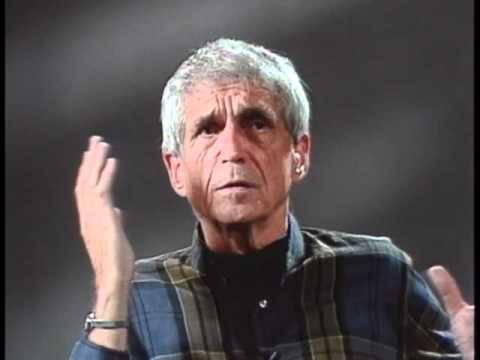
In Memoriam

Father Daniel Berrigan
May 9, 1921 - April 20, 2016


A poet, 
a prophet, 
a pastoral presence 
for peace.

He challenged the status quo of the "war machine" and stood in humble strength before the powers that be.


Three quotes:
One is called to live nonviolently, even if the change one works for seems impossible.
And even more radically:
Faith is rarely where your head is at. Nor is it where your heart is at. Faith is where your ass is at!
And finally, at the heart of the matter for Bro. Dan:
If you are going to follow Jesus, you better look good on wood.
Well done, good and faithful servant.

Sunday, April 19, 2015

Never Be the Same

When I stop long enough to listen to words of new songs in church, I am usually surprised. While too much of the contemporary worship music field is made up of sappy songs that don't get to the heart of what it means to be a Christian, there are enough that do to make it worth my while to listen.

This happened at the Maundy Thursday service of footwashing and Eucharist. It is one of those discipling songs like "I, the Lord of Sea and Sky" or "Eagle's Wings." It is a hymn of calling, being summoned by God to do the work of being a Christian. It is The Summons, written by John Bell, a Church of Scotland minister and member of the Iona Community.

It grabbed me from the fourth line of the first verse and then settled-in to do a great job of renewing God's call. In the first four verses, lines two and four repeat. Each verse starts with the call of what we could do

"If I [God] but call your name"
then another action step followed by
"And never be the same."
That's the line- right there-
And never be the same.
That's not what we count on when we think about hearing the call, of course. Nothing big, earth shattering. In the modern Christian thinking that "never be the same" is usually translated into some prosperity gospel promise or the wonder of being free from sin.

But that is not what the Gospel call is all about. That whole thing about never being the same comes when we see that who and what we are can be so different when we hear the God of creation call our name through the Son. We are to go and be and make disciples- showing love, sharing The Name and let God's life grow in us.
1. Will you come and follow me
If I but call your name?
Will you go where you don’t know
And never be the same?
Will you let my love be shown,
Will you let my name be known,
Will you let my life be grown
In you and you in me?
When we do leave our selves behind and start serving others, like caring for the cruel and kind, we will never be the same- and never look at the world in the same way. Every person I ever went on a mission trip with said that. It is a mark of the Spirit on us.
2. Will you leave yourself behind
If I but call your name?
Will you care for cruel and kind
And never be the same?
Will you risk the hostile stare
Should your life attract or scare?
Will you let me answer pray’r
In you and you in me?
Being a "secret disciple" the humility of being used for healing and hope, even to kissing the leper and supporting them, will not leave you unchanged- nor will it meet the standards of society either.
3. Will you let the blinded see
If I but call your name?
Will you set the pris’ners free
And never be the same?
Will you kiss the leper clean,
And do such as this unseen,
And admit to what I mean
In you and you in me?
There is a child of God hidden within us- as well as the things we do not like about ourselves. When God calls our name, will we never be the same and instead reshape the world. It's not about you or me- it's about the work in the world.
4. Will you love the ‘you’ you hide
If I but call your name?
Will you quell the fear inside
And never be the same?
Will you use the faith you’ve found
To reshape the world around,
Through my sight and touch and sound
In you and you in me?
The the fifth verse is me talking. If I have been listening to the words I have been singing, it is now my turn. As in here I am Lord, I'm ready. I am willing to never be the same again.
5. Lord, your summons echoes true
When you but call my name.
Let me turn and follow you
And never be the same.
In your company I’ll go
Where your love and footsteps show.
Thus I’ll move and live and grow
In you and you in me.
It is then that I am able and willing to see even more in the Eucharist. It is then that I take the bread and cup and pray that
I will never be the same.
Thanks be to God!

Words: John L. Bell & Graham Maule, copyright © 1987 Wild Goose Resource Group/ WGRG, Iona Community, Glasgow G2 3DH, Scotland.
Melody: 'Kelvingrove', Scots traditional. Reproduced by permission.


Sunday, January 25, 2015

Following


I liked this poster the first time I saw it- other than the standard problems I have with most representations of a white Jesus in a robe.

Sure, it's a religious schmaltz.
Sure, it's even tacky.

But I am sure it captures the essence of what Jesus said to his first followers.

It also describes the struggle that any "follower" has. Whether it's the fishermen along the Sea of Galilee 2000 years ago or my answering a "call" to "ministry" 45 years ago, it will be a wrestling match. Such a struggle never goes away. As times change, so can our call.

Just some thoughts.

Saturday, September 06, 2014

An Old Quote From Myself

Reading through old journal last week doing some research on thoughts and feelings I have had and I came across a line I wrote almost 9 years ago:

Infidels playing saints. Isn't that what all of us are doing? Faking it until we make it? And we probably won't finally make it until we cross the last barrier.

Thursday, November 14, 2013

Membership Has It's Privileges.. Doesn't It?

Our pastor posted this as the theme for an adult forum the other week. It was to get people in our church thinking about what it means to be a member of the church. Needless to say it got me thinking and wandering around my thoughts and feelings about this probably controversial topic.

I didn't get to the forum that Sunday so what I am about to say is entirely of my insight- or lack thereof. It is what has been running through my brain since then.

It was a good starting place. We assume that when we are members of an organization or group that there is some benefit we can get for it. If I join a local theater I get the privilege of cheaper tickets or perhaps backstage tours. If I join the library (get a library card) I can borrow books. To join may or may not cost money, but there is definitely an advantage. That's why we join.

Hence the gist of the question on church membership. What ARE the advantages of joining the church.

Reaction #1: None. I get nothing for it that I couldn't get just by attending the church. Worship is free and open in most churches. Plenty of non-members attend most of the mega-churches. Sure, I might not be able to take communion in some churches, but is that enough reason to join?

Reaction #2: Control of some type. For example, I get to vote for church officers and perhaps have a say in the way the church is run.

Reaction #3: (According to some people)- Salvation. That is not my opinion. I don't believe that being a church member has anything to do with our eternal life in heaven or wherever. I have known plenty of people who do believe that. I have met more than my share of individuals who kept their names on church rolls as an eternal life insurance policy- and would admit to that publicly anytime they were called and asked if they wanted to remain on the church rolls having not attended in years- or even decades.

Reaction #4: Privilege? Wait. Hold on. Privilege. Privilege? What does that mean?

Privilege- honor, treat, pleasure, joy, freedom, license, opportunity, restricted right or benefit, advantage, special treatment.
That's where the trouble comes in, I think. When we believe that membership is about what we get, the advantages, special rights or treatment. I am a member, you owe me this or I deserve that kind of treatment. Hence one of the great complaints about the modern 20th Century Church (where most of us are still living?!) is that it has become more like a country club or just passive entertainment.

Here is where I can begin to get in trouble, hot water, and start all kind of arguments. Perhaps I am too much a follower of the Dietrich Bonhoeffer theological school. There is no greater exposition on the heart of church "membership" than his classic The Cost of Discipleship. From Wikipedia:
Bonhoeffer argues that as Christianity spread, the Church became more "secularised", accommodating the demands of obedience to Jesus to the requirements of society. In this way, "the world was Christianised, and grace became its common property." But the hazard of this was that the gospel was cheapened, and obedience to the living Christ was gradually lost beneath formula and ritual, so that in the end, grace could literally be sold for monetary gain.
"Hold on," some might say. "When did we get into discipleship? We're talking about membership in an institution, an organization, that functions within the society."

All of this really muddies the waters, doesn't it? It depends on which side of the theological discussion you start- with an organization in the society or with following Jesus. Is the church to be a foundational institution in our society as some might argue, or is it something different, something unique, something spiritual?

How is the church different from other organizations in society?

I realize that we have strayed a little from the original question.  But the relevance of the original question depends entirely, completely, totally on where and how we define the church. I would argue as a starting point for discussion that there are no benefits gained from being a church member, unless you are interested in
having a say in the running of the church
aligning yourself publicly with a religious/spiritual position
want the church to continue to be alive in your community.

Beyond that, as a starting point, the membership in the church is a human-devised institution, and a secular one at that.

To be a member of the church in a spiritual sense is anything but that. The language of the New Testament took a Greek word that was used to indicate a part of the human body and applied it to those who joined with Christ. It is a mystical joining, something beyond institution, something beyond privilege. No part of the human body can exist without the body. No part of the human body is any more- or less important, each having it's own place.

Somewhere along the line, though, the word member has come to mean a special relationship, a privilege. Membership has its privilege, right?

Except the only privilege my left arm has for being a member of my body is two-fold
1) to live and
2) to do it's job of being my left arm.

How did we get to this? Aren't we playing word games and a philosophical/theological scrabble?

No, I don't think so. I think we are at the foundation of the problems of the modern church.

Membership in The Church brings along with it no privilege, no special advantage, no promise of anything other than the life-giving body and blood of our Lord, spiritually, mystically flowing through us. To serve Christ is not to clean floors, shovel snow, or provide for the survival of a human institution. (Those may be important in their own ways, but they are not, I believe, in the service of God. More at some other time on that!) That's about the church, not The Church.

The two are not the same; they are no co-equal in spite of what theological discussions have tried to tell us. They may (MAY) overlap at times when the church lives out the call of The Church, but they are not the same. One is a human institution based in and through society; the other is a spiritual union of the followers of Jesus, those who would be humble enough to be willing to call themselves Christian- Christ-followers.

What privilege do I get by being a member of the church? Put most simply, I get the privilege of giving myself to the benefit of others. It is the benefit of sacrifice and discipleship, of being part of The Word alive in the world.

That is downright scary!

No wonder we have made it into a country club.

With that in mind I call you attention to the post right below this. It is a story I have posted before and will post again. It is one of only two non-Biblical stories that I have preached more than once at the same church. It is the Parable of the Lifesaving Station. Read it and you will understand my theology in a nutshell.

Sure, there are nuances and digressions we could take with this discussion, but in keeping it simple, I don't think we could get must more basic than that.

The Parable of the Lifesving Station

On a dangerous seacoast where shipwrecks often occur there was once a crude little lifesaving station. The building was just a hut, and there was only one boat, But the few devoted members kept a constant watch over the sea, and with no thought of themselves went out day and night tirelessly searching for the lost.

Many lives were saved by this wonderful little station so that it became famous. Some of those who were saved, and various others in the surrounding area wanted to become associated with the station and give of their time and money and effort for the support of its work. New boats were bought and new crews trained. The little lifesaving station grew.

Some of the members of the lifesaving station were unhappy that the building was so crude and poorly equipped. They felt that a more comfortable place should be provided as the first refuge of those saved from the sea. So they replaced the emergency cots with beds and put better furniture in the enlarged building. Now the lifesaving station became a popular gathering place for its members, and they decorated it beautifully and furnished it exquisitely, because they used it as a sort of club.

Fewer members were now interested in going to sea on lifesaving missions, so they hired lifeboat crews to do this work. The lifesaving motif still prevailed in this club's decoration, and there was a liturgical lifeboat in the room where the club initiations were held.

About this time a large ship was wrecked off the coast, and the hired crews brought in boatloads of cold, wet, and half-drowned people. They were dirty and sick, and some of them had black skin and some had yellow skin. The beautiful new club was in chaos. So the property committee immediately had a shower house built outside the club where victims of shipwreck could be cleaned up before coming inside.

At the next meeting, there was a split in the club membership. Most of the members wanted to stop the club's lifesaving activities as being unpleasant and a hindrance to the normal social life of the club. Some members insisted upon lifesaving as their primary purpose and pointed out that they were still called a lifesaving station. But they were finally voted down and told that if they wanted to save the lives of all the various kinds of people who were shipwrecked in those waters, they could begin their own lifesaving station down the coast. They did.

As the years went by, the new station experienced the same changes that had occurred in the old. It evolved into a club and yet another lifesaving station was founded. History continued to repeat itself. And if you visit that sea coast today, you will find a number of exclusive clubs along that shore. Shipwrecks are frequent in those waters, but most of the people drown!

Note: This story was the Preface to the classic Introduction to Pastoral Care and Counseling by Howard Clinebell. When I first read it in 1972 I was overwhelmed. It has set the definition for my ministry (though not as well as I would have liked at times.) I would preach it every three years or so, even if they had heard it before. It is that important to me. It speaks today as well as ever.

Thursday, July 08, 2010

A Holy Book

The other evening I finished Sara Miles's most recent book, Jesus Freak. It is a powerfully simple and deeply challenging look at the church as she expands on her previous book, Take This Bread. She looks at

  • feeding,
  • healing,
  • forgiving and
  • raising the dead
as the mission of the church in living in and dealing with the world. The book builds through these stages and, by the end, I was caught up in the great story of redemption that is going on in the world through people like Sara Miles and St. Gregory's Church.

As the book ended I was smiling in the wonder of resurrection available to Christians in their lives. I was awed by the ways feeding and healing can get one ready to be a channel of forgiveness. When all that happens the result is resurrection. Death has been defeated.

As I was reading the book, the local library had notified me that a book I had reserved was ready to pick up, War by Sebastian Junger. I started reading that book and was immediately struck by Junger's powerful prose and experience. I knew it was going to be a book that grabbed me and challenged me. Yet I knew that I couldn't go any farther with Junger's book until I finished Miles's. I didn't know why until I came to the end of Jesus Freak.

I had to be reminded that resurrection is real. I had to be brought back to the awareness that choosing life is the choice of God's people. I had to be surrounded by the life-giving Presence as my "default" location. Then, and only then could I pick up War and look at it from a life-giving perspective.

Miles's book is holy. It has been blessed with an understanding of the ways of God that is eye-opening and exciting. It is how the Church can do what it is called to do.

Sunday, June 27, 2010

Discipleship and Church

Looking at the back of a bulletin today I was brought up short with another one of those "We've been hearing this for 40 years" moments. The scripture text had to do with those who were too busy to come along and follow Jesus. He responded, as we may remember, that we should let the dead bury the dead.

The text written by a young pastor had the sound of one I might have written 35 years ago. He was bemoaning the fact that a fishing trip "up north" often kept people away from church. Or the sad fact that going to soccer practice on a weekday evening kept them from attending Bible study. yep. I could have written those words in the mid-1970s.

I still remember a Friday evening when I was a guest preacher at a revival-type meeting at a friend's church in another town. As we drove through the downtown on the way to church I took notice of all the people walking along or the young people hanging around doing what young people do. "They should be in church tonight, I thought, (to hear me of course) and then they would get a new way of living. Then for many years I remember the bemoaning of myself along with colleagues about all those things that kept people away from church.

The bulletin author then went on to talk about Jesus' call to discipleship inherent in the scripture passage. These other things are keeping us from truly being disciples. It is the standard and long standing direction. It has not changed an iota in the 36 years since I was ordained or the 46 years since I became a Christian.

But I have learned in recent years through hard lessons of awareness that discipleship is NOT the same as going to church or attending Bible study. Discipleship may- and often does- get strengthened in those ways but they are not equal. Doing church work is not being a disciple in and of itself.

What heresy!

But I have come to believe that discipleship IS

  • turning "water into wine" at a wedding feast at the local Legion Hall;
  • picking up the injured man lying along your biking route;
  • stopping and visiting with the woman at the (coffee shop) well;
  • throwing money changers and bean counters out of God's houses of prayer.
Actually I have gone beyond heresy now to meddling. I know that because when I first wrote this down in my journal this morning I waffled on that last one- after all they pay my pension.)

The real enemy of discipleship is not necessarily the possibility of other things taking over our "church" duties. After all burying a dead loved one is not exactly an uncaring selfish thing. It may be that the real danger is to make the church the center of discipleship, the end-all and be-all of following Jesus.

I don't believe that is what Jesus meant.

Wednesday, April 21, 2010

The Protection of God

I hope God's protecting actions on my behalf don't stop. This came to mind the other day when I posted the quote from Oscar Wilde

When the gods wish to punish us, they answer our prayers.
What a great way to stop us short in our tracks than once in a while to actually give us what we (think we) want. I am grateful, though, that God has been more gracious to me than that. God has been quite busy in my life for years stopping me from getting what I think I want when getting it might have been a disaster.

I was discussing this with a friend the other evening and we ended up sharing a couple of incidents where that has happened. One of the common elements to all of the incidents was that what we thought we wanted was not a "bad" thing. We also knew that they were appropriate things to want and were avenues of "good" things. They even fit within our lives and talents.

I can't speak for my friend's situations, but one other common element of all of them- I didn't pay attention to advice from others. I even asked some friends and wise associates to give me feedback- and I then went ahead anyway.

When you turn things over to God you should listen to what God is telling you, especially through other people.

Life is too short to get caught in things that will diminish your ability to do what God is calling you to do.

Sunday, January 25, 2009

DUCCIO di Buoninsegna
Calling of Peter and Andrew 1308-11
Tempera on wood, 43,5 x 46 cm
National Gallery of Art, Washington


The Third Sunday of Epiphany


Mark 1:16-18-- As Jesus walked beside the Sea of Galilee, he saw Simon and his brother Andrew casting a net into the lake, for they were fishermen. "Come, follow me," Jesus said, "and I will make you fishers of men." At once they left their nets and followed him.

If God
invited you to a party and
said,
“Everyone in the ballroom tonight will
be my special
guest.”

How would you then treat them when you arrived?

Indeed, indeed!

Source: Hafiz, Love Poems From God, translated by Daniel Ladinsky

Saturday, August 16, 2008

Olympian Feats - II

On Wednesday I talked about what I have been watching with such awe at the Olympics. Every four years especially I just cannot believe what I am seeing. This year has been even more so. Perhaps because I am more aware of the limitations of the human body (especially as we age) and I have just finished my 60 mile bicycle trip, but it is more obvious to me in this Olympics.

Maybe it also has to do with Michael Phelps and his amazing performances. At moments like these we see the heights to which we can fly- soar- when we put our minds to it and we have some of "the right stuff" that can move into unheard of territories. So we shake our heads in awe.

These are truly, as I said on Wednesday, Olympian feats of the Olympic Spirit.

But so are yours and mine.

Getting up and going to work day in and day out, even when we don't feel like it is no different from Michael Phelps getting up at the crack of dawn knowing he had five miles of swimming ahead of him. Day in and day out we do our best and build things, help others, serve others. Olympian feats occur in every home, factory, workplace, school every day. I don't have size 14 feet and the ability to swim like a dolphin. Very few do. But each of us is who we are. That sounds so trite that sometimes we miss the amazing truth in it.

When Jesus called a bunch of every day people to become his followers he knew they were capable of Olympian feats. He told them so when he said they would do even greater works than he was doing. All it takes is discipline to get up and go do them in whatever ways each of us has been gifted and called.

Sunday, July 20, 2008

Sunday Questions

In keeping with today's theme- i.e. it's a Sunday- here are some questions that were originally posted on Today at the Mission just about a year ago. Originally there were 50 but I have done some picking and choosing, hence the numbers. If they make you uncomfortable, don't worry, they made me uncomfortable, too.

1. Why don't we give church members keys to the kitchen?
2. Can we throw more parties?

10. What would happen if there was no big building for us all to go to on Sunday morning?
11. Can a coffee shop breakfast with the guys still be church?

14. If I only had 12 people in my congregation, and one of them ends up turning on me, one of them flat out denies he even knows me, and the rest bail out just when I need them most... would my ministry be a success or a failure?

20. If our entire bible consisted only of the four gospels, how would our religion look today?
21. Why don't we stop explaining our faith to atheists? Yes - my faith is completely, totally and absolutely irrational. That would be the 'faith' part. Duh.

28. "We thank you father, that you, father, have blessed us father, that you loved us father, and that, father, you are here with us now father." Why do people pray like that?

31. If a church event is meant to be an 'outreach' to our friends and family, shouldn't we be going to where they are? If not, perhaps we should change the name to 'inreach'.

36. Here's a little game to play. Sit in church. Pick a man or woman - someone you sort of know, but don't know real well. A Christian person. A nice Christian person. Ask yourself, "If they fell off the wagon and ended up downtown, living on the street, sleeping in their own urine and vomit... would I go get them?
37. Would any of us go get them?
38. Or would that be the pastor's job?

41. Why do missionaries always live somewhere else?

43. Rich Christians are blessed by God. Absolutely destitute Christians must live on faith for their every need. Which is better?
44. Which is better when you haven't eaten in three days?
45. Why do all our pictures of Jesus look like us?

48. Why is there a copyright on bibles?
49. When will we stop praying for revival and start living like the revived?
See, I warned you.

Wednesday, July 09, 2008

Stay Unsatisfied

You are Christian only so long as you constantly pose critical questions to the society you live in, so long as you emphasize the need of conversion both for yourself and for the world, so long as you in no way let yourself become established in the situation of the world, so long as you stay unsatisfied with the status quo and keep saying that a new world is yet to come. You are Christian only when you believe you have a role to play in the realization of the new kingdom, and when you urge everyone you meet with holy unrest to make haste so that the promise might soon be fulfilled. So long as you live as a Christian you keep looking for a new order, a new structure, a new life.
--Henri Nouwen, Circles of Love
Link to Inward/Outward

Sunday, June 29, 2008

Not Again....

Over and over and over it goes. Year in and year out. We hear the same old Scriptures. Even on a three-year cycle some of them just seem to come up more often than others. Like this week:

Matthew 10:37-42 - Whoever loves father or mother more than me is not worthy of me; and whoever loves son or daughter more than me is not worthy of me; and whoever does not take up the cross and follow me is not worthy of me. Those who find their life will lose it, and those who lose their life for my sake will find it. Whoever welcomes you welcomes me, and whoever welcomes me welcomes the one who sent me. Whoever welcomes a prophet in the name of a prophet will receive a prophet’s reward; and whoever welcomes a righteous person in the name of a righteous person will receive the reward of the righteous; and whoever gives even a cup of cold water to one of these little ones in the name of a disciple—truly I tell you, none of these will lose their reward.
Worthiness is in rejecting my family? Worthiness is giving up all that is important to me and leaving it behind? Worthiness is losing my life? Don't we in the church ever get tired of preaching and hearing those words?

Well, probably. That may be why we don't live them. They are too familiar. Background words of the Christian life.

Then there's the question of rewards. We talk about a Gospel of grace and we hear words of works. It gets confusing so we just go on with our lives and stop trying to figure it all out.

Which may be the smartest thing we can do, as long as in the stopping figuring we don't stop worshiping. It is when we give up our control of things; our interpretations that have to be the right ones; our worship and Bible and denomination and on and on and on, only then can we begin to hear what it may be that God is telling us in these passages.

I wish I could tell you because I still struggle with them on a daily basis. I guess I'll just keep listening.

Sunday, March 02, 2008

Fourth Sunday of Lent - Follow Him

Found on Inward/Outward. This is a "distillation of the Gospel" at the heart of Madonna House and is referred to as "The Little Mandate."

How to Follow Jesus
By Catherine Doherty

Arise — go! Sell all you possess. Give it directly, personally to the poor. Take up My cross (their cross) and follow Me, going to the poor, being poor, being one with them, one with Me.

Little — be always little! Be simple, poor, childlike.

Preach the Gospel with your life — without compromise! Listen to the Spirit. He will lead you.

Do little things exceedingly well for love of Me.

Love... love... love, never counting the cost.

Go into the marketplace and stay with Me. Pray, fast. Pray always, fast.

Be hidden. Be a light to your neighbour’s feet. Go without fear into the depth of men’s hearts. I shall be with you.

Pray always. I will be your rest.
I know it is not this week's Gospel, the man born blind. Or is it? What if we followed Jesus into the streets on the Sabbath instead of going to church? Would we get in the same trouble? What if we followed Jesus into the world where the blind can be given sight? Would we get in trouble?

What if we simply followed the simplicity of Jesus?

What a concept.

Maybe it is this week's (and every week's) Gospel.

Sunday, February 03, 2008

Your Point of View

I preached this morning. Here's the written version of the sermon. I had fun.

Something that becomes clearer and clearer to me with each passing year is that things are not often as easily understood as we think they are. When we learn something we think everybody knows it. When we understand something, we expect everybody to understand what we are saying.

This just isn’t true. Understanding often depends on what you already know, what you think you know and your angle of vision.

Take the Super Bowl. (You didn’t think I would preach today without mentioning it, did you?) The way we all hear so much about what’s happening this afternoon, the stories that have gone on and on for two weeks, you’d think the whole country would know. Yet just last Wednesday I overheard a conversation that consisted of one simple question. “So, tell me. Who’s playing on Sunday?”

But that is only a small part of the lack of understanding. We haven’t even gotten to the game yet. When that happens, well, the announcers often sound like they are speaking a foreign language. Let’s take a moment and review some of the things you will hear.

Are they talking about money when they mention a Nickel defense, Dime coverage, the Quarterback sneak or a Single Wing formation?

What about the firepower of playing out of the Shotgun, or with that same gun, having a Pump Fake

Then there’s Play action, (which I don’t think is something children do at recess) and an item I would think any player would need- a Nose guard, which, as everyone knows, is one of the players on the field. (But which one?)

If you ever do go to a game you will discover that what you see on TV is often quite a bit different and usually more exciting than what you may see in person. All those TV cameras at all those locations with all the slow-motion or the really neat one that flies over the field and gets overhead shots of things happening gives a different ball game. Which is why the Monday morning quarterbacks have such a better understanding of what went wrong. They saw it more clearly. Or at least think they did.

Of course none of this is just a problem just for football. It is a human problem.

Which means it can be a problem for us in the church as well. We know what we are talking about. We know all the inside phrases and words and patterns. But there are a lot of people in our neighborhoods, schools, workplaces, and daily travels who know next to nothing about the church and Christianity.

Even in some of the more highly churched parts of the US, there is still 30% of the population that is unchurched. Most of them wouldn’t know an offertory when it came out of the organ. And their understanding of what Christians believe and who Jesus is would probably stun most of us.

Yet week in and week out we worship and talk and pray in ways that would be a foreign language to many. When one of these unchurched people walks into one of our worship services or Sunday School classes they would be as lost as I feel every time I watch a football coach trying to diagram something on the whiteboard.

Yes, it depends on what you think you know. What is a Christian? Especially in an election year we get all kinds of definitions and interpretations. Many of them are right, many of them are wrong. Most have a grain of truth, some do not. It depends on how you look at it- your angle of vision.

Jesus took his friends up the mountain. While they were there something truly remarkable happened- Jesus changed right before their eyes. There was light and energy and who knows what. Matthew tells us that Jesus’ “face shone like the sun, and his clothes became as white as the light. Just then there appeared before them Moses and Elijah, talking with Jesus. … a bright cloud enveloped them, and a voice from the cloud said, ‘This is my Son, whom I love; with him I am well pleased. Listen to him!’”

Peter, who always thought he knew what was going on is amazed and thinks this is something about Jesus being a prophet, next in line with the great ones – Moses and Elijah. We know this simply by Peter’s reaction. He said to Jesus, "Lord, it is good for us to be here. If you wish, I will put up three shelters—one for you, one for Moses and one for Elijah." But then the words from the very mouth of God came from the bright cloud that was not just low-hanging fog from the Sea of Galilee.

They fell face down to the ground, terrified. They realized that they didn’t know what they were talking about. They were surrounded by a great mystery, the wonders of God’s own Son- whatever that meant to them- and the only response was simply to be terrified- and silent.

We often approach Jesus the same way- with what we think we know, our lack of understanding, our own expectations, - and finally our point of view.

Now I know I have painted a fairly broad picture here. I have jumped from non-Christians to us- from the unchurched person’s difficulty in understanding what we are doing to our own inability to capture all there is about the faith.

What I am trying to say is that patience is important- patience with others and patience with ourselves. They will find our language at communion odd and out of place. They will have no idea different churches actually have significantly different understandings of everything from Scripture to politics and whatever else may be found in-between.

In order to develop that patience we need to have the humility that reminds us that we do not have the final answer. At the heart of it is how do each of us discover who Jesus is? For that the example of the apostles on the mountain comes clear.

First, we need to spend time with Jesus (and His Father!) Prayer, worship, reading scripture, meditating on readings and music can all lead us into an openness to Him that we have not had before.

Then we need to listen. I have heard many great pray-ers in my life. They can give eloquent voice to the deepest understandings and longings of the soul. But if they don’t stop long enough to listen- it will be a pretty dull relationship. But that’s not easy. Look at Peter speaking his mind- on the mountain- but over and over in the Gospels. In the end it took God breaking through that made the difference.

Which is the third part of how we discover who Jesus is- the revelation given to us from God. God does this in all kinds of ways, of course. From the quiet times, from the reading of scripture, to the words of a preacher on Sunday morning or a friend on the phone on Wednesday evening. We learn when we listen. More will be revealed each and every day.

After all these years of taking communion, for example, I can’t explain it any better than I did say 40 years ago- or even last year. Each time I come to this table and hear a pastor- or myself- use the awesome words- this is my body, this is my blood- I am aware that something exciting and far, far, far beyond my poor human understanding is happening.

Which means that with that humility must come an openness to not have to know the answers and listen for what word from God is coming to me today. Like that cloud surrounding the apostles on the mountain, there is an invisible presence that is here when we gather as his people.

Tuesday, May 15, 2007

Adventures Great and Small
In a conversation with a friend last week the subject of "great adventures with God" came up. I thought that was a really good phrase and I have spent some time pondering it- and its comrades- average adventures and small adventures. What I believe is that all of life is, of course, an adventure when God is involved. What's needed most for that is a sense of awe and openness and being aware. God is always doing small things. God's work is going on around us in so many ways that it is hard to pay attention to them all.

Some of these daily adventure possibilities are small- noticing a fresh breeze, hearing laughter, assisting with tears. Some of them are not daily but relatively frequent. These are the average adventures. These are the opportunities for a special ministry, a new way of looking at an old one, or deciding to make some changes in your life that help you follow Jesus more completely.

But it's the great adventures, though, that catch our attention and lead us into places we would never have thought possible. These are the things that change us, our world,our friends, our churches, our denominations. It doesn't need to look BIG and special, but its long-term impact can be huge. I have been blessed to be par of a number of great adventures with God including work in short-term mission development, senior high church camping and AIDS ministry. These are the things that stick out in my mind, but they are part of the full range of following God.

We call this discipleship. We follow the lead of our God, doing what the Savior wants, empowered by the Holy Spirit. Big or small, it is an adventure, never dull, and always filled with opportunities. But it takes the awareness I've already mentioned, the openness to God. But it also takes commitment. It is that moving from centering on self to a centering on God.

Author Tom Bandy of Easum, and Associates has this to say in a new posting on the EBA website:

With the first breath and your last penny, will it be “mission” or “me”? That is the clincher. If people cannot answer that question in favor of “mission”, then they are simply not faithful by any standard of faith and behavior of the earliest church. Period.
--The Clincher, Tom Bandy

Friday, April 06, 2007

Holy Week 2007-
Good Friday- The System Wins- or Does It?

(Based on thoughts from Marcus Borg and John Dominic Crossan in the book, The Last Week.)

Darkness and death. It is Good Friday and all has come to an end. The "domination system of ancient Rome with religious cooperation wins. Jesus of Nazareth is gone.

It is injustice at its most visible. It is an injustice that is so horrifyingly common in history, so routine, that one would have to say that such actions and systems are the rule not the exception. Borg and Crossan (pp. 162-163) say it is part of the historic "normalcy of civilization."

Jesus has been crucified- killed- by the sin of the world.

He is far from alone.

Yet he accepted the road of the Cross. He accepted its inevitability for when you confront the sin of the world, it is never pretty, no matter where or how that sin is embodied. No wonder so few have felt the willingness to follow that call. No matter we (all, myself as much as anyone) transform it into a superficial emotional moment that happened to Jesus. We can be moved by Bach's St. Matthew Passion or emotionally overturned by Mel Gibson's Passion of the Christ. It helps remove me from the possibility that if I would follow this Jesus I might have to face the domination systems of sin and the world and establishment and the dark and broken places of my own heart.

Author John Howard Yoder reminds us of the real power of the Cross as we all wander away with the disciples this Friday to wait for the Sabbath to be over and the Lord's Day to begin:

The cross of Christ was not an inexplicable or chance event, which happened to strike him, like illness or accident. To accept the cross as his destiny, to move toward it and even to provoke it, when he could well have done otherwise, was Jesus’ constantly reiterated free choice; and he warns his disciples lest their embarking on the same path be less conscious of its costs.
Source: The Politics of Jesus
--from Inward/Outward