Showing posts with label Civil War. Show all posts

Friday, July 10, 2015

About That Flag Thing...

I am a Northerner. I was born and raised in the North. I have only "lived" in the South on vacations. I am a Yankee through and through. As far as the Civil War is concerned:
  • The Battle of Gettysburg saved the United States. 
  • The Gettysburg Address was brilliant. 
  • My great, great uncle was killed at The Wilderness while being the flag bearer for the US army.
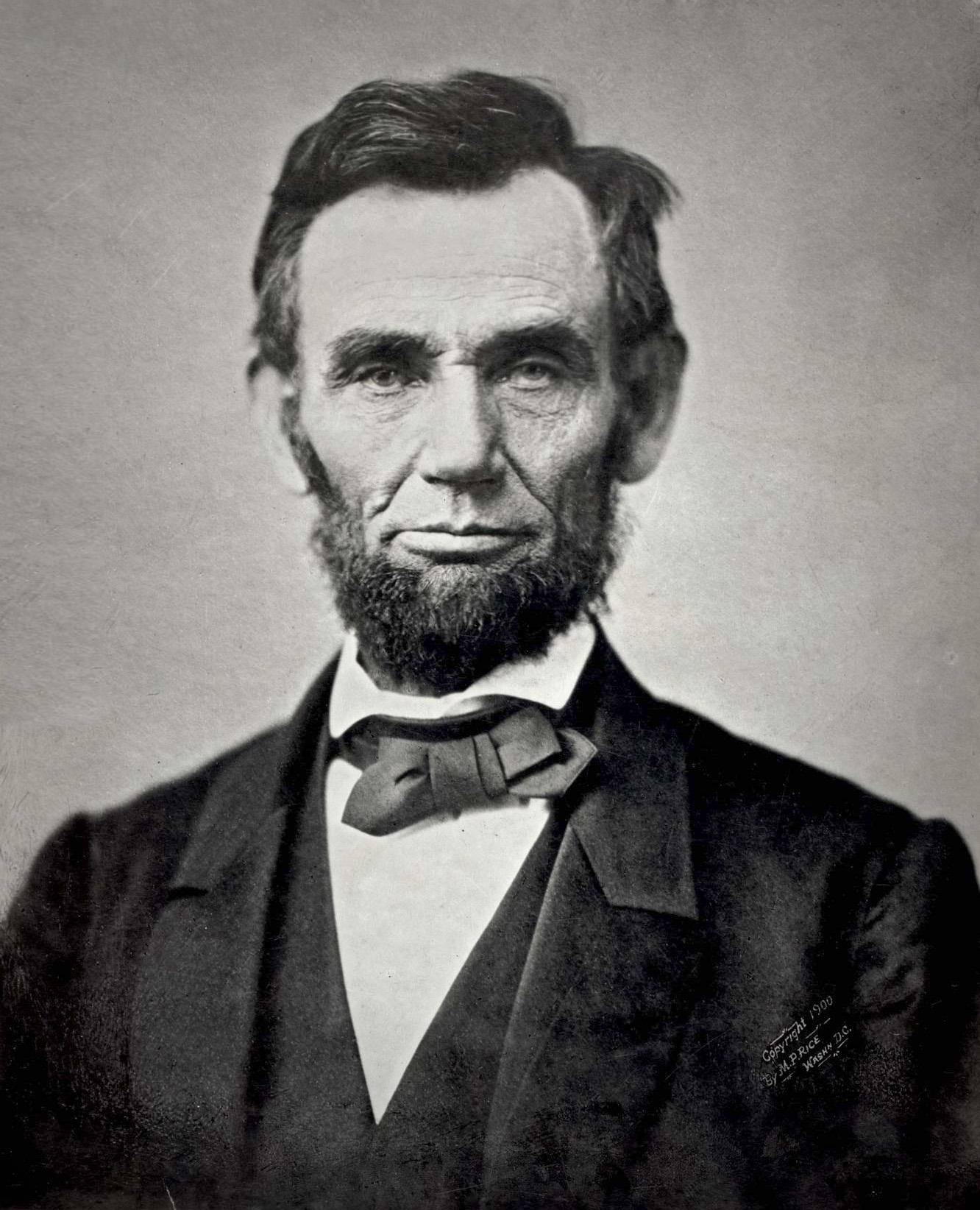
  • The death of Abraham Lincoln was a tragedy for the south as much as the north, perhaps even more so. 
  • Jefferson Davis was a traitor to the United States.
  • It was not a war of northern aggression
  • It was always about slavery- state's rights meant the right to own slaves.
And, because of all the above, I have always been offended by the flying of the Confederate battle flag. It has always been a symbol of at least a bunch of good ol' boys wanting to whoop it up and at worst- racism.

As such it does not belong hanging on the same flag pole or near the flag that all these conservative pundits claim they want to honor and wear on their lapels- the American Flag- the official flag of the United States. If you want to be patriotic, it is not for the so-called heritage of the south. It is for the USA. My father did not go to war to save the confederate flag. He fought under the Stars and Stripes.
Let's get over it and be Americans- citizens of the UNITED States, not the confederate states.

[Does this mean it should be illegal to own or sell the confederate flag. No, I don't think so, any more than it is illegal to own or sell a Nazi flag or Soviet flag, two other defeated nations. It may be in bad taste and offensive at times to display it, but it's not illegal.]

Wednesday, April 15, 2015

A 150-Year Memory: The Death of Abraham Lincoln


President Abraham Lincoln
was shot by John Wilkes Booth on
April 14, 1865 at
10:15 p.m. in
Ford's Theater


He died the next morning,
April 15, 1865, at
7:22 a.m.

He was 56 years old.


According to Lincoln's secretary John Hay, at the moment of Lincoln's death, "a look of unspeakable peace came upon his worn features".

The group in the room then knelt and prayed.

Secretary of War Edwin Stanton then made a statement that has gone down in our national memory:
Now he belongs to the ages.

Thursday, April 09, 2015

Saturday, November 15, 2014

All Kinds of Things Can Happen on This Day

1859 – The first modern revival of the Olympic Games takes place in Athens, Greece.

1864 – American Civil War: Union General William Tecumseh Sherman burns Atlanta, Georgia and starts Sherman's March to the Sea.

1939 – In Washington, D.C., US President Franklin D. Roosevelt lays the cornerstone of the Jefferson Memorial.

1969 – Vietnam War: In Washington, D.C., 250,000-500,000 protesters staged a peaceful demonstration against the war, including a symbolic "March Against Death".

1969 - Wendy's Hamburgers opens

1969 - Janis Joplin, accused of vulgar & indecent language in Tampa, Fla


Tuesday, November 19, 2013

Just a Few Words

Only 272, to be exact. The best example of keeping it simple that politics may ever have seen before or since. It has become one of the great speeches of our history. (I'm already over 10% of the way there.)

November 19, 1863. Gettysburg, Pennsylvania. In the middle of the Civil War the president had this to say:

Four score and seven years ago our fathers brought forth on this continent a new nation, conceived in liberty, and dedicated to the proposition that all men are created equal.

Now we are engaged in a great civil war, testing whether that nation, or any nation so conceived and so dedicated, can long endure. We are met on a great battlefield of that war. We have come to dedicate a portion of that field, as a final resting place for those who here gave their lives that that nation might live. It is altogether fitting and proper that we should do this.

But, in a larger sense, we can not dedicate, we can not consecrate, we can not hallow this ground. The brave men, living and dead, who struggled here, have consecrated it, far above our poor power to add or detract. The world will little note, nor long remember what we say here, but it can never forget what they did here. It is for us the living, rather, to be dedicated here to the unfinished work which they who fought here have thus far so nobly advanced. It is rather for us to be here dedicated to the great task remaining before us—that from these honored dead we take increased devotion to that cause for which they gave the last full measure of devotion—that we here highly resolve that these dead shall not have died in vain—that this nation, under God, shall have a new birth of freedom—and that government of the people, by the people, for the people, shall not perish from the earth.


Wednesday, July 03, 2013

Days That Changed the War: Day Three

The Battle of Gettysburg
150 years ago

The Third Day: July 3, 1863


The history of the third day of the Battle of Gettysburg (July 3, 1863) has focused on the disastrous infantry assault nicknamed Pickett's Charge. During and after that charge, however, two significant cavalry battles also occurred: one approximately three miles (5 km) to the east, in the area known today as East Cavalry Field, the other southwest of the [Big] Round Top mountain (sometimes called South Cavalry Field).

The East Cavalry Field fighting was an attempt by Maj. Gen. J.E.B. Stuart's Confederate cavalry to get into the Federal rear and exploit any success that Pickett's Charge may have generated. Union cavalry under Brig. Gens. David McM. Gregg and George Armstrong Custer repulsed the Confederate advances.

In South Cavalry Field, after Pickett's Charge had been defeated, reckless cavalry charges against the right flank of the Confederate Army, ordered by Brig. Gen. Judson Kilpatrick, were easily repulsed, resulting in the death of Brig. Gen. Elon J. Farnsworth.

--Link


The "High Water Mark" on Cemetery Ridge as it appears today. The monument to the 72nd Pennsylvania Volunteer Infantry Regiment ("Baxter's Philadelphia Fire Zouaves") appears at right, the Copse of Trees to the left.


Tuesday, July 02, 2013

Days That Changed the War: Day Two

The Battle of Gettysburg
150 years ago

The Second Day: July 2, 1863

During the Second Day of the Battle of Gettysburg (July 2, 1863) Confederate Gen. Robert E. Lee attempted to capitalize on his first day's success. He launched the Army of Northern Virginia in multiple attacks on the flanks of the Union Army of the Potomac, commanded by Maj. Gen. George G. Meade.

After a lengthy delay to assemble his forces and avoid detection in his approach march, Confederate Lt. Gen. James Longstreet attacked with his First Corps against the Union left flank. His division under Maj. Gen. John Bell Hood attacked Little Round Top and Devil's Den. To Hood's left, Maj. Gen. Lafayette McLaws attacked the Wheatfield and the Peach Orchard. Although neither prevailed, the Union III Corps was effectively destroyed as a combat organization as it attempted to defend a salient over too wide a front. Gen. Meade rushed as many as 20,000 reinforcements from elsewhere in his line to resist these fierce assaults. The attacks in this sector concluded with an unsuccessful assault by the Third Corps division of Maj. Gen. Richard H. Anderson against the Union center on Cemetery Ridge.

That evening, Confederate Second Corps commander Lt. Gen. Richard S. Ewell turned demonstrations against the Union right flank into full-scale assaults on Culp's Hill and East Cemetery Hill, but both were repulsed.

The Union army had occupied strong defensive positions, and Meade handled his forces well, resulting in heavy losses for both sides but leaving the disposition of forces on both sides essentially unchanged. Lee's hope of crushing the Army of the Potomac on Northern territory was dashed, but undaunted, he began to plan for the third day of fighting.

--Link

Monday, July 01, 2013

Days That Changed the War: Day One

Gettysburg in 1863, viewed from north at Lutheran Seminary
Gettysburg.

July 1, 2, 3, 1863

Almost. But not enough.

The Union was successful.

Of course, I'm a northerner. I grew up about 125 miles north of Gettysburg and lived for a few years just east of there in York. It was the iconic Civil War battle site.

I have no pictures of my own to share of this historic and consecrated ground. I will rely on Wikipedia to summarize the story.
--Link

The Battle of Gettysburg  was a pinnacle battle in the American Civil War, fought from July 1st to 3rd, 1863, in and around the town of Gettysburg, Pennsylvania. It was the battle with the largest number of casualties in the American Civil War and is often described as the war's turning point. Union General George Meade's Army of the Potomac defeated Confederate General Robert E. Lee's Army of Northern Virginia, ending Lee's invasion of the North.

The First Day: July 1, 1863

The First Day of the Battle of Gettysburg during the American Civil War took place on July 1, 1863, and began as an engagement between isolated units of the Army of Northern Virginia under Confederate General Robert E. Lee and the Army of the Potomac under Union Maj. Gen. George G. Meade. It soon escalated into a major battle which culminated in the outnumbered and defeated Union forces retreating to the high ground south of Gettysburg, Pennsylvania.

The first-day battle proceeded in three phases as combatants continued to arrive at the battlefield. In the morning, two brigades of Confederate Maj. Gen. Henry Heth's division (of Lt. Gen. A.P. Hill's Third Corps) were delayed by dismounted Union cavalrymen under Brig. Gen. John Buford. As infantry reinforcements arrived under Maj. Gen. John F. Reynolds of the Union I Corps, the Confederate assaults down the Chambersburg Pike were repulsed, although Gen. Reynolds was killed. By early afternoon, the Union XI Corps had arrived, and the Union position was in a semicircle from west to north of the town. The Confederate Second Corps under Lt. Gen. Richard S. Ewell began a massive assault from the north, with Maj. Gen. Robert E. Rodes's division attacking from Oak Hill and Maj. Gen. Jubal A. Early's division attacking across the open fields north of town. The Union lines generally held under extremely heavy pressure, although the salient at Barlow's Knoll was overrun.

The third phase of the battle came as Rodes renewed his assault from the north and Heth returned with his entire division from the west, accompanied by the division of Maj. Gen. W. Dorsey Pender. Heavy fighting in Herbst's Woods (near the Lutheran Theological Seminary) and on Oak Ridge finally caused the Union line to collapse. Some of the Federals conducted a fighting withdrawal through the town, suffering heavy casualties and losing many prisoners; others simply retreated. They took up good defensive positions on Cemetery Hill and waited for additional attacks. Despite discretionary orders from Robert E. Lee to take the heights "if practicable," Richard Ewell chose not to attack. Historians have debated ever since how the battle might have ended differently if he had found it practicable to do so.

The first day at Gettysburg—more significant than simply a prelude to the bloody second and third days—ranks as the 23rd biggest battle of the war by number of troops engaged. About one quarter of Meade's army (22,000 men) and one third of Lee's army (27,000) were engaged. Union casualties were almost 9,000, Confederate slightly more than 6,000.